September 23, 2026 • Callum Reeve • 8 min reading time • Specs verified June 5, 2026
Machetes and Camp Choppers: Steel Grade, Handle Geometry, and the Tasks That Actually Justify the Weight
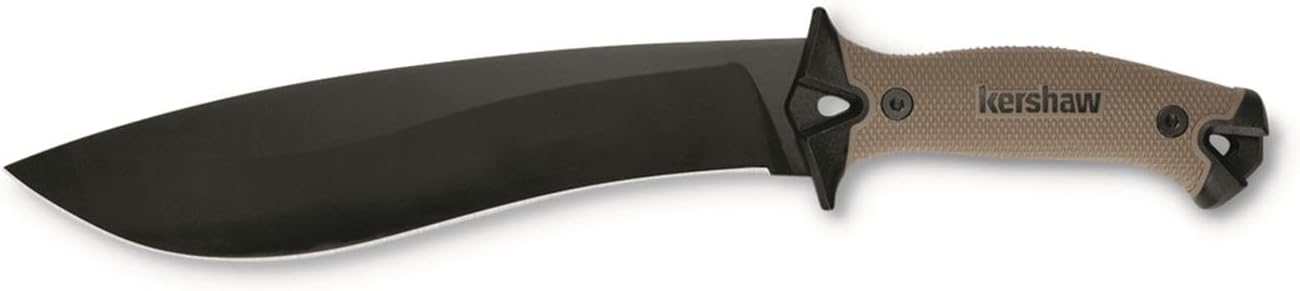
A machete is simply a long, thin chopping blade — usually 10 to 24 inches of steel — designed to clear brush, split kindling, and process camp materials in a single versatile tool. A camp chopper sits in the same territory but leans heavier and shorter: think 7 to 12 inches, more axe-like in weight distribution, meant for splitting small logs and batoning (driving the blade through wood by striking the spine) rather than swinging arcs through vegetation. If you’re outfitting for a backcountry trip, guiding clients, or just trying to avoid carrying both a fixed blade and a hatchet, these tools make a compelling argument. The catch is that a poor choice leaves you with a blade that’s too soft to hold an edge, too hard to survive a flex-load without chipping, or — most commonly — so handle-heavy or blade-heavy that your wrist quits before the task does. This guide breaks down what actually matters in the steel, the geometry, and the handle, and ends with a clear decision tree so you can stop second-guessing.
Why Steel Grade Matters More Here Than on a General-Purpose Knife
On a 4-inch EDC blade, steel choice involves real trade-offs but the stakes are manageable — a softer steel dulls faster, a harder steel chips more, and you sharpen accordingly. On a chopper, those stakes amplify. Every swing delivers an impact load. Flex cycles multiply. The blade occasionally contacts rocks, frozen ground, and knots. This is exactly the use case where toughness — a steel’s resistance to chipping or fracturing under impact — becomes the dominant spec, not hardness or edge retention.
Larrin Thomas at Knife Steel Nerds has done the most methodical published work on this, using notch-toughness testing to rank steels against each other. The summary relevant to choppers: high-toughness steels in the mid-hardness range (roughly 54–58 HRC for choppers) outperform harder, more wear-resistant steels in any impact-heavy application. That’s why the most field-respected chopper and machete blades rarely show up in premium stainless — they show up in 1075, 1095, 3Cr13, and high-carbon tool steels.
The working steel tiers for choppers:
| Steel | HRC Range (typical) | Toughness | Edge Retention | Notes |
|---|---|---|---|---|
| 1075 high-carbon | 54–58 | Excellent | Moderate | Industry workhorse; forgiving of abuse |
| 1095 high-carbon | 55–60 | Very Good | Moderate–Good | Slightly harder, slightly less flex; common in mid-tier |
| 3Cr13 stainless | 52–56 | Good | Low | Budget range; corrodes less, holds edge poorly |
| 80CrV2 | 57–62 | Very Good | Good | Popular in custom choppers; easy to sharpen |
| 5160 spring steel | 54–58 | Outstanding | Moderate | Favored for machetes; exceptional flex resistance |
5160 spring steel deserves special mention. Originally used in automotive leaf springs, it handles repeated lateral flex without fatigue cracking in ways that most knife steels can’t match. Owners of Cold Steel machetes and Condor’s Latin-series blades — both 1075 and 1095 users — consistently note that the blades bend under hard side-load rather than snapping. That’s exactly what you want when the blade catches in a root-ball and you’re levering it free.
What you’re generally not buying for a camp chopper: CPM-3V, S35VN, or any of the premium stainless powders. Knife Informer’s geometry and steel analysis notes that those steels are optimized for a hardness range (60–63 HRC) that resists fine-edge wear but sacrifices the flex toughness that impact tools demand. Save the 3V for your hunting fixed blade. Put 1075 or 5160 on the chopper.
Handle Geometry: Where Most Buyers Go Wrong
If steel is the engine, handle geometry is the transmission. Get it wrong and it doesn’t matter how good the blade is — you’ll manage fatigue, hot spots, and poor control before the task is half done.
The three variables that determine handle performance on a chopper:
1. Handle-to-blade weight balance. Swing efficiency depends on where the center of mass sits. A blade-heavy tool (balance point ahead of the guard) delivers more force per swing but fatigues the forearm faster and reduces fine control. A handle-neutral or slightly handle-forward balance gives better sustained control for camp tasks — processing poles, splitting kindling, clearing brush close to the body. Gear Junkie’s camp chopper overview notes that testers consistently preferred tools where balance sat within 1–2 inches ahead of the guard for mixed-use work, while dedicated vegetation-clearing tools could be more blade-forward because the swing arc is longer and the target forgiving.
2. Cross-section shape. Round handles rotate under grip during hard swings — a known failure mode. Oval or slightly rectangular cross-sections with a distinct top-and-bottom orientation lock the blade angle without requiring the user to consciously maintain grip. This is especially important for guides and outfitters who hand tools to clients who don’t have muscle memory yet. Micarta (a dense linen or canvas laminate) and G10 (a fiberglass laminate) both provide texture retention across wet, cold, and bloody conditions. Slick-finish polymers and uncoated hardwood are the two handle materials that most consistently draw complaints in long-run Blade Forums owner threads — not for durability, but for grip confidence under stress.
3. Guard geometry and pommel. A machete rarely needs a guard — the task geometry keeps fingers away from the edge. A camp chopper, especially one used for batoning or fine splitting, benefits from a positive stop that prevents forward hand migration when the blade stops suddenly in a knot. Pommels are divisional: they add lanyard options and serve as a glass-breaker in tactical applications, but they add weight at the wrong end for swing tasks. For pure camp use, a rounded or flared pommel that prevents backward hand slip is usually enough.
Tasks That Actually Justify the Weight (And the Ones That Don’t)
Here’s the honest weight conversation. A quality camp chopper runs 12–24 oz. A quality machete in the 18-inch range runs 14–22 oz. You’re already carrying a fixed blade at 6–12 oz. That’s a real load decision, and the answer depends entirely on your specific task profile.
Tasks where the chopper earns its weight:
- Building a debris shelter or lean-to (cutting and sizing poles, clearing brush, notching)
- Processing firewood from downed limbs 2–4 inches in diameter
- Batoning through green wood when a hatchet isn’t available
- Trail-clearing over multiple days in dense, wet vegetation
Tasks where a good fixed blade is sufficient and the chopper adds nothing:
- Food prep and camp kitchen work
- Carving and fine woodwork (feather sticks, trigger mechanisms)
- Skinning and processing game
- Day-hiking where you’re on maintained trail
Tasks where neither is the right tool — you actually need an axe:
- Splitting seasoned firewood over 5 inches in diameter
- Felling trees larger than 3–4 inches
- Sustained heavy wood processing over multiple camp nights
Outdoor Life’s machete buyers guide makes the point directly: a machete is a brush tool, not a wood-processing tool. If your primary anticipated task is chopping, the weight math usually favors a compact hatchet over a long machete. But for the guide or outfitter managing vegetation on a trail or building temporary camp infrastructure for clients, a machete covers territory no fixed blade can, and an 18-inch 1075 blade that costs $35–$80 is entirely expendable in a way that a $400 fixed blade isn’t.
By the numbers — approximate price-to-performance tiers:
- $25–$55: Cold Steel Latin Machete (1075), Condor Golok (1075), Imacasa production blades. Functional steel, serviceable handles, minimal finishing. Replace rather than restore.
- $60–$120: Ontario 18” Military Machete (1095), Mora Bushcraft (but not a chopper), Condor Tool & Knife Bolo. Improved fit-finish, usable out-of-box edges, handles worth keeping.
- $150–$300: ESEE Junglas (1095, ~11 inches), Bark River Bravo series (3V or A2, though edge-case for choppers), custom-adjacent production pieces. Purpose-built geometry, premium handle materials, edge-holding worth protecting.
- $300+: Custom and semi-custom from bladesmith community. Typically 80CrV2 or 5160, often distal-tapered (the spine gets thinner from guard to tip for balance), handle geometry tailored to task.
The Decision Rules
If you’ve read to here, you have the framework. Here’s the if/then:
If your primary use is vegetation clearing and trail work over 3+ days: a production machete in 1075 or 5160, 18–22 inches, handle-forward balance, $35–$80. Buy two. Leave the premium blade at camp.
If your primary use is mixed camp infrastructure — wood processing, clearing, and light shelter work: a camp chopper in 1095 or 80CrV2, 9–12 inches, oval-section handle in micarta or G10, positive guard. The ESEE Junglas is the most frequently cited reference point in this category; long-run owners across Blade Forums threads report it holds up to sustained mixed-use work better than anything else in the production tier under $200.
If you’re equipping clients as a guide or outfitter: prioritize handle geometry over steel. A lower-hardness blade in 1075 that a novice can grip safely through a full swing cycle causes fewer incidents than a premium piece with a round handle and no guard. Budget-tier production blades with oval handles and positive guards — resharpenable, replaceable — are the professional choice here, not the enthusiast choice.
If you’re in the $250–$500 range and want a single piece that does most camp tasks: the semi-custom and custom smithing community (check americanbladesmith.com for registered makers) is producing distal-tapered 5160 and 80CrV2 camp choppers in the 9–11 inch range with precisely fitted micarta handles. These cover 80% of camp chopper tasks while being light enough to carry as a standalone blade on day trips. You’re paying for geometry work and handle fit that production can’t match at scale.
If you’re primarily splitting firewood: stop shopping machetes and choppers entirely. Get a compact hatchet. The weight math, the geometry, and the task physics all point the same direction.
The machete and camp chopper category rewards honest task assessment more than almost any other blade category. The best one is almost always the one that matches what you’re actually going to do — not the one with the most impressive steel designation on the spine.