September 22, 2026 • Callum Reeve • 10 min reading time • Specs verified June 5, 2026
American-Made Folders from $40 to $200: Buck, Kershaw, and Benchmade Side by Side
American-Made Folders from $40 to $200: Buck, Kershaw, and Benchmade Side by Side
If you’ve ever stood at a knife counter trying to figure out why one folder costs $45 and another costs $200 — and whether that difference actually matters for how you’ll use it — this article is for you. A folding knife, or folder, is simply a knife whose blade pivots and locks into the handle so it can close safely for carry. The lock mechanism is what keeps the blade open during use; there are several designs, and they’re not all equal. The blade steel is the alloy the blade is made from, and it determines how long the edge lasts before sharpening and how hard that sharpening is to do. Buck, Kershaw, and Benchmade each make genuinely American-made folders across a wide price range. This comparison maps the tradeoffs at every tier so you can stop second-guessing and spend your money well.
The Three Manufacturers, Honest Context
Before the comparison, you deserve a straight account of what “American-made” actually means for each brand, because it’s not identical across the three.
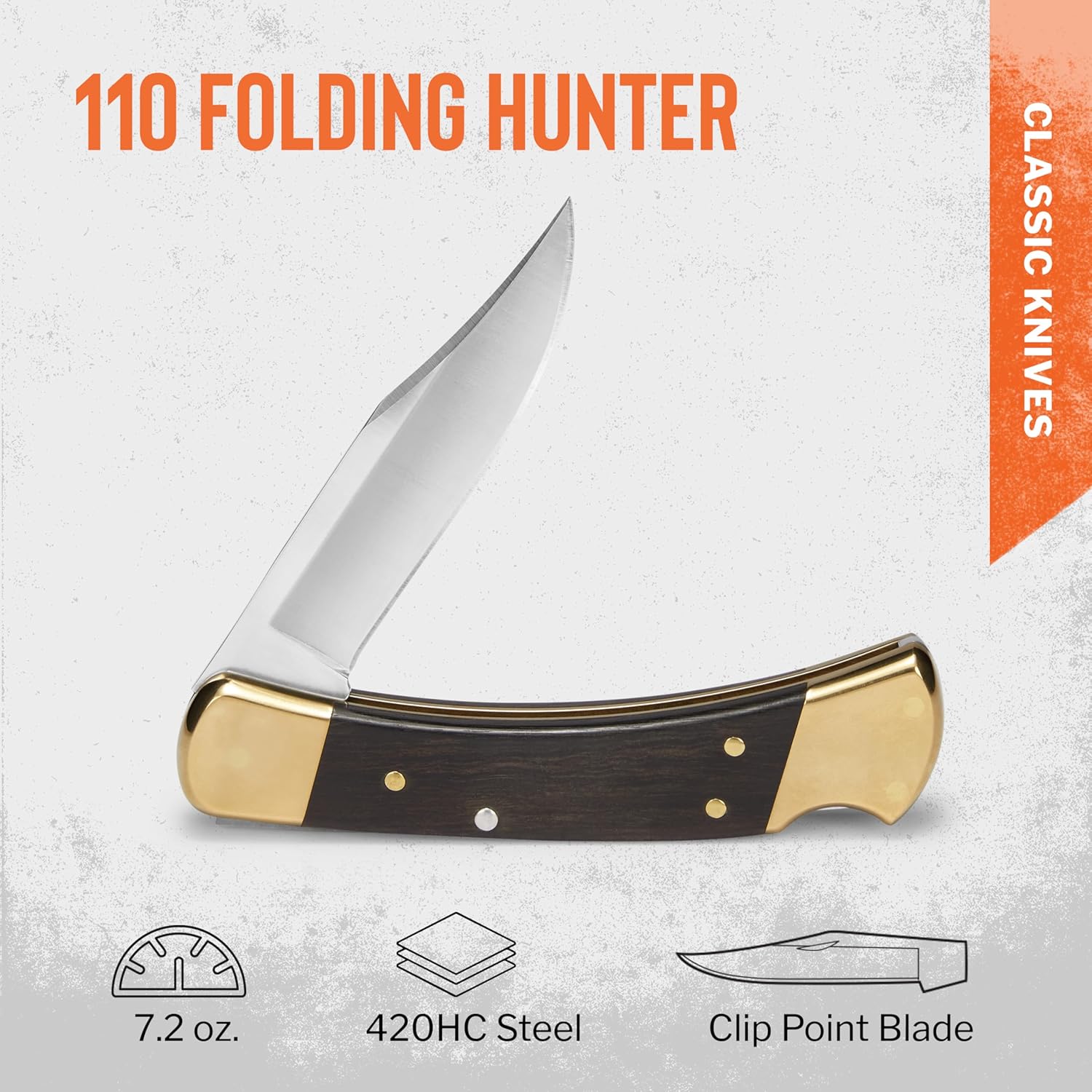
Buck Knives manufactures in Post Falls, Idaho. Their flagship folders — the 110 Folding Hunter and the slimmer 112 Ranger — have been made in the United States continuously since the 1960s. Buck’s history supplying working knives to American outdoorsmen and military personnel is a genuine part of their identity, and aggregated owner discussion on BladeForums consistently surfaces that heritage as a real purchase motivation rather than a marketing abstraction. The lifetime warranty is also real: Buck’s published policy covers defects in materials and workmanship for the life of the product.
Kershaw is headquartered in Tualatin, Oregon, and designs all its knives there. Importantly, not all Kershaw knives are American-made — many models are produced overseas. The models relevant to this comparison, particularly the Bel Air MagnaCut, are made in the USA. If domestic production matters to you, check the individual product page; Kershaw marks its US-made line clearly on packaging and on BladeHQ’s product listings.
Benchmade manufactures in Oregon City, Oregon, and maintains domestic production across almost its entire catalog. Their lifetime warranty program covers sharpening and factory service — though the terms are worth reading carefully, particularly around what constitutes warranty work versus a service fee situation.
Steel Comparison: 420HC vs. MagnaCut vs. S30V
This is where the real decision lives for anyone who’s been carrying a knife for more than a year.
420HC is a high-carbon stainless steel that gets undeserved criticism online. Buck’s proprietary heat treatment brings it to a respectable hardness level for this alloy class. Owners on BladeForums consistently note it’s easy to touch up on a leather strop or basic ceramic rod — and for camping, hunting, and everyday carry tasks that don’t push edge retention to its limits, 420HC performs above its price point. The honest limitation: buyers who’ve moved to S30V or MagnaCut describe a real and noticeable difference in how long the edge lasts between sharpenings, particularly in food prep and sustained outdoor cutting.
MagnaCut is where the conversation gets genuinely interesting. Developed by metallurgist Larrin Thomas and documented in detail by Knife Steel Nerds in their article “MagnaCut Steel Composition and Properties,” MagnaCut was engineered to combine the toughness of tool steels with the corrosion resistance of conventional stainless alloys — a combination that had historically required compromises in one direction or the other. Reviews aggregated at BladeHQ for the Kershaw Bel Air MagnaCut are unusually enthusiastic for a mid-price domestic Kershaw offering, with multiple owners noting the edge holds meaningfully longer than the 420HC knives it replaced in their rotation.
S30V (used in many Benchmade models including the Bugout) remains a respected performer. It’s a powder metallurgy stainless steel with good edge retention, reasonable toughness, and predictable sharpening behavior. KnifeInformer’s Benchmade Bugout review notes the steel is well-matched to the knife’s intended EDC role, holding a working edge through a week of normal carry tasks without demanding much maintenance attention.
Three Tiers: Budget, Mid-Range, and Premium
### Budget Tier: Buck 110 and 112 — The Heritage Case
The Buck 110 Folding Hunter and its slimmer sibling the 112 Ranger represent something increasingly rare at the under-$60 price point: American-made folders with a documented manufacturing lineage and a substantive lifetime warranty, sold without inflated MSRP games.
The 110’s back lock — a spring-loaded bar that seats into a notch at the blade’s heel — has been in continuous service for over sixty years. It is not the fastest to disengage one-handed, but aggregated BladeForums owner discussion is consistent: for hunting and camp use where ambidextrous one-hand operation isn’t a priority, the back lock is essentially bombproof. If you’re wearing gloves and dressing game, a back lock is perfectly adequate, and the simplicity means fewer mechanical failure points over decades of service.
The 112 Ranger is meaningfully slimmer and more pocket-friendly than the 110 if you’re carrying in jeans rather than a belt sheath. Outdoor Life’s coverage of best folding knives has repeatedly cited the Buck 110 family as the benchmark for American-made value at this price tier, with reviewers noting that the 420HC steel’s ease of field sharpening is a genuine advantage when you’re working without a bench setup.
For buyers whose purchase logic includes “support domestic manufacturing,” Buck earns that better than most at this price point because the production continuity is genuine and uninterrupted — not a recently repatriated line marketed as heritage.
Norton
$24.33
In stock on Amazon
Check price on Amazon### Mid-Range Tier: Kershaw Bel Air MagnaCut — The Steel Value Case
The Kershaw Bel Air MagnaCut occupies a price point in the $100–$140 range where the competition thins out considerably among US-made options. The argument for it is straightforward: MagnaCut’s combination of edge retention and corrosion resistance, documented in Knife Steel Nerds’ “MagnaCut Steel Composition and Properties,” is engineering that until recently would have cost significantly more to access in a production folder.
Kershaw’s DuraLock mechanism — a frame-lock variant where a section of the handle frame springs inward behind the blade tang — provides solid lockup and intuitive one-hand disengagement for right-handed users. BladeHQ’s aggregated reviews for the Bel Air MagnaCut note rattle-free lockup and smooth disengagement as consistent owner observations, not outliers. For one-handed field operation, it’s a meaningful step up from a back lock.
For someone who’s been carrying 420HC or an import-steel folder and wants to understand what a meaningful steel upgrade actually feels like in sustained use, the Bel Air MagnaCut is a lower-risk experiment than going straight to a $200 Benchmade. The gap between 420HC and MagnaCut in edge retention is observable and real, particularly in food prep and sustained outdoor cutting tasks where you’d otherwise reach for a strop every few hours.
Buck
$89.99
In stock on Amazon
Check price on Amazon### Premium Tier: Benchmade Bugout — The EDC Systems Case
The Benchmade Bugout’s case for its price premium rests on three things that are genuinely hard to replicate cheaper: the Axis lock’s ambidextrous disengagement, a carry weight under 2 ounces per Benchmade’s published specifications, and factory service support through the company’s lifetime warranty program.
The Axis lock uses a hardened bar that rides in a slot and engages the blade’s notch from the spine — it can be disengaged ambidextrously with a single finger, and it handles opening force as well as closing load. For left-handed users and for anyone who carries a bag or pack where the knife hand changes situationally, that ambidextrous capability is a functional advantage the DuraLock doesn’t fully replicate. KnifeInformer’s Benchmade Bugout review specifically calls out the Axis lock as the defining feature separating the Bugout from competitors at similar price points.
S30V in this application is appropriately specified. The factory service program means you can send it back for a professional edge — a meaningful benefit for buyers who don’t maintain their own sharpening equipment. Outdoor Life’s best folding knives coverage consistently places the Bugout in the premium EDC tier on the basis that the combination of lock, weight, and warranty support is hard to replicate in a single package under $200.
The honest counter-argument: if edge-retention-per-dollar is your primary metric, Knife Steel Nerds’ comparative analysis of MagnaCut against S30V suggests MagnaCut holds an edge meaningfully longer under sustained cutting load. The Bugout wins on lock mechanism, carry weight, and service infrastructure. The Bel Air MagnaCut wins on steel performance per dollar. Neither answer is wrong.

Benchmade 58-60HRC
$200.00
In stock on Amazon
Check price on AmazonFrequently Asked Questions
Is 420HC steel actually good enough for serious outdoor use or just casual EDC? For hunting, camping, and general outdoor tasks, 420HC — particularly at Buck’s heat treatment standard — is more than adequate. The steel’s real limitation is edge retention during sustained cutting work compared to higher-alloy options. If you’re processing game or doing extended whittling, you’ll sharpen more often. For camp kitchen work, opening packages, and field dressing, 420HC performs honestly at its price point. Aggregated owner discussion on BladeForums consistently notes Buck’s 420HC holds up better in practice than its spec-sheet reputation suggests among buyers coming from import-steel comparisons.
What does MagnaCut steel offer that 420HC and budget import steels don’t? MagnaCut was engineered specifically to close the gap between toughness and corrosion resistance — two properties that historically traded against each other in steel design. Per Knife Steel Nerds’ published analysis by Larrin Thomas in “MagnaCut Steel Composition and Properties,” MagnaCut achieves stainless-class corrosion resistance while maintaining edge retention and toughness closer to premium tool steels. Compared to 420HC, the edge-holding difference is meaningful and observable in sustained use. Compared to the 8Cr13MoV common in budget import folders, MagnaCut is in a different performance class entirely.
Is the Benchmade Bugout worth $200 compared to a $60 Buck? It depends on what you’re optimizing for. If ambidextrous one-hand operation, sub-2-oz carry weight, and factory service support are priorities, the Bugout earns its price. If edge-retention-per-dollar is the metric, the Kershaw Bel Air MagnaCut challenges the Bugout’s value case at a lower price. If ease of field sharpening and heritage manufacturing continuity matter more than lock sophistication, the Buck 110 remains one of the most defensible knife purchases in American manufacturing. All three are correct answers to different questions.
Does Buck’s lifetime warranty cover normal wear and edge damage? Buck’s lifetime warranty covers defects in materials and workmanship. It does not cover normal wear, misuse, or intentional damage — edge damage from hard use or improper sharpening technique falls outside the warranty scope. What the warranty does cover is manufacturing defects: a blade that chips abnormally under reasonable use, a lock that fails under normal load, handle materials that delaminate. Buck publishes the warranty terms on their official product pages, and the company has a documented reputation among BladeForums owners for reasonable interpretation of those terms.
How does the Kershaw DuraLock compare to the Benchmade Axis lock in daily carry? Both are reliable, well-executed designs. The DuraLock provides solid lockup and intuitive right-hand one-handed disengagement. The Axis lock adds genuine ambidextrous disengagement — the bar can be pushed by the index finger of either hand — and is engineered to handle opening force as well as closing load. For right-handed EDC where ambidextrous operation isn’t a factor, the practical difference in daily carry is small. For left-handed users or anyone who wants genuine ambi capability in field conditions, the Axis lock is a meaningful functional advantage that the DuraLock doesn’t fully replicate.