August 5, 2026 • Callum Reeve • 10 min reading time • Specs verified June 5, 2026
The $25–$60 No-Name D2 Fixed Blade Market: Surprising Quality or Race to the Bottom?
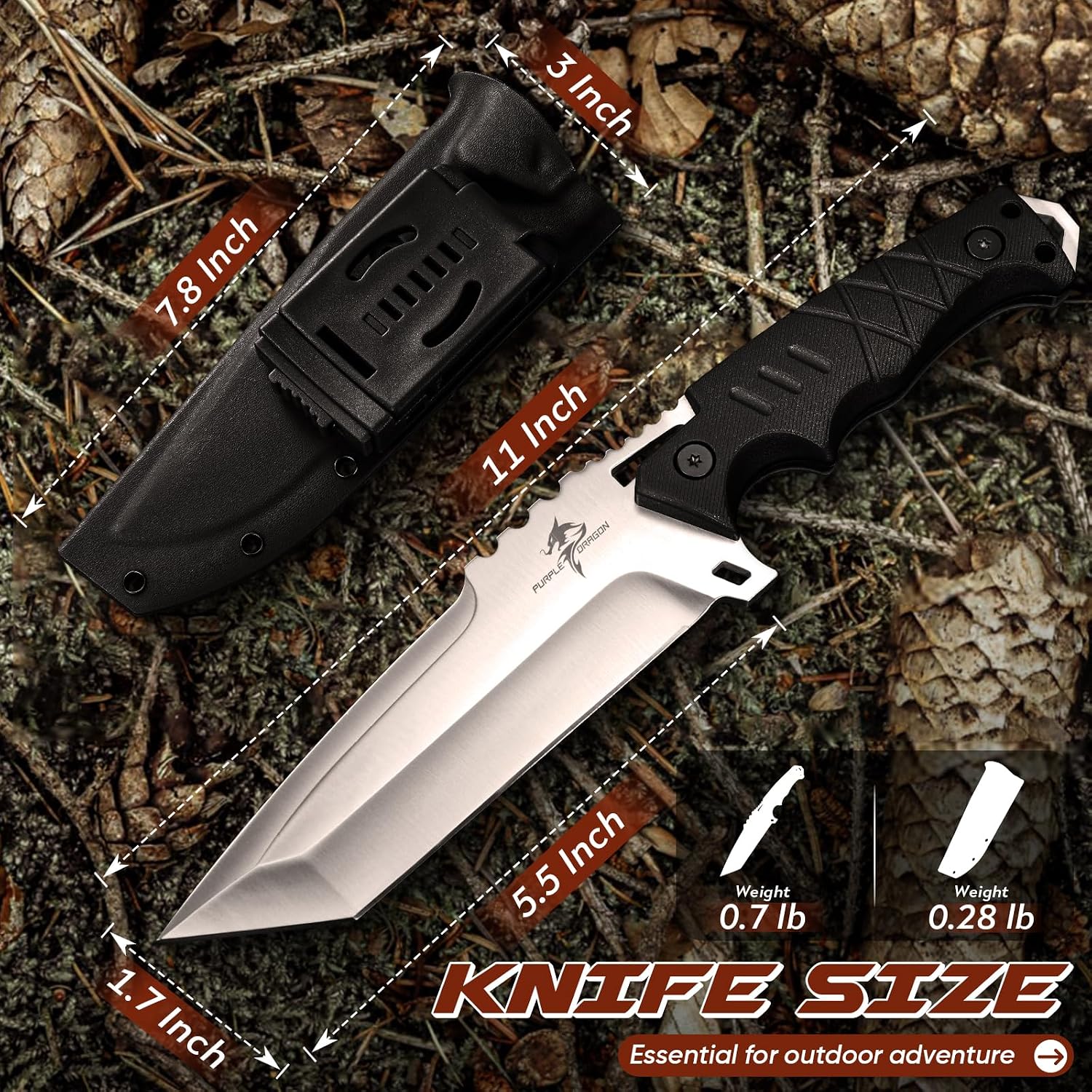
Walk into any online marketplace in 2026 and you’ll find dozens of fixed-blade knives — that means a knife with a blade that doesn’t fold, typically used for camping, hunting, or heavy outdoor tasks — all claiming to use D2 steel and all priced between $25 and $60. D2 is a tool steel (a category of steel engineered for hardness and wear resistance) that serious knife buyers have long respected: it holds an edge well, resists surface rust better than plain carbon steels, and punches above its class when heat-treated correctly. Brands like REAT, Dragon Creek, Purple Dragon, and Kizer have flooded the budget tier with blades carrying the D2 name. The honest question every intermediate buyer should ask before handing over $35 is this: are these knives genuinely good tools at a shocking value, or is “D2” on the product listing doing a lot of marketing work that the steel itself can’t back up? This guide works through that question with real owner data, lays out where the quality genuinely surprises and where it quietly fails, and gives you a clear decision frame for buying — or walking away.
| EDITOR'S PICKKizer Cabox Fixed Blade Knife | Mid-tierDragon Creek Tactical Knife Kyd… | Budget pickREAT Fixed Blade Knife with Kyd… | |
|---|---|---|---|
| Blade length | 3.36" | — | 4" |
| Sheath type | Sheath | Kydex | Kydex |
| Full tang | — | ✓ | — |
| Handle color | Green | Brown | — |
| Price | $53.10 | $29.99 | $19.49 |
| See on Amazon → | See on Amazon → | See on Amazon → |
What Owners Actually Report: The Genuine Surprise Is Real
Let’s start with the good news, because it’s real and it’s worth saying plainly: across aggregated owner reviews on multiple platforms, a consistent theme emerges that is unusual in budget knife discussions. Phrases like “could be $60 and still worth it” and “quality of an expensive knife at an affordable price” recur across REAT, Dragon Creek, Purple Dragon, and Kizer budget fixed blade listings. That doesn’t happen by accident.
What owners are responding to, specifically, is fit and finish at the grind and handle level. Reviewers across long-run BladeForums.com threads note that primary grinds (the main bevel that forms the cutting edge) on several of these knives are even and well-executed — something that typically gets cut first when a manufacturer needs to reduce cost. Handle scales (the side panels, often G10 or a G10-adjacent composite on these knives) tend to sit flush with full tangs (meaning the steel extends the full length of the handle, which matters for strength and balance). For the segment of the market where plastic-handled mystery steel is the norm, hitting these fundamentals is legitimately impressive.
The Purple Dragon in particular draws a comparison that tells you everything about how experienced buyers frame this category: multiple owners benchmark it against Cold Steel’s 6-inch SRK (Survival Rescue Knife), a respected mid-tier blade that retails in the $65–$85 range depending on variant. Getting into that conversation at half the price is meaningful. It doesn’t mean the Purple Dragon is an SRK — it means buyers who know the competitive landscape are not writing it off.
By the numbers:
| Brand | Typical street price (2026) | Steel claimed | Handle material noted by owners |
|---|---|---|---|
| REAT | $28–$38 | D2 | G10 composite |
| Dragon Creek | $30–$45 | D2 | Micarta-style / G10 |
| Purple Dragon | $25–$40 | D2 | G10 |
| Kizer (budget fixed line) | $40–$60 | D2 | G10 |
Where the Corners Actually Get Cut: Three Real Complaints Worth Taking Seriously
The positive owner sentiment is genuine, but it doesn’t tell the whole story. Three specific, recurring complaints in owner reviews represent real ergonomic and safety considerations — not nitpicks.
1. Missing jimping on the REAT thumb ramp. Jimping refers to the small serrations or grooves machined into the spine of a blade near the handle, specifically designed to give your thumb purchase when you’re applying force to a cut. One REAT reviewer flags its absence directly as a practical miss, not an aesthetic one. When you’re pushing through dense material — breaking down game, processing wood — your thumb will slide without that texture. At $30, adding jimping costs almost nothing in manufacturing; its absence suggests either a cost-cutting decision or a designer who didn’t consult field use. If tactile thumb control matters to your intended tasks, note this before buying.
2. Kizer sheath retention so tight it required dangerous draw force. A Kizer owner’s review specifically describes the included sheath’s retention being calibrated so aggressively that drawing the knife required a level of force that created a genuine safety hazard — the blade exiting unpredictably once it released. Kydex and molded polymer sheaths (rigid synthetic holster-style knife carriers) can be tuned for retention, and “more is better” is a common mistake in sheath manufacturing. At premium tiers, makers tune retention carefully. At $35, QC on the sheath is an afterthought. This is not a minor complaint: a draw that fails or fires unpredictably is a hand injury waiting to happen.
3. Dragon Creek size and weight misrepresentation. A Dragon Creek buyer explicitly notes the knife arrived substantially larger and heavier than the product photos implied. This is a structural problem with how budget Chinese fixed blades are photographed: macro lenses, neutral backgrounds, and the absence of scale references (no hand, no common object for comparison) systematically obscure real dimensions. KnifeInformer.com’s buyer guides consistently note that listed blade length doesn’t communicate blade thickness, grind height, or handle volume — all of which determine how a knife actually feels at carry weight.
The Steel Verification Problem: Honest Talk About D2 Claims
Here is the part of this category that no enthusiastic Amazon listing will tell you, and that you deserve to hear plainly.
At least one reviewer explicitly noted the absence of a D2 stamp on the blade itself. The reviewer treated the absence of a “Made in China” stamp as partial reassurance — which reflects a real gap in buyer knowledge rather than a sound verification strategy. Those are two completely different questions, and neither one confirms steel composition.
Larrin Thomas at Knife Steel Nerds has written extensively on how D2’s properties are highly sensitive to heat treatment — specifically, the hardening temperature, soak time, and tempering cycle. D2 that has been improperly heat-treated can exhibit none of D2’s characteristic edge retention and wear resistance, while still being technically composed of the right alloy. You can have genuine D2 steel that performs like a cheaper 420 stainless because the heat treatment was wrong.
At $30–$45, there is no economically viable way for a manufacturer to certify individual batches against Rockwell hardness targets and publish those results. BladehQ.com’s editorial notes on D2 heat treatment variance are consistent with what BladeForums.com long-run threads document: even among established brands, D2 performance at the budget tier is inconsistent from batch to batch.
The practical implication: when you buy a $35 “D2” fixed blade, you are buying a knife that claims D2 composition and may have been heat-treated well. You are not buying the verified metallurgical consistency you get from ESEE, Bark River, or any maker whose heat treatment process is documented and warranted. That’s not a dealbreaker for everyone — but it is a real variable you’re accepting.
A note on sharpening as a proxy test. D2 that has been properly hardened (typically 60–61 HRC on Rockwell C scale) will noticeably resist a budget sharpening stone. Owners who find their budget D2 blade sharpening almost as easily as 1095 carbon steel should treat that as a yellow flag: either the steel isn’t D2, or it wasn’t hardened to D2’s characteristic range. This is imperfect but actionable field information. The SHARPAL 168H diamond sharpening stone is referenced by owners in this price segment specifically because diamond abrasives (much harder than aluminum oxide or ceramic) are genuinely necessary to work properly heat-treated D2 efficiently. If your budget blade sharpens on a cheap drugstore stone in three passes, that tells you something.
The Decision Frame: If X, Then Y
You’re buying in this tier. Here’s how to route the decision cleanly:
If you need a beater tool where loss or damage is low-stakes: Budget D2 fixed blades are a reasonable bet. Fit and finish at the grind level genuinely outperforms the price point, and the worst-case scenario (poorly heat-treated steel, an inadequate sheath) costs you $35 and a lesson.
If you’re planning to carry daily in a working context where draw reliability matters: Factor in a sheath upgrade immediately. Budget $20–$40 for a purpose-made Kydex sheath from a small domestic maker on the secondary market — there are many producing custom-fit sheaths for popular blade profiles. The included sheath on most of these knives should be treated as a placeholder.
If you’re benchmarking against a specific mid-tier knife like the Cold Steel SRK or an ESEE-4: The Purple Dragon comparison to the SRK is a useful starting point, but understand that the SRK comes with documented steel, a known heat treatment, and a sheath system that has been field-validated over years of production. The budget D2 alternative is a gamble on those variables, not an equivalent. If those variables matter to your use case, spend the additional $40–$50 and buy the known quantity.
If you’re an intermediate buyer building intuition about steel and heat treatment: Buying one of these knives specifically to sharpen and use it is a legitimate learning exercise. The sharpening experience alone will teach you things about D2’s behavior that reading about it cannot.
Frequently Asked Questions
How can I verify that a budget knife actually uses D2 steel and not a cheaper substitute? Practically speaking, you can’t verify steel composition without laboratory spark testing or spectrographic analysis — neither of which is realistic for a $35 purchase. The best proxy is behavior at the sharpening stone (D2 at proper hardness resists conventional stones) and edge retention over time in real use. A knife that chips on moderate tasks or loses its edge after light use almost certainly isn’t properly heat-treated D2, regardless of what the listing claims.
Are Kydex sheaths on budget fixed blades safe for daily carry? Not reliably. As the Kizer owner review documents, retention calibration on budget sheaths is inconsistent. Before carrying any budget fixed blade daily, draw and re-sheath the knife at least twenty times slowly, checking for blade movement during carry and testing the draw force against what you can comfortably manage one-handed. If there’s any hesitation or surge in the draw, plan for a sheath replacement before field use.
Why do budget fixed blade photos so often misrepresent the actual knife size? Product photography for budget blades is frequently shot with macro lenses on plain backgrounds with no human hand or scale reference visible — a combination that compresses apparent size and masks real proportions. The Dragon Creek experience (knife arriving substantially larger and heavier than expected) is common in this segment. Mitigation: always check the listed blade length and overall length, and then physically measure that dimension against something in your hand before buying.
Is D2 steel harder to sharpen in the field than simpler carbon steels like 1075 or 1095? Yes, meaningfully so — when it’s properly heat-treated. 1075 and 1095 carbon steels (common in mid-tier knives from ESEE and Ontario) are forgiving steels that sharpen readily on simple stones and are easy to touch up in the field with minimal equipment. Properly hardened D2, with its high chromium and carbon content, requires diamond abrasives or quality ceramic rods for efficient sharpening. If your field kit doesn’t already include a diamond stone, add that to your budget calculation when buying a D2 blade.
What should I realistically spend on a sheath upgrade if the included one is inadequate? Budget $20–$45 for a functional upgrade. Custom Kydex sheaths sized to specific blade profiles are widely available from small domestic makers through knife-community marketplaces. Leather sheaths in this price range are available but variable in quality. Purpose-made nylon sheaths (MOLLE-compatible designs from makers like Condor Tool & Knife) land in the $15–$25 range and represent a significant safety upgrade over most included budget sheaths. Spending $40 total on a $35 knife is genuinely reasonable if the blade geometry proved to be solid — you’re essentially assembling a working kit at $75 that performs respectably.