September 1, 2026 • Callum Reeve • 10 min reading time • Specs verified June 5, 2026
No-Name D2 Fixed Blades vs. Named Brands: Purple Dragon, Dragon Creek, and When Budget Wins
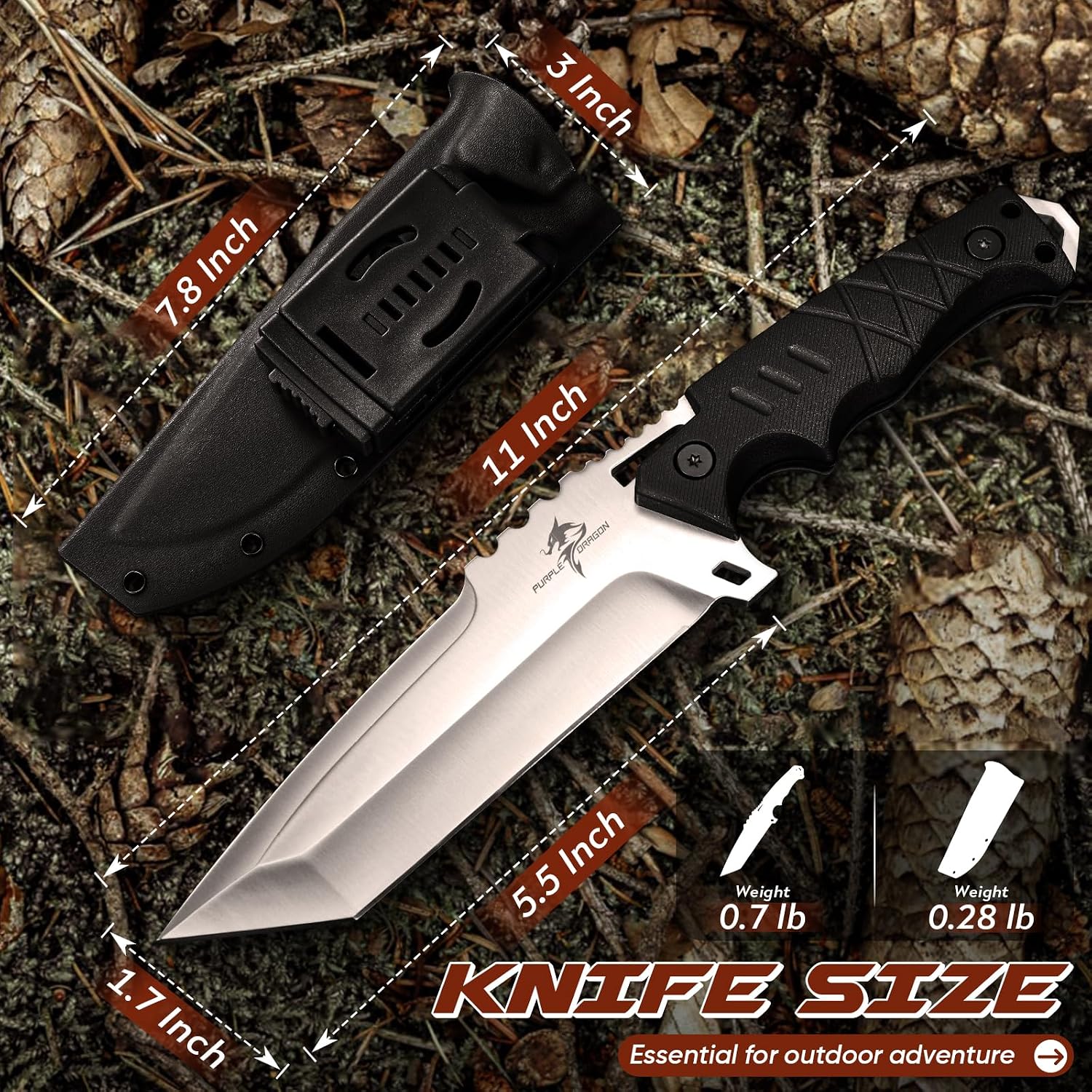
If you’ve ever scrolled through a knife listing and seen “D2 steel” advertised on a $28 fixed blade with a dragon logo and a Kydex sheath included, you’ve been exactly where this article starts. D2 is a high-carbon, high-chromium tool steel — the kind used in industrial cutting dies — that sits in an appealing middle ground: harder and more wear-resistant than the cheap stainless you’d find on a gas-station blade, but less brittle than full-on high-speed steels. Named brands like ESEE, Benchmade, and Bark River have built real reputations on it and on similar alloys. The question this guide answers is specific: when a no-name brand stamps “D2” on a $25–$40 fixed blade, is that claim credible, what are the real risks, and is there a scenario where budget actually wins over spending $90–$100 on an ESEE?
Spoiler: sometimes budget wins. But the decision depends on what you’re actually buying — and the signals hiding in buyer reviews are more telling than the spec sheet.
| EDITOR'S PICKESEE PR4 Fixed Blade Survival K… | Mid-tierKizer Cabox Fixed Blade Knife | Budget pickREAT Fixed Blade Knife with Kyd… | |
|---|---|---|---|
| Blade steel | — | D2 | D2 |
| Blade length | — | 3.36" | 4" |
| Handle material | — | G10 | G10 |
| Sheath type | Dark tan sheath | Sheath | Kydex |
| Price | $130.35 | $53.10 | $19.49 |
| See on Amazon → | See on Amazon → | See on Amazon → |
The Steel Authenticity Problem Is Real — And Buyers Are Noticing
Let’s name the uncomfortable thing first. Across aggregated owner reviews of no-name D2 fixed blades — particularly the REAT D2 survival knife and similar SKUs from Purple Dragon — a recurring observation surfaces: buyers notice the blade lacks a “D2” stamp, which creates doubt, but also notice the absence of a “China” country-of-origin stamp, which some read as a positive signal. That’s worth unpacking, because it reveals a genuine heuristic gap.
The absence of a country-of-origin mark on a knife sold in the U.S. is not actually a green flag. U.S. Customs regulations require country-of-origin marking on imported goods, and an unmarked blade is more likely a compliance miss than evidence of domestic manufacture. The absence of a steel-grade stamp simply means there’s no verifiable claim at all.
Per Knife Steel Nerds’ coverage of D2 metallurgy, D2 has a specific composition window: roughly 1.4–1.6% carbon, 11–13% chromium, and specific manganese and vanadium ratios. When heat-treated correctly — typically hardened to 58–62 HRC — it delivers excellent edge retention and decent corrosion resistance for a tool steel. When it’s not D2 at all, or when D2 is heat-treated carelessly, you get a blade that looks right but behaves like a much cheaper alloy. BladeHQ’s steel reference guide notes that the difference between well-treated D2 and poorly treated D2 can be as dramatic as a full letter grade in edge retention.
The honest buyer signal: If a budget D2 blade holds a factory edge well through moderate camp tasks and sharpens predictably with a ceramic rod or diamond stone, you’re probably getting something close to real D2 or a comparable tool steel. If the edge rolls after light food prep or chips on small bone contact, the steel claim is probably inflated — or the heat treat was sloppy.
What Purple Dragon and Dragon Creek Actually Deliver (Per Owners)
Both Purple Dragon and Dragon Creek occupy the $25–$50 fixed blade space and sell primarily through Amazon. Reviewer patterns across both brands share a consistent surprise: these knives are larger than they photograph.
This matters practically. Dragon Creek’s hunter/skinner variant photographs like a compact 4-inch blade. Owners consistently report a true overall length closer to 9–9.5 inches with a 4.5-inch blade — which is a meaningfully different knife for pack weight, sheath placement, and task suitability. Purple Dragon’s full-tang survival fixed blade shows a similar pattern. Photos flatten the scale. If you’re buying one of these as a compact EDC or fishing knife, check the listed measurements in millimeters and compare against a known reference blade you own.
By the numbers — what owners are reporting on Purple Dragon and Dragon Creek:
| Spec | Listed | Owner-reported actual |
|---|---|---|
| Purple Dragon survival blade overall | ~8.5 in | 9.0–9.3 in |
| Dragon Creek hunter overall | ~8.75 in | 9.3–9.6 in |
| Sheath fit | ”secure” | Mixed — some play, some over-retention |
| Steel stamp | D2 claimed | Often absent on physical blade |
Both brands get consistent praise for out-of-box sharpness and handle ergonomics at the price. The micarta-style or G10 handles (note: budget versions are often textured FRN or a rubber composite, not true micarta) get credit for grip in wet conditions. The weak points: sheath quality and steel verification.
The Kydex Sheath Problem Is a Safety Issue, Not Just an Annoyance
This gets its own section because Kizer’s Cabox — a step-up budget fixed blade often compared against Purple Dragon and Dragon Creek — generated a documented owner injury from a sheath with overly aggressive retention. The reviewer explicitly reported cutting themselves during the draw stroke because the blade hung up on an overtight Kydex welt and released unpredictably. That’s not a “minor complaint.” That’s a preventable injury.
At the budget tier, Kydex sheath quality is almost never matched to the blade’s actual geometry. Sheaths are often made to approximate fits, which creates two failure modes:
- Too loose: The blade migrates or falls free under inversion. This is annoying in camp and dangerous during a fall or scramble.
- Too tight: Retention requires force to overcome, and when the blade releases, it does so suddenly — directly toward your draw hand or forearm.
When evaluating any budget fixed blade’s sheath, owners on BladeForums consistently recommend:
- Test draw with the sheath empty first — feel for even resistance across the full stroke
- Look for a retention adjustment mechanism (a tightening screw on quality Kydex) — almost none exist at this price tier
- If retention feels sticky anywhere in the draw arc, don’t use it on your person until you’ve sanded or heat-adjusted the sheath — or replaced it entirely
A $12–$20 aftermarket Kydex sheath from a known maker, or a leather sheath from a domestic craftsperson, can transform an otherwise solid budget blade into a genuinely safe carry.
The ESEE Tradeoff: Why “Overpriced” Is the Wrong Frame
KnifeInformer’s full review of the ESEE Izula-II is unusually honest about the sticker tension: it “feels a little overpriced for a small fixed blade” at the $90–$100 price point when no-name alternatives appear to offer similar steel and similar geometry for a third of the cost. That tension is real. But the reviewers who work through it land on a specific justification: the ESEE lifetime warranty, which covers the blade unconditionally — including if you break it doing something stupid.
That’s not a small thing. Here’s the actual decision frame:
If you’re buying one fixed blade for the next 10 years, the ESEE makes sense. The 1095 high-carbon steel (not D2, but an excellent and well-understood alloy) is heat-treated in-house, documented, and consistent. The handle scales are interchangeable. The sheath system — sold separately — is a known, adjustable MOLLE-compatible system with third-party accessory support. If the blade cracks or snaps, ESEE replaces it. No questions. No receipt. The per-year cost math over a decade closes the gap with the $30 alternative entirely.
If you’re outfitting a group, buying a gift, or need a task-specific knife you’ll abuse without guilt, the budget tier wins. Three Dragon Creek knives for the cost of one Izula-II is a defensible call for a guide outfitting clients, or for a camp kit that will get loaned out.
One more honest differentiator: the Bloodline 1095 fixed blade — a budget-tier knife that sells in gift-oriented packaging — consistently gets reviewer credit for presentation quality that makes it genuinely gift-worthy out of the box. For buyers who need a knife that looks considered as a gift, that packaging signal matters in a segment where most budget blades arrive in a poly bag.
Frequently Asked Questions
How can I tell if a cheap knife actually uses real D2 steel and not a lesser alloy?
You can’t verify it at home without a spectrometer. What you can do: test edge retention against a known benchmark. Genuine D2 at proper hardness (58–62 HRC) will hold an edge through repeated cardboard cuts or wood-shaving tasks noticeably better than a 420 stainless or 8Cr13MoV blade. If a claimed D2 blade dulls as quickly as a budget stainless, treat the steel claim skeptically. Knife Steel Nerds notes that D2 is also more difficult to sharpen than softer stainless, so paradoxically, a blade that sharpens too easily on a ceramic rod may not be D2 at all.
Are no-name D2 fixed blades safe to baton with or use for heavy camp tasks?
Batoning — driving a blade through wood with a baton — is high-stress on the blade spine and tang. Full-tang designs (where the steel runs the full length of the handle) are safer for batoning than partial-tang or rat-tail-tang designs. Budget blades often claim full-tang construction but use thin, skeletonized tangs that reduce weight and material cost. Owner reports on BladeForums suggest light batoning through softwood is generally fine, but sustained hardwood batoning on no-name blades produces tip snap or handle separation at higher rates than named brands. Use a dedicated camp axe or hatchet for serious wood processing.
What should I look for in a Kydex sheath to avoid retention that is dangerously too tight or too loose?
Look for even resistance across the full draw stroke — no sticky points, no sudden release. An audible click at full seat means positive retention. Test it by holding the sheath inverted and shaking; the blade should stay seated. If retention is adjustable via a screw, confirm you can tune it. For budget sheaths without adjustment, a light sanding on the inside welt or careful heat-reshaping with a heat gun (without the blade inside) can open up a too-tight welt.
Is it worth spending $90–$100 on an ESEE when these $30 knives seem similar in reviews?
Depends on your use case. If you want one knife for years of real use with a warranty backstop, ESEE wins on total cost of ownership. If you’re buying for occasional use, outfitting others, or gift-giving, the budget tier is defensible. The knives are not actually “similar” — the steel traceability, sheath system, and warranty are genuinely different — but for light camp and outdoor tasks, a budget D2 blade will perform adequately in the near term.
Do budget fixed blades from Chinese manufacturers hold a factory edge as long as named brands?
Across aggregated owner reviews, the honest answer is: often yes, initially, and then no over time. Budget blades frequently arrive sharp because they’re factory-stropped before packaging. After the first resharpening — which requires matching the factory edge angle — many owners report they can’t replicate the original edge without better technique or better stones. Named brands publish their edge angles (ESEE uses approximately 20 degrees per side) and maintain consistency across production. Budget blades often don’t disclose edge geometry, making consistent resharpening harder. If you invest in learning to sharpen freehand, the gap narrows. If you rely on a pull-through sharpener, it widens.
The Decision Rule
If you’re buying for yourself and expect the blade to see real use over multiple seasons: spend the extra money on a named brand with documented steel, a real warranty, and a known sheath system. The ESEE Izula-II is the honest recommendation at the $90–$100 tier for a small fixed blade. For a larger camp knife in that budget, Bark River and ESEE’s Camp Lore line are worth the stretch.
If you’re buying for group use, gift-giving, or as a “beater” blade you won’t stress over: Purple Dragon and Dragon Creek deliver genuine value at $25–$40. Go in with clear eyes about the steel claim, swap the sheath if retention feels off, and don’t baton hardwood with it.
The D2 stamp on a $28 knife is a starting point for investigation, not a guarantee. Treat it that way, and you’ll spend your money well.