August 10, 2026 • Callum Reeve • 11 min reading time • Specs verified June 5, 2026
CIVIVI vs. Spyderco in the $45–$120 Window: How Much Knife Does the Price Gap Buy?

If you’ve been knife shopping in the $45–$120 range lately, you’ve almost certainly run into two brands that dominate the conversation: CIVIVI and Spyderco. CIVIVI (pronounced “see-vee-vee”) is a sub-brand of WE Knife Co., a Chinese manufacturer known for precision CNC machining. Spyderco is an American company that has been making folding knives — knives with blades that fold into the handle for safe carry — since 1978. A folding knife in this price range is what most people mean when they say “everyday carry” or EDC: something you clip in a pocket, use for boxes, food, cord, and light tasks, and carry without thinking about it. The question this article answers is direct: at the same price, does one brand give you meaningfully more knife? And when the price gap runs $40–$60, does it matter?
The short answer is nuanced in exactly the ways you’d expect after a few months of serious knife research. Let’s get into it.
| EDITOR'S PICKCIVIVI Elementum II Pocket Fold… | Mid-tierSpyderco Tenacious Folding Pock… | Budget pickSpyderco Para Military 2 Foldin… | |
|---|---|---|---|
| Blade Length | 2.96 in | 3.3 in | 3.4 in |
| Blade Steel | Damascus | 8Cr13MoV | CPM S45VN |
| Handle Material | — | FRN | G-10 |
| Deep Carry Clip | ✓ | — | — |
| Price | $82.45 | $59.13 | |
| See on Amazon → | See on Amazon → | See on Amazon → |
The Steel Story: D2 vs. VG-10 and What the Numbers Actually Mean
Steel is where this comparison gets genuinely interesting, and where marketing outpaces reality on both sides.
CIVIVI’s D2 at the Entry Tier
CIVIVI leans heavily on D2 tool steel at its lower price points (roughly $45–$75). D2 is a high-carbon, high-chromium steel — technically “semi-stainless,” sitting between carbon steel and true stainless. It takes a fine edge, holds it respectably, and tolerates hard use. The knock on D2 has traditionally been inconsistency: poorly heat-treated D2 is mediocre; well-treated D2 is genuinely capable.
BladeHQ’s editorial notes and customer review aggregation for the CIVIVI Mini Praxis include assessments from professional sharpeners who handle hundreds of knives annually across every price bracket. The consistent verdict: CIVIVI’s D2 heat treatment is high-tier for the category, not a cost-cut version of the alloy. Published analysis by Knife Steel Nerds — in their reference document on D2 steel composition and heat treatment — confirms that heat treatment quality drives real-world performance more than the alloy specification alone. That makes WE Knife Co.’s manufacturing consistency the actual differentiator, not just the “D2” label on the box.
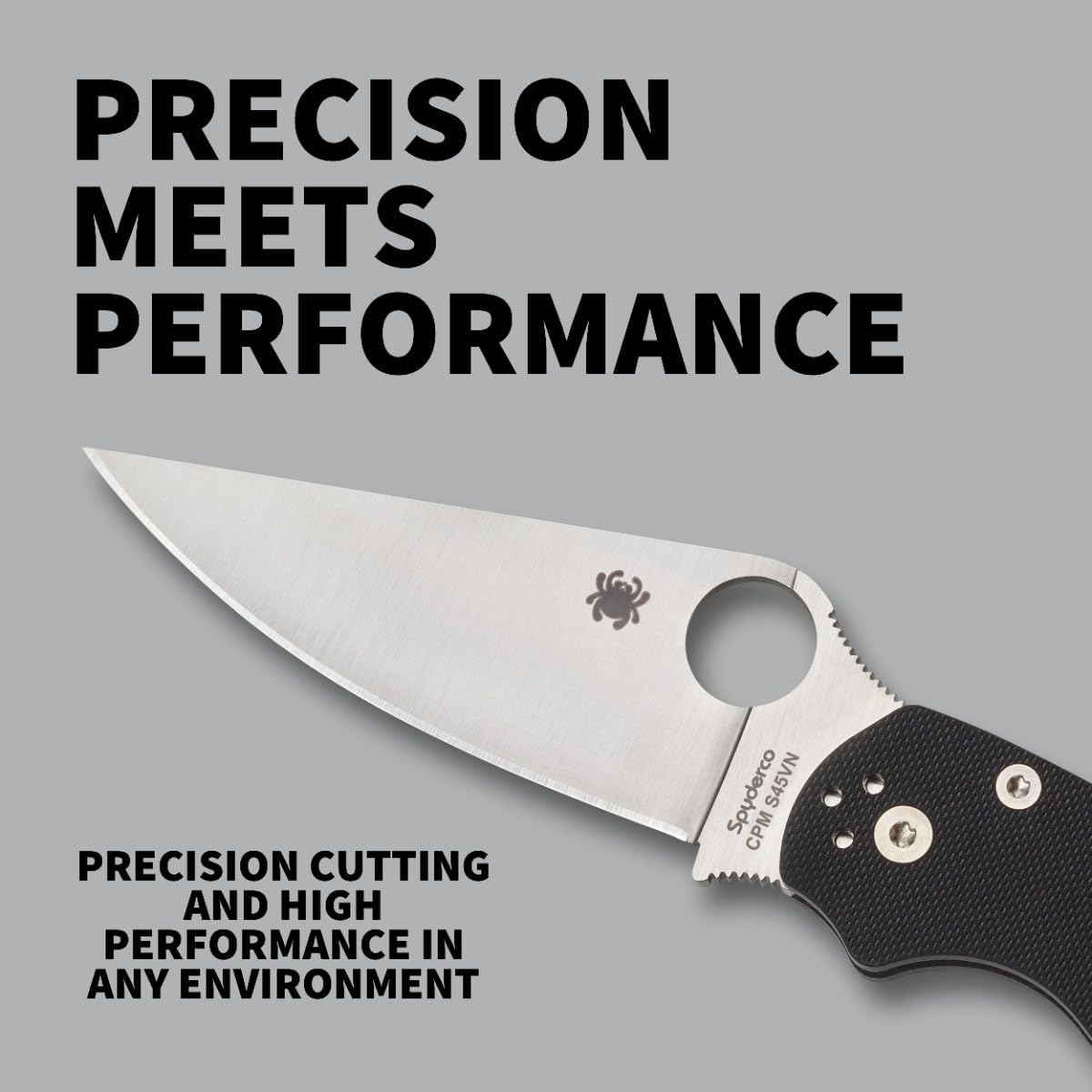
Spyderco
In stock on Amazon
Check price on AmazonCIVIVI’s Mid-Tier Step-Up and Spyderco’s VG-10
At the $80–$120 tier, CIVIVI steps up to S35VN (a premium stainless made by Crucible Industries, designed specifically for knife blades) and 20CV (a high-end stainless with excellent edge retention and corrosion resistance). At that point the steel conversation tips toward CIVIVI on pure specification — you’re getting alloys that Spyderco charges more to include in comparable models.
Spyderco’s workhorse steel in this window is VG-10, a Japanese stainless that has been reliable and predictable for decades. It isn’t exciting in 2026, but it isn’t bad: it sharpens easily, resists corrosion, and performs consistently. Where Spyderco earns its premium is in blade geometry — the cross-sectional shape of the blade — not always the alloy. The Paramilitary 2 in particular features a hollow grind (the blade faces are ground concave on each side, producing a thin, aggressive slicing edge) that reviewers at KnifeInformer.com, in their Spyderco Paramilitary 2 review, consistently describe as one of the most refined cutting geometries available in production knives regardless of price tier.
Comparison at a glance:
| Model | Street Price (May 2026) | Steel | Lock Type | Made In |
|---|---|---|---|---|
| CIVIVI Elementum II | ~$50 | D2 | Liner lock | China |
| CIVIVI Brazen | ~$75 | D2 | Liner lock | China |
| Spyderco Tenacious | ~$55 | 8Cr13MoV | Liner lock | China |
| Spyderco Endura 4 | ~$95 | VG-10 | Back lock | Japan |
| Spyderco Paramilitary 2 | ~$180 | S30V | Compression lock | USA |
| Kershaw Bel Air | ~$110 | MagnaCut | Liner lock | USA |
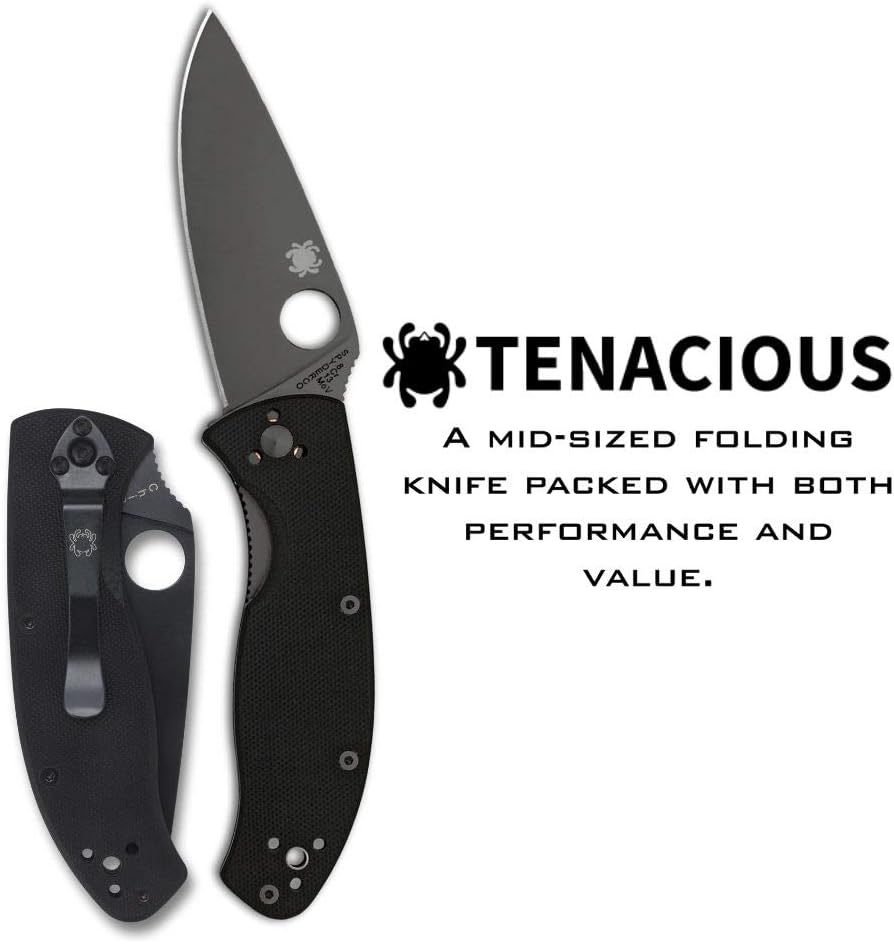
Spyderco
$59.13
In stock on Amazon
Check price on AmazonPremium Steel at Mid-Range Money: The Kershaw Disruption
Any honest version of this comparison has to include the Kershaw Bel Air, because it breaks the pricing logic of the whole category.
MagnaCut is a steel developed by metallurgist Larrin Thomas — whose published research appears in Knife Steel Nerds’ online reference database — and manufactured by Crucible Industries. It combines the edge retention of high-carbide tool steels with corrosion resistance that exceeds most stainless alloys on the market. It is legitimately premium steel, the kind Spyderco reserves for knives at the $200-plus tier. The Bel Air puts it in a US-made folder at roughly $110 street price.
Gear Junkie’s first-look review of the Kershaw Bel Air MagnaCut compared it favorably against Benchmade models not just on value but on its own terms. The lock is a conventional liner lock and the design is not as ergonomically refined as a PM2, but if steel performance is your primary metric the Bel Air forces a real question: why pay more for VG-10 in a Spyderco Endura when you can have MagnaCut in an American-made Kershaw for comparable money? The answer, honestly, involves blade geometry and lock engineering — the Endura’s back lock and Spyderco’s decades of ergonomic refinement are real differentiators. But the Bel Air narrows the gap enough to belong in any honest mid-range comparison.
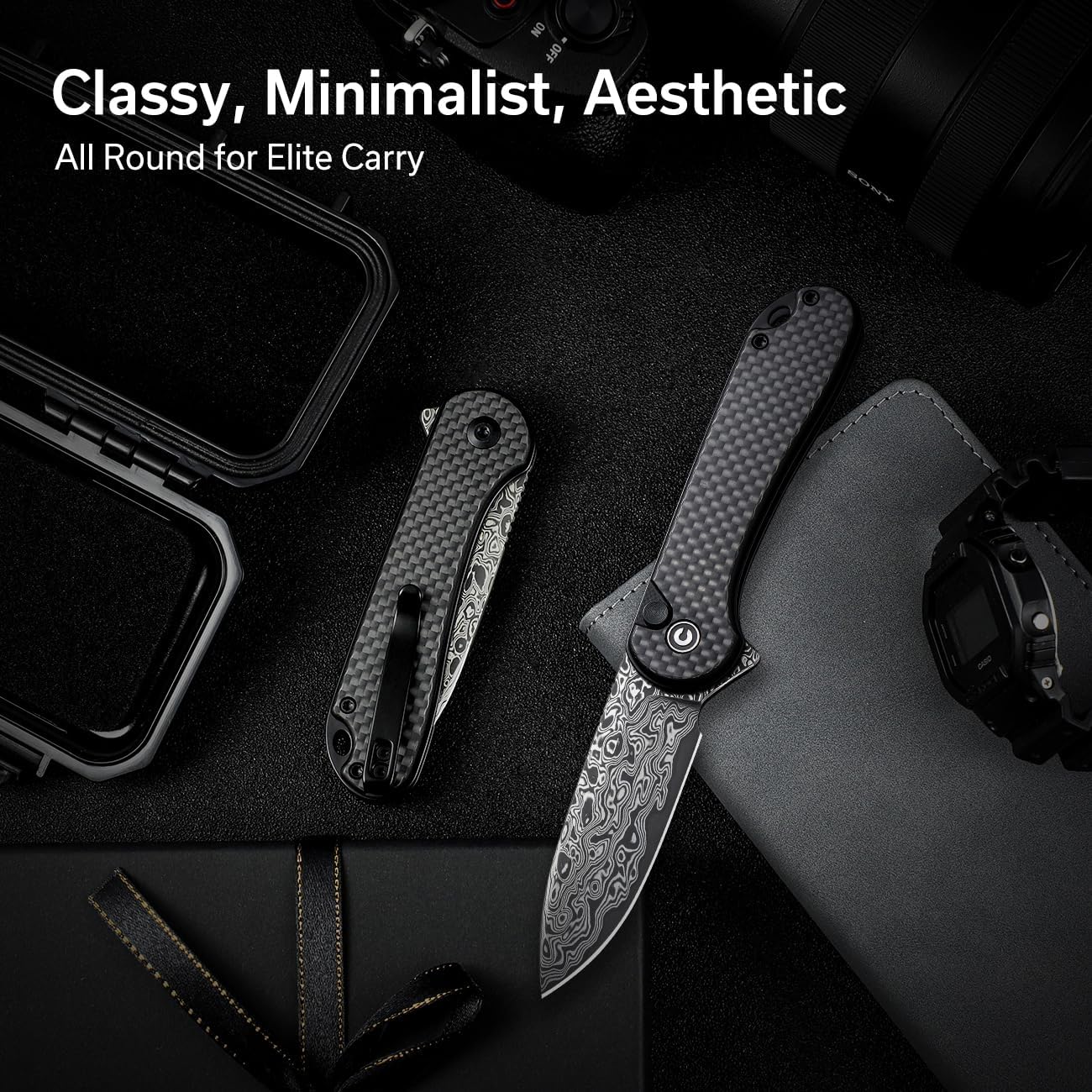
CIVIVI
$82.45
In stock on Amazon
Check price on AmazonThe Lock Question: Liner Locks, Compression Locks, and Long-Term Reliability
Most CIVIVI folders in this price window use a liner lock — a thin strip of metal inside the handle that clicks into place behind the blade’s tang when it opens, preventing the blade from closing onto your fingers. Liner locks are simple, well-understood, and easy to maintain. Their structural weakness is that lateral pressure — force applied sideways against the blade rather than along the cutting axis — works against the lock rather than reinforcing it, and a worn liner lock on a heavily used knife can develop noticeable play.
Spyderco’s compression lock, found on the Paramilitary 2 and a handful of other models, works on a different geometry: a portion of the liner locks above the blade’s tang rather than behind it, which means closing pressure reinforces the lock mechanism rather than stressing it. The practical benefit is a lock that owners consistently report feels more secure under hard use and ages more gracefully over years of daily carry. The closing motion is also ambidextrous-accessible, which matters to a meaningful portion of EDC users.
BladeForums.com long-term owner threads on the Spyderco compression lock — including testimony from users who describe themselves as skeptical before their first PM2 purchase — consistently isolate two specific reasons the knife converts buyers: the compression lock geometry and the hollow-ground blade profile. Not the brand. Not the spider logo. Those two engineering choices, specifically. That’s a useful data point because it clarifies what Spyderco actually does differently, rather than trading on reputation.
The honest framing for most buyers: for light to moderate EDC — packages, food prep, occasional cord work — a quality liner lock is perfectly adequate and you will likely never notice the difference. For heavier, more frequent use or real lateral stress on the blade, the compression lock’s geometry is a meaningful engineering advantage.
The CIVIVI Entry Phenomenon: When the Budget Knife Becomes the Preference
One of the most consistent patterns in CIVIVI owner reports — aggregated across BladeForums.com threads and BladeHQ customer review data — is buyers who entered the CIVIVI ecosystem as a deliberate cost-saving move and ended up preferring the CIVIVI over their more expensive primary knife.
The clearest example type: an owner who buys a CIVIVI Brazen specifically to avoid scratching a Benchmade during travel. The Brazen is a mid-sized folder with a drop-point blade (a blade shape where the spine curves downward to meet the edge, creating a controllable, general-purpose tip) and a nicely milled handle. The buyer’s expectation is that it will feel noticeably worse. The long-term verdict in multiple BladeForums.com threads: the Brazen’s fit, finish, action, and ergonomics compete at a level that wasn’t expected from a $75 knife. In several documented cases the Brazen displaced the Benchmade as the daily carrier.
This is not universal — Benchmade’s Axis lock and American manufacturing carry genuine value for plenty of buyers — but it is common enough to constitute a pattern rather than an outlier. WE Knife Co.’s CNC machining tolerances are tight, and CIVIVI inherits that directly. Handle materials — G10 (a fiberglass composite used for knife handles because it is grippy, light, and impervious to moisture), micarta (a canvas or linen composite with a warmer, slightly textured feel), and carbon fiber on higher-end models — are cut and finished with more care than the price suggests.
The CIVIVI Elementum II warrants a separate mention. Reviews across BladeHQ’s platform note that buyers frequently chose it for aesthetics first — it has a clean, minimal silhouette — and validated the specifications afterward. That sequence is a real insight into how buyers shop this tier: feel and appearance close the transaction, and the D2 steel and smooth deployment action justify it in retrospect. It does not feel cheap next to a Benchmade Bugout. Whether it feels equivalent depends on what you value: the Bugout’s Axis lock is more mechanically versatile, but the Elementum II’s cleaner lines and lower price make it genuinely competitive on the factors most daily users actually notice.
The Decision Framework: If X, Then Y
Here is where the analysis lands after aggregating owner testimony, published specifications, and professional review sources across this category.
If you are buying your first quality EDC folder and want maximum knife per dollar: Start with CIVIVI. The Elementum II at approximately $50, or the Brazen at approximately $75, will outperform their price points on fit, finish, and steel — especially compared against Spyderco’s China-made budget line. The D2 at this tier is genuinely capable when heat-treated well, and WE Knife Co.’s manufacturing makes the difference.
If you do daily hard use and lock reliability is a priority: The Spyderco PM2’s compression lock justifies its premium over any liner-lock alternative, CIVIVI or otherwise. At approximately $180 it sits above this article’s stated price window, but if you are considering stretching your budget, that is the model where the engineering earns it.
If premium steel at mid-range money is your optimization target: The Kershaw Bel Air MagnaCut at approximately $110 is the current market disruptor. It is not as ergonomically refined as a PM2, but the steel quality is legitimately premium and the US manufacturing is real.
If the Spyderco blade geometry matters but you cannot justify PM2 pricing: The Endura 4 is the answer. VG-10 is not the newest steel available, but the blade profile and back lock are time-tested, and the ergonomics are distinctly better than budget-tier alternatives.
Frequently Asked Questions
Is CIVIVI D2 steel as good as the marketing claims, or is it a budget-grade alloy? The D2 CIVIVI uses is consistently heat-treated well — better than D2 from lesser-controlled manufacturers. BladeHQ’s editorial notes and professional sharpener assessments for the Mini Praxis call it high-tier for the category. Knife Steel Nerds’ published analysis of D2 composition confirms that heat treatment quality matters more than the alloy label, and WE Knife Co.’s manufacturing controls are a real differentiator at this price point.
At what price does it make more sense to buy a Spyderco than a CIVIVI? At $80 and below, CIVIVI consistently wins on value. Above $100, Spyderco’s ergonomic refinement and lock engineering — particularly the compression lock on the PM2 — start to justify the gap. When CIVIVI is offering S35VN or 20CV at a given price point, re-run the comparison: the steel specification often tips back toward CIVIVI.
Does the CIVIVI Elementum II feel cheap compared to a Benchmade or Spyderco? Not according to consistent owner reports. Fit and finish are noticeably better than the price implies. It will not feel identical to a Benchmade Bugout — the Axis lock and US manufacturing carry a different character — but “cheap” is not an accurate description of the Elementum II’s in-hand experience.
Is the Kershaw Bel Air MagnaCut a genuine premium knife or a budget knife with premium steel? Somewhere between — and that is not a dodge. The steel is genuinely premium; MagnaCut is among the best production knife steels available in 2026, as documented in Knife Steel Nerds’ published research on the alloy. The design and lock are conventional rather than refined. It is a value-priced platform running premium material, which makes it an excellent purchase for steel-focused buyers but not a fully premium package in ergonomics or lock engineering.
How does the Spyderco compression lock compare to CIVIVI’s liner lock for long-term reliability? The compression lock’s geometry means closing force reinforces rather than stresses the mechanism, which translates to better durability under heavy use over time. Owner testimony aggregated on BladeForums.com consistently supports this. For light EDC use, a quality liner lock — including CIVIVI’s — is adequate indefinitely. For heavy daily use with real lateral stress on the blade, the compression lock ages more gracefully.