August 11, 2026 • Callum Reeve • 12 min reading time • Specs verified June 5, 2026
Full-Tang Carbon Steel Fixed Blades at $40–$120: BPS, ESEE, TOPS, and KA-BAR Kephart Side by Side
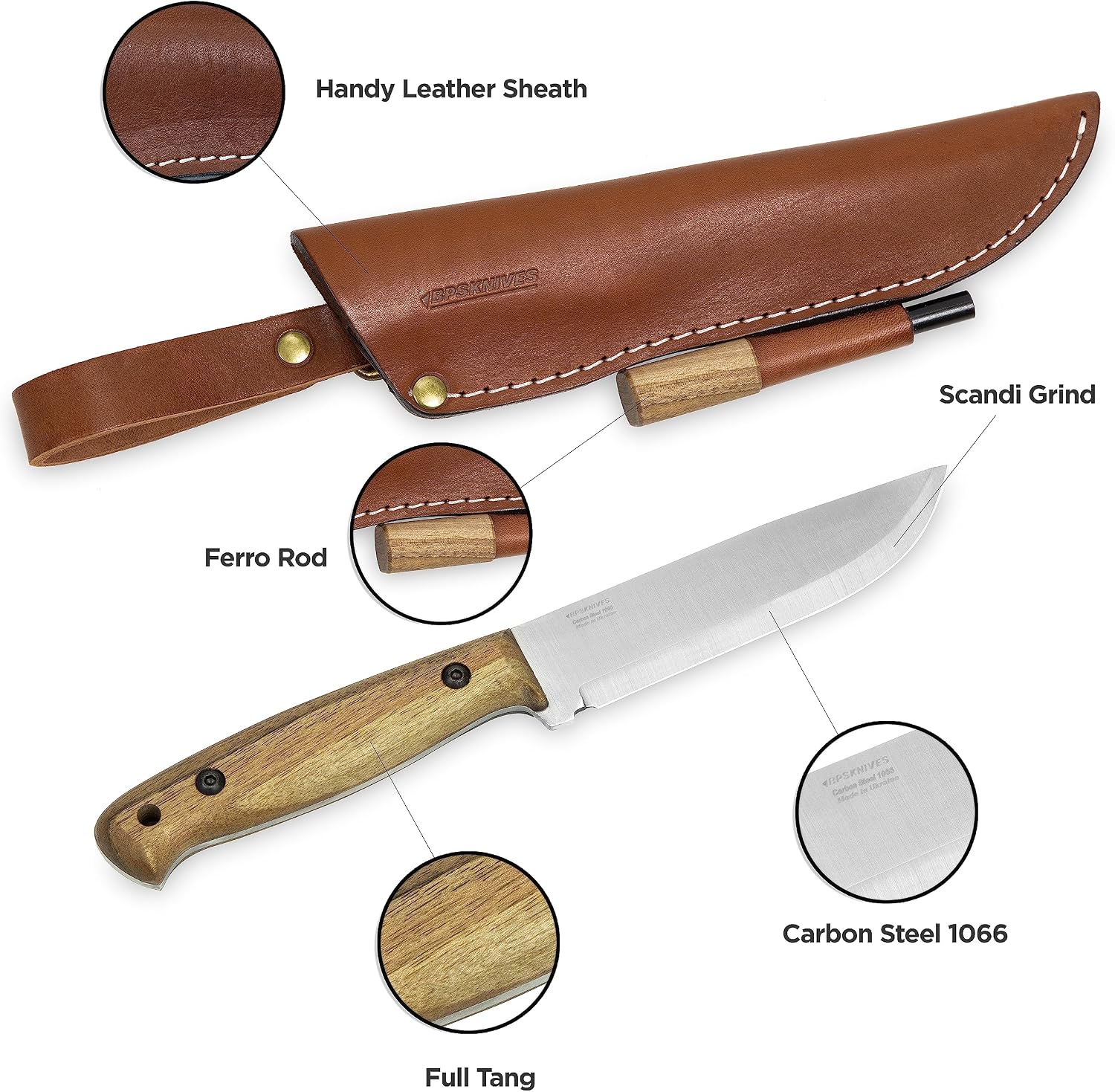
A fixed blade is simply a knife with no folding mechanism — the blade and the handle are one rigid piece, which makes it stronger and easier to clean than a folding pocket knife. Full tang means the steel runs the entire length of the handle, not just partway; that construction is the gold standard for hard use because it virtually eliminates the risk of the blade separating from the handle under stress. Carbon steel (as opposed to stainless) refers to alloys — primarily 1095 and similar high-carbon grades — that sharpen to a razor edge quickly and forgive a lot of field sharpening mistakes, though they do require a wipe-down after use to prevent rust. If you are somewhere between “I want a reliable camp knife” and “I want to understand why some people spend serious money on a fixed blade,” this article is the on-ramp. We looked at four knives — the BPS Adventurer, the ESEE PR4, the TOPS BOB Fieldcraft, and the KA-BAR Kephart — that all live in the $40–$120 window and all use full-tang carbon steel construction. Each one makes a different argument for your dollar.
| EDITOR'S PICKTops Knives Fieldcraft by Broth… | Mid-tierESEE 4P Survival Knife - Field… | Budget pickBloodline Fixed Blade Survival… | |
|---|---|---|---|
| Steel | — | — | 1095 carbon |
| Handle | Tan Micarta | — | G10 |
| Sheath | Kydex | Polymer | Kydex |
| Ferro rod | — | — | ✓ |
| Clip plate | — | ✓ | — |
| Edge | — | Plain | — |
| Price | $181.66 | $109.99 | $91.35 |
| See on Amazon → | See on Amazon → | See on Amazon → |
The Four Knives, Plain English
BPS Adventurer — Best Total Package at the Floor of the Range
The BPS Adventurer sits at the low end of this price band and consistently surprises buyers who expect bargain-tier results. The steel is 1095 high carbon, the grind is a flat scandi-style that makes field sharpening straightforward, and the handle is a textured polymer that holds up to wet conditions. What makes the Adventurer’s reputation is not only the blade — it is the leather sheath. Multiple owner reviews aggregated on Blade Forums, the community review forum at bladeforums.com, singled this out without prompting; one buyer noted the leather sheath exceeded the quality of sheaths on knives costing two to three times more. That is a specific, recurring claim across independent reviews, not a marketing line, and it matters because a bad sheath is one of the most common reasons an otherwise solid knife gets abandoned.
Gear Junkie’s budget fixed blade roundup coverage similarly flags sheath quality as a real differentiator in this price tier, noting that buyers frequently underweight it until they have lived with a poor one. For buyers at the bottom of this range, the BPS Adventurer’s sheath quality alone elevates the ownership experience in a way that pure blade metrics don’t capture.
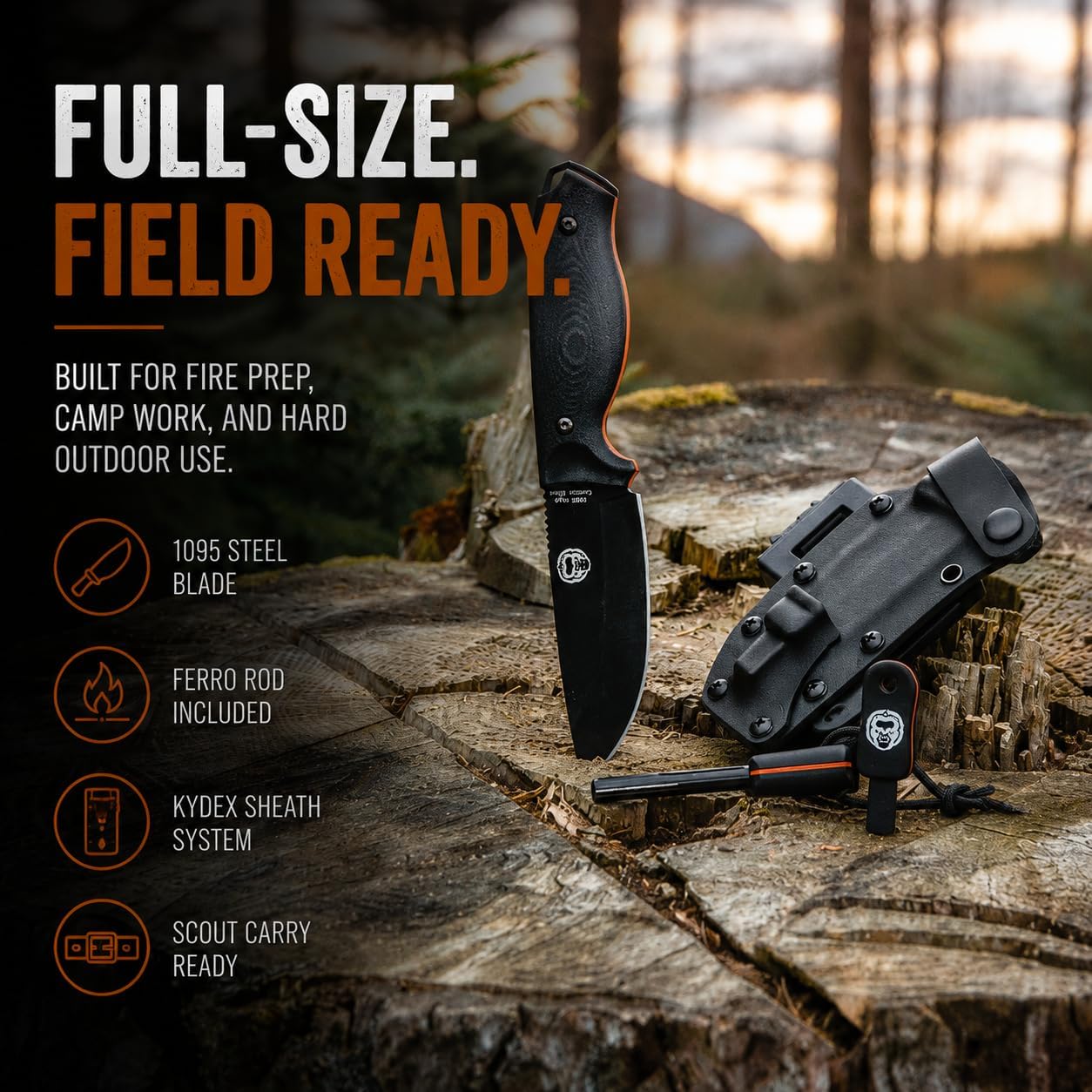
Bloodline
$91.35
In stock on Amazon
Check price on AmazonESEE PR4 — Best for Professional and High-Frequency Users
ESEE (Randall’s Adventure & Training) manufactures its blades in the United States and backs every knife with a no-questions-asked lifetime warranty that covers even deliberate abuse. The PR4 is a lighter, more refined sibling to the famous ESEE 4, with a 3.75-inch blade, 1095 carbon steel, and a skeletonized handle design that accepts aftermarket scales. What grounds the PR4’s reputation is the depth of its endorsement in long-arc owner communities.
Blade Forums threads on ESEE fixed blades consistently feature working professionals — guides, outfitters, military personnel — who carry these knives in genuine field conditions rather than weekend recreational contexts. Knife Informer’s fixed blade buyer guides identify the ESEE line’s unconditional lifetime warranty as a primary reason buyers rationalize the price premium over comparably specified alternatives; the warranty covers intentional abuse, breakage from improper use, and manufacturing defects, with no receipt required. For high-frequency professional users, that eliminates replacement cost uncertainty entirely. For weekend campers, it is peace of mind that may never need to be exercised — but it remains real value in either case.
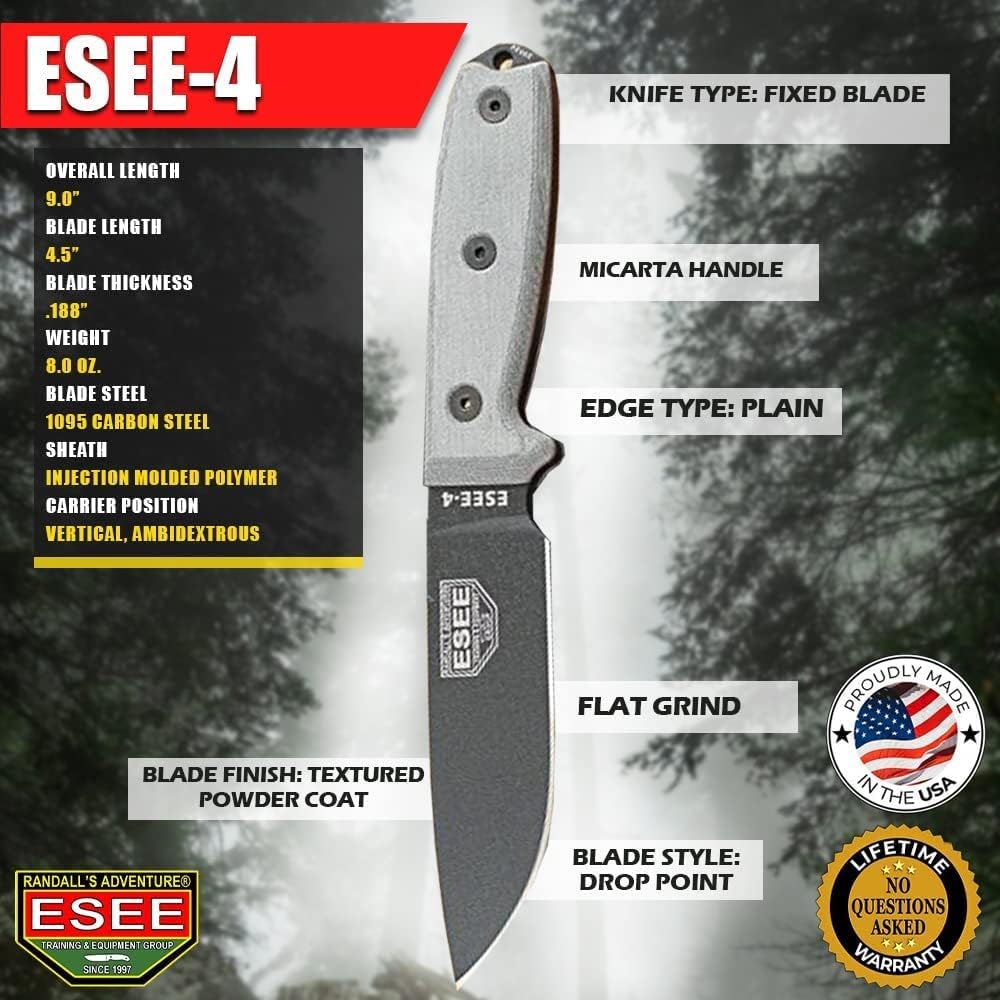
ESEE
$109.99
In stock on Amazon
Check price on AmazonTOPS BOB Fieldcraft — Best for Large Hands and Wet-Condition Work
TOPS (Tactical Operations) positions the BOB (Brother of Bushcraft) at the upper end of this range. The blade is 1095, the handle is canvas micarta — a layered resin composite that does not slip when wet and does not swell with moisture — and the geometry is a high flat grind that slices well through camp food, cordage, and tinder. The differentiator that appears repeatedly in Blade Forums owner threads is hand-fit: TOPS BOB owners who also own or have owned an ESEE 4 consistently report that the BOB’s handle geometry works better for large hands.
The ESEE 4’s handle is excellent for average hand sizes; the BOB’s flare and fuller provide more positive purchase for people whose hands run large. Outdoor Life’s carbon steel knife coverage identifies handle comfort on extended tasks as one of the most underappreciated factors in fixed blade selection — a point the BOB’s design addresses directly. Canvas micarta also outperforms polymer handles in extreme wet and cold conditions, per Knife Informer’s handle material comparisons, making the BOB a defensible choice for buyers who work in genuinely demanding environments.

Tops
$181.66
In stock on Amazon
Check price on AmazonKA-BAR Kephart — Best for Historical Design and Wood Handle Aesthetics
The Kephart is KA-BAR’s tribute to Horace Kephart, the woodsman and writer whose camp knife design has been influential since the early 20th century. The blade is 1095, the handle is walnut wood, and the price sits in the accessible middle of this range. The genuine out-of-box complaint that appears across multiple independent reviews at Blade Forums and is echoed in Gear Junkie’s fixed blade coverage is worth naming plainly: the walnut scales arrive rough and dry, with a surface texture that can cause discomfort on longer tasks. One reviewer specifically recommended 0000-grade steel wool and a penetrating oil — boiled linseed oil or similar — before first use, with the handle left to cure overnight.
This is not a structural defect. It is a finishing step KA-BAR leaves to the buyer, and it is a known, solvable 20-minute preparation. If you are prepared for that step before carry, the Kephart’s looks, blade profile, and historical provenance are genuinely satisfying. If you want to open the box and go, account for the prep time and materials.
ESEE
$109.99
In stock on Amazon
Check price on AmazonSteel, Sheath, and Warranty: Where the Real Tradeoffs Live
1095 vs. D2 — What the Steel Actually Means for Bushcraft
All four of these knives run 1095 high carbon steel, which is worth understanding before you consider whether D2 — a tool steel that appears in nearby competitors at similar price points — is a better choice.
1095 is a simple iron-carbon alloy with roughly 0.95% carbon. It achieves high hardness (typically 56–58 HRC on production knives), takes a very sharp edge, and re-sharpens easily even with basic field tools like a folding diamond card or a simple whetstone. Its limitation is corrosion resistance — it will rust if left wet, and a light patina develops with use. Outdoor Life’s carbon steel maintenance guides and Knife Informer’s steel comparison overviews both note that owners who work outdoors generally consider this a non-issue with a basic maintenance habit: wipe, dry, apply a thin coat of oil after hard use.
D2 sits in a different category. It is a semi-stainless tool steel with higher chromium content (approximately 12%), which slows corrosion significantly. However, per Knife Informer’s fixed blade steel guide, D2 is notably harder to sharpen in the field than 1095 and its edge geometry tends to be more chip-prone at thinner grinds. For bushcraft — where you are batoning firewood, processing camp food, and shaping tinder with the same blade — 1095’s toughness and field-sharpenability generally win the practical argument over D2’s corrosion resistance. This consensus appears consistently across Knife Informer steel comparison coverage and long-term owner discussions on Blade Forums.
Specification comparison by knife:
| Knife | Steel | Blade Length | Handle Material | Warranty |
|---|---|---|---|---|
| BPS Adventurer | 1095 | ~4.0 in | Polymer | Limited |
| ESEE PR4 | 1095 | 3.75 in | Scales (polymer / aftermarket) | Lifetime, unconditional |
| TOPS BOB Fieldcraft | 1095 | 4.375 in | Canvas micarta | Limited |
| KA-BAR Kephart | 1095 | 4.625 in | Walnut wood | Limited |
The ESEE Warranty Argument — When It Changes the Math
The ESEE lifetime warranty is not a marketing decoration. Blade Forums discussion threads and Knife Informer buyer guides both identify it as the primary reason buyers rationalize the ESEE price premium over comparably specified alternatives. The warranty covers intentional abuse, breakage from improper use, and manufacturing defects — ESEE replaces the knife, no receipt required.
Whether the warranty justifies the premium depends on use context. A professional guide or working hunter who puts a fixed blade through 100-plus field days per year is carrying deferred replacement cost risk on any non-warranted knife; the ESEE warranty eliminates that risk directly. A weekend camper who takes reasonable care of tools is paying for peace of mind that the warranty provides but that they may never need to exercise. Neither calculation is wrong. They reflect different risk profiles, and Knife Informer’s buyer guide framework makes this distinction explicit when evaluating lifetime warranty value in the $50–$150 fixed blade range.
Fire-Starting and Ferro Rod Compatibility
A bare 1095 spine — uncoated, square ground — will throw sparks from a ferro rod. The BPS Adventurer, ESEE PR4, and TOPS BOB all have spine geometry and finish that owners report as ferro-rod compatible with reliable results, per Blade Forums fixed blade review threads. The KA-BAR Kephart’s spine is slightly more rounded, and while it will work, reviewers note the spark shower is less consistent than the other three without a slight spine modification using a file. If ferro rod use is a core requirement rather than an occasional fallback, the BPS Adventurer, ESEE PR4, or TOPS BOB are the stronger choices — or plan a simple spine prep on the Kephart before relying on it.
Decision Framework: If X, Then Y
You are building intuition in this price band, not just buying a single knife. Here is how to read the decision:
If your first priority is best total package value at the floor of the range, the BPS Adventurer is the answer. The sheath quality in particular overdelivers at the price in a way that affects daily satisfaction more than most buyers expect. The limitation is that the warranty and long-term parts ecosystem are not in the same league as ESEE.
If you use a fixed blade in a professional or near-professional context and want zero ambiguity about long-term coverage, the ESEE PR4 or ESEE 4P is the call. The unconditional lifetime warranty is a real operational asset for high-frequency users, and the sustained endorsement from working professionals documented in Blade Forums community threads is the kind of long-arc social proof that holds up under scrutiny.
If you have large hands and find standard bushcraft knife handles uncomfortable after extended sessions, the TOPS BOB Fieldcraft’s handle geometry resolves that problem directly. The canvas micarta also outperforms polymer in extreme wet or cold conditions. The higher price is real; the functional fit improvement is also real for the buyers who need it.
If you want a historically grounded design, an attractive wood handle, and are comfortable doing a simple out-of-box prep step, the KA-BAR Kephart earns its place. Steel wool the scales, work in a penetrating oil, let it dry — 20 minutes of prep converts a rough-from-factory handle into something genuinely comfortable. Budget for that step and it is a satisfying knife.
Frequently Asked Questions
Is the BPS Adventurer actually as good as knives costing twice as much? On blade steel and edge geometry, it competes well. The standout claim from multiple independent owners on Blade Forums is that the leather sheath exceeds what you would expect from knives at two to three times the price. Where it does not compete is warranty depth, brand ecosystem (aftermarket scales, accessories), and long-term maker accountability. For a primary camp knife that does not need a lifetime warranty backstop, it punches above weight.
Does the ESEE PR4 hold up to daily professional use? Long-arc owner testimony from Blade Forums community threads — including professional users with documented daily fixed blade carry in field conditions — consistently supports this. The 1095 steel is tough, the construction is American-made, and the unconditional lifetime warranty means professional users are not carrying deferred replacement cost risk. Knife Informer’s buyer guides name the ESEE warranty as a primary differentiator for professional-context buyers in this price band.
Is the KA-BAR Kephart handle rough out of the box and how do you fix it? Multiple independent reviewers on Blade Forums confirm the walnut scales arrive dry and rough in factory condition. The standard fix is 0000-grade steel wool to smooth the surface followed by two coats of a penetrating wood oil (boiled linseed oil or similar), allowed to cure overnight. The result is a significantly more comfortable handle. This is a known and solvable finishing step, not a structural problem.
What is 1095 high carbon steel and how does it compare to D2 for bushcraft? 1095 is a high-carbon, low-alloy steel that sharpens quickly and achieves good toughness — important when a blade is being used for batoning or prying. D2 resists corrosion better but is harder to sharpen in the field and more prone to chipping at thin grinds. For bushcraft applications where field maintenance matters, 1095 generally wins the practical comparison per Knife Informer’s steel comparison guides and Outdoor Life’s carbon steel knife coverage.
Does the TOPS BOB Fieldcraft justify its higher price over an ESEE? If handle fit for large hands is the issue, reviewers who have owned both make this case directly and consistently on Blade Forums. If hand size is not a limiting factor, the ESEE’s unconditional lifetime warranty and comparable blade performance make the price delta harder to justify on performance grounds alone. Both knives are well-made; the decision comes down to hand geometry and warranty priority.
Which of these knives is best for fire-starting with a ferro rod? The BPS Adventurer, ESEE PR4, and TOPS BOB Fieldcraft all have square-ground, uncoated spines that owners report work reliably with a ferro rod. The KA-BAR Kephart produces less consistent spark with a stock spine. If ferro rod use is a core requirement, the first three options are the stronger choices, or plan a simple spine prep on the Kephart before relying on it in the field.