August 18, 2026 • Callum Reeve • 12 min reading time • Specs verified June 5, 2026
Gerber StrongArm vs. ESEE Fixed Blades: When Made-in-USA Actually Matters
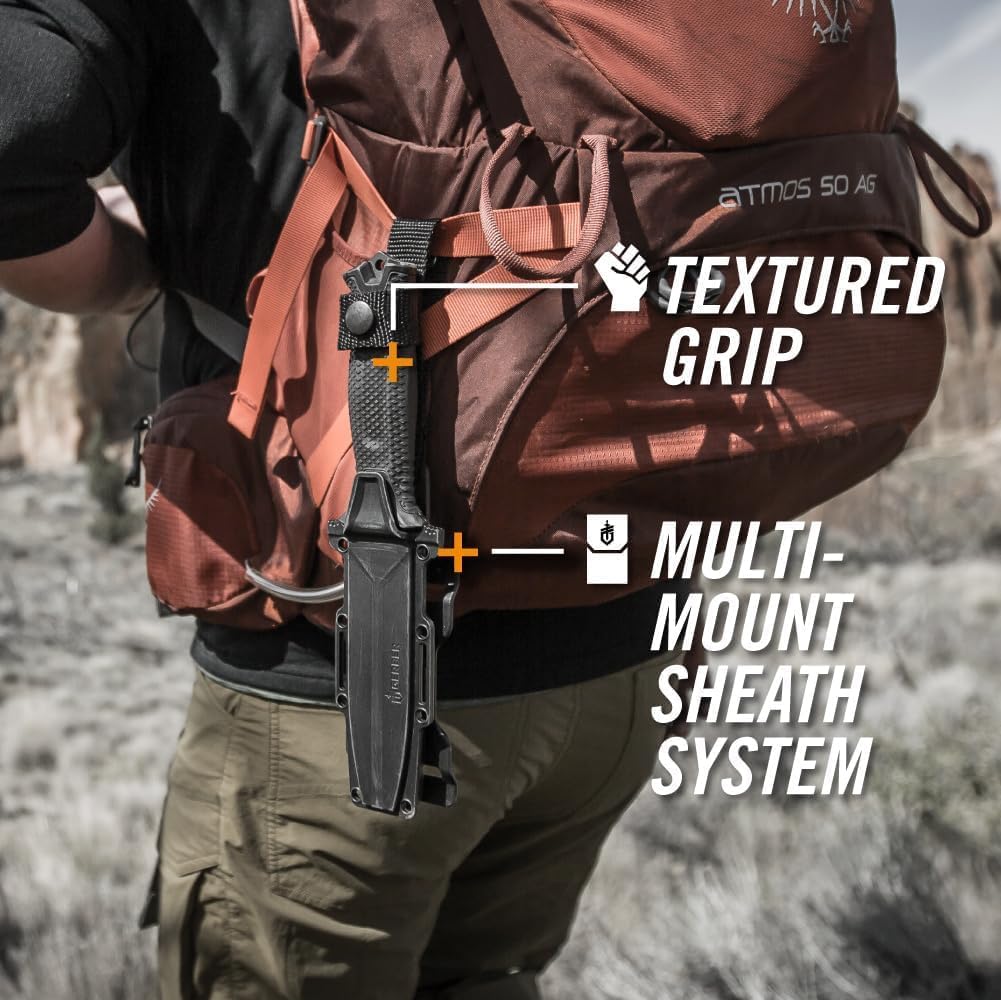
If you’re new to fixed blades, here’s the short version: a fixed blade is a knife with no folding joint — the blade and handle are one rigid unit. That matters for survival and outdoor work because there’s nothing mechanical to fail when you’re wet, cold, or under pressure. The two knives in this comparison sit in the $80–$130 price band that a lot of buyers hit after outgrowing a cheap starter knife — the Gerber StrongArm, an American-designed fixed blade with a rubberized handle and protective Cerakote coating on the blade, and the ESEE lineup (pronounced “es-ee”), which includes the compact Izula-II, the mid-size 4P, and a range of related models, all made in the USA with a warranty that’s unusually honest about what it covers. This article maps the real tradeoffs so you can make a confident call before spending your money.
The central tension here isn’t which knife has cooler specs. It’s that the StrongArm has moved from a clear sub-$60 value buy to a roughly $100 asking price as of 2025–2026, and at $100 it’s competing directly against knives that long-term owners — not just reviewers writing a quick take — call bulletproof investments. That changes the math considerably.
| EDITOR'S PICKESEE PR4 Fixed Blade Survival K… | Mid-tierGerber Gear StrongArm Fixed Bla… | Budget pickESEE Knives Izula-II Fixed Blad… | |
|---|---|---|---|
| Blade Edge | — | Plain edge | — |
| Handle Material | — | — | Micarta |
| Sheath Included | ✓ | — | ✓ |
| Made in USA | — | ✓ | — |
| Clip Plate | — | — | ✓ |
| Price | $130.35 | $109.99 | $83.43 |
| See on Amazon → | See on Amazon → | See on Amazon → |
The Three Knives, Side by Side
Before diving into the narrative case for each blade, it helps to see the core specs in one place. The table below covers the three most relevant comparison points at this price tier.
| Spec | Gerber StrongArm | ESEE Izula-II | ESEE 4P |
|---|---|---|---|
| Blade steel | 420HC stainless | 1095 carbon | 1095 carbon |
| Blade length | 4.8 in | 2.6 in | 4.5 in |
| Full tang | Yes | Yes (skeletonized) | Yes |
| Origin | Designed USA, made overseas | Made in USA (NC) | Made in USA (NC) |
| Warranty | Limited | Unconditional lifetime | Unconditional lifetime |
| 2026 street price | ~$100 | ~$50–$65 | ~$100–$115 |
| Primary role | Survival/camp workhorse | Compact EDC / neck knife | Camp workhorse |
Gerber
$109.99
In stock on Amazon
Check price on AmazonWith the specs visible, the decision stops being about money alone and starts being about what you value in a working knife. The sections below work through each candidate in depth.
The Gerber StrongArm: A Strong Design Under Pricing Pressure
The Gerber StrongArm is a genuinely well-engineered knife. The full-tang construction — meaning the steel runs the full length of the handle, not just into the first inch — is solid throughout. The rubberized grip stays secure with wet or gloved hands, a point highlighted consistently in buyer reviews aggregated on Blade HQ, and the Cerakote finish, a thin ceramic coating baked onto the blade, earns consistent marks for corrosion resistance from owners who carry in humid environments or coastal areas.
The 420HC stainless steel blade sharpens easily on basic equipment, which matters if you’re in the field without a full sharpening kit. Gear Junkie’s “Best Survival Knives” roundup for 2025 included the StrongArm among its recommended options. Outdoor Life’s “Best Fixed Blade Knives” buyer guide for 2025 similarly cited it as a capable camp knife. The sheath system gets positive marks as well — it’s a polymer hard-plastic design with multi-position carry options, and most owners find it wears comfortably through a full day.
Here’s the issue: a significant portion of buyer reviews — visible in Blade HQ’s review aggregates — come from people who bought the StrongArm at $50–$60 and are writing from that value context. Their “great knife for the price” verdict doesn’t automatically transfer to a $100 purchase. Multiple owners who bought at the old price have explicitly noted in reviews that they’d hesitate to recommend it at the current street price, because at $100 you’re no longer in a category by yourself. You’re standing next to ESEE.
One additional note that matters for buyers who weigh country of origin: Gerber is an American brand headquartered in Portland, Oregon, and the StrongArm is designed domestically. However, it is manufactured overseas. That’s not inherently disqualifying — many respected knives are produced internationally — but “American brand” and “made in USA” are not the same claim. If domestic manufacturing matters to your purchase for economic, ethical, or quality-assurance reasons, that distinction is real and worth factoring in.
Gerber
$109.99
In stock on Amazon
Check price on AmazonThe ESEE 4P: The Camp Workhorse with a Warranty That Changes the Math
ESEE knives are manufactured in Rowan County, North Carolina, at Randall’s Adventure & Training — the company that developed ESEE designs originally for military and survival training use. That’s end-to-end domestic production, documented and verifiable.
ESEE’s warranty policy is worth understanding clearly, because it’s unusual enough that it shapes how owners think about the knife as a long-term purchase. The company covers the knife against defects, breakage, and — this is the part most warranty language explicitly excludes — damage from use. ESEE has been transparent in published policy statements that this coverage extends to field damage, not just factory defects. Knife Informer’s published review of the ESEE 4P documents this warranty coverage and notes it as a meaningful differentiator at this price tier. Owner accounts aggregated on Blade HQ include buyers who chose ESEE specifically because they carry a fixed blade for work through long daily shifts and needed confidence the knife could be replaced or repaired without a dispute.
That’s not a small thing. At $100–$115, the ESEE 4P isn’t just a knife — it’s a working tool with a built-in recovery option.
The 4P itself gets described repeatedly in owner testimony as overbuilt for the task. It handles batoning (using the knife as a wedge by striking the spine with a baton — a technique for splitting wood without a hatchet), heavy brush clearing, and carving tasks that would stress a thinner blade. Knife Informer’s published review of the ESEE 4P notes that the flat grind makes it a strong performer in wood tasks and easy to sharpen with a field stone. Outdoor Life’s 2025 fixed blade buyer guide includes ESEE in its recommended tier for users who need a do-everything camp knife capable of taking punishment.
The sheath system is another concrete differentiator. ESEE’s molded Kydex sheaths — Kydex is a rigid thermoplastic — with clip plate systems are praised across multiple reviewers for retention, configurability, and durability. The StrongArm sheath is functional and well-regarded; the ESEE system is more configurable and, by most accounts, more developed for serious carry setups.
Gerber
$109.99
In stock on Amazon
Check price on AmazonThe ESEE Izula-II: A Different Tool, Not a Smaller Version of the 4P
One mistake that shows up in buyer discussions is treating the entire ESEE lineup as interchangeable. The Izula-II and the 4P serve genuinely different roles, and conflating them leads to the wrong purchase.
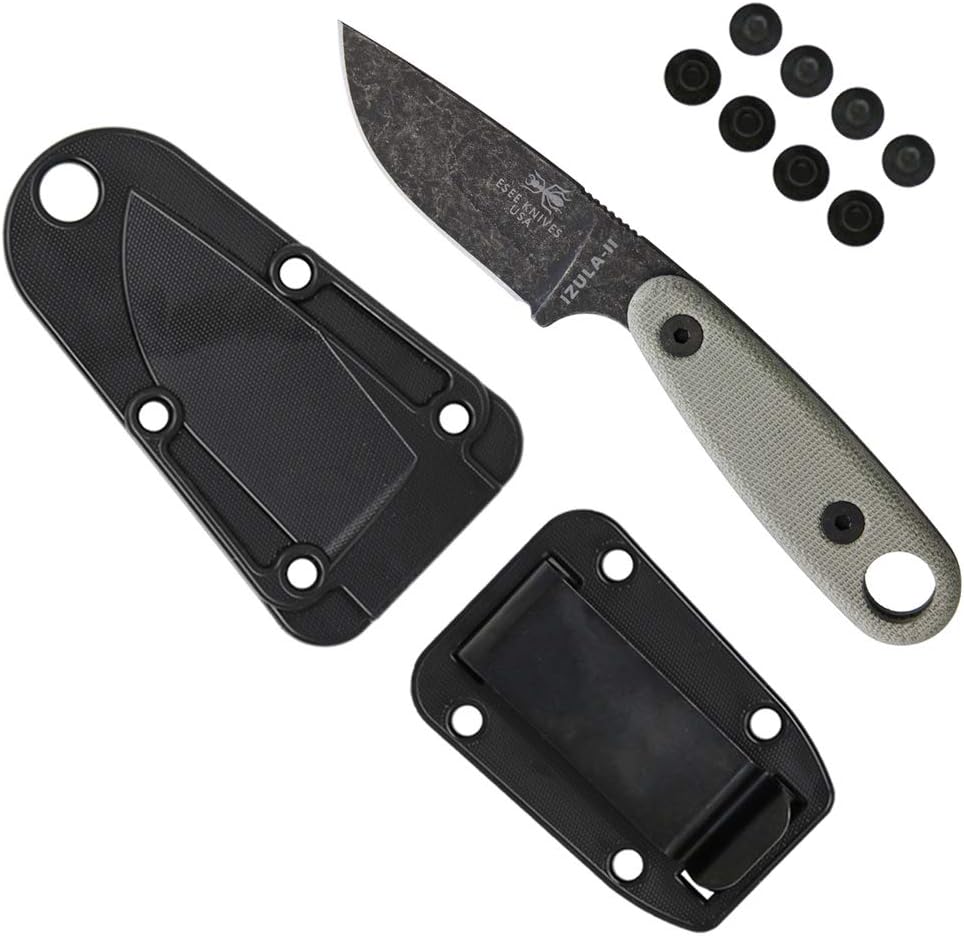
The Izula-II is a small, skeletonized fixed blade. The handle is the exposed tang, designed to be wrapped in cord or fitted with optional handle scales sold separately. The blade runs approximately 2.6 inches, and the whole package is light enough that some everyday-carry users choose it as a neck knife or pocket-sheath option. It’s praised for discretion, low weight, and the ability to go places a larger fixed blade cannot.
But if you’re expecting it to function as a camp workhorse — batoning, processing firewood, food prep for a group, heavy brush work — that’s not what this knife was designed to do. Knife Informer’s coverage of the Izula-II frames it explicitly as a compact EDC fixed blade and secondary field knife, not a primary camp tool. The blade geometry and overall size simply aren’t optimized for high-load tasks.
The Izula-II earns its place as a companion blade — carried alongside a larger knife or hatchet as a backup, or chosen by EDC users who want a fixed blade’s reliability in a format that travels as lightly as a folding knife. At its street price of $50–$65, it’s also the most accessible entry point into the ESEE system, which matters if you want to evaluate the brand’s build quality and warranty response before committing to a 4P purchase. If camp utility is your primary use case, the ESEE 4P is the correct comparison point against the StrongArm — not the Izula-II.
ESEE
$83.43
In stock on Amazon
Check price on AmazonSteel Showdown: 420HC vs. 1095 Carbon
This is where the decision gets genuinely interesting for a practitioner reader. Both steels are well-understood, and both have real tradeoffs. Knife Informer’s published steel and review coverage, along with owner testimony compiled on Blade HQ, provide the clearest practical reference available on both 420HC and 1095 carbon steel in working knife contexts.
420HC — the StrongArm’s steel — is a stainless alloy. “Stainless” means it resists rust and corrosion with minimal maintenance. You don’t need to dry it after use in wet conditions or oil it in storage. It sharpens easily on almost any equipment, including basic field stones and ceramic rods most users carry. The tradeoff: it does not hold an edge as long as higher-carbon alternatives under sustained working conditions, and at comparable hardness it is generally considered a moderate rather than high performer for edge retention. For casual users, this barely matters. For daily-carry working knives, it means more frequent touch-up sharpening.
1095 carbon steel — ESEE’s standard steel — is not stainless. It will develop surface rust if left wet or neglected, and owners in humid environments or coastal areas need to dry and lightly oil it as part of routine care. In exchange for that maintenance commitment, 1095 offers better edge retention at comparable hardness and is considered by many bushcrafters and working hunters to be more satisfying to sharpen to a truly keen edge. It also throws sparks with a ferro rod — a minor but real field advantage for fire-starting that stainless alloys cannot replicate.
Knife Informer’s published reviews of ESEE knives consistently note that 1095 at ESEE’s heat treat range — tuned for toughness rather than maximum hardness — will generally out-retain an edge compared to 420HC under equivalent working conditions. Owner accounts on Blade HQ echo this pattern across multiple long-term users.
Practical guidance on steel choice:
- If you work in salt air, fish frequently, paddle in coastal water, or know you won’t maintain a carbon steel consistently: the StrongArm’s 420HC is less stressful to own and will serve you well without demanding discipline.
- If you’re in dry or temperate conditions and want better edge retention on a blade you’re using hard: ESEE’s 1095 and its maintenance requirement are worth accepting. The edge performance and field sharpenability are meaningfully better for most working tasks.
Frequently Asked Questions
Is the Gerber StrongArm still worth buying at its current price? At roughly $100 in 2026, the StrongArm is harder to recommend without reservation than it was at $50–$60. It’s a well-made knife with real strengths in corrosion resistance and ergonomics, but at the current price it sits directly alongside the ESEE 4P, which brings a stronger warranty, better edge retention for most working applications, and fully domestic manufacturing. Gear Junkie’s 2025 survival knife roundup and Outdoor Life’s 2025 fixed blade buyer guide both acknowledge the StrongArm as a capable knife, but neither evaluates it specifically against the pricing pressure it now faces in the market. If the StrongArm drops to $75 or below, the calculus shifts back in its favor. At $100, the ESEE 4P gets the stronger recommendation for most buyers.
Does the ESEE lifetime warranty cover user damage and normal field wear? Based on ESEE’s published warranty policy and owner testimony documented in Knife Informer’s reviews and Blade HQ’s review aggregates: yes. The warranty covers breakage from use, not just manufacturing defects — which is the unusual and valuable part. It does not cover lost knives. Always verify directly with the manufacturer for current policy terms, as warranty language can change.
Which of these knives is better for someone who carries a fixed blade daily for work? For daily working carry, the ESEE 4P has the stronger ownership case — primarily because of the warranty. An owner who depends on a fixed blade through a full working day needs confidence that a break or field damage doesn’t mean a $100-plus out-of-pocket replacement. ESEE’s warranty removes that risk. The 1095 carbon steel also holds a working edge longer than 420HC, which matters when you’re using the blade constantly. The maintenance requirement is real but manageable as a professional discipline.
How does 420HC compare to 1095 carbon for edge retention? Knife Informer’s published ESEE and Gerber reviews both address this tradeoff directly: 1095 at ESEE’s heat treat generally outperforms 420HC for edge retention under working conditions. The tradeoff is corrosion resistance — 420HC is stainless and requires minimal care; 1095 requires drying and oiling to prevent rust. For field use in dry or temperate conditions, 1095’s edge retention advantage is meaningful. In wet or coastal environments, 420HC’s rust resistance may outweigh the edge retention gap depending on how consistently you can maintain a carbon blade.
Is the ESEE Izula-II too small for general camp use? For most camp tasks — processing wood, food prep for a group, batoning, heavy brush clearing — yes, the Izula-II is undersized. Its 2.6-inch blade and skeletonized handle make it an excellent compact EDC or neck knife, but it is not a camp workhorse. If camp utility is the primary use case, the ESEE 4P is the right choice. The Izula-II excels when carried alongside a larger tool as a backup or secondary blade, or as a standalone EDC for users who prioritize low weight and discretion over utility range.
The bottom line: If you bought the StrongArm at $50, you got a great deal on a capable knife. At $100, the honest answer is that the ESEE 4P — or the Izula-II if compact EDC is your actual primary need — offers more value for the money, a better warranty, and fully domestic manufacturing. The StrongArm’s stainless steel and ergonomics are genuine advantages in specific conditions, particularly high-humidity and coastal environments. But the price drift has moved it out of its original sweet spot and into a competition it doesn’t consistently win at its current street price.