September 25, 2026 • Callum Reeve • 10 min reading time • Specs verified June 5, 2026
The Kershaw Under-$30 Tier: Camshaft, Appa, and Misdirect Tested Against Real Daily Use
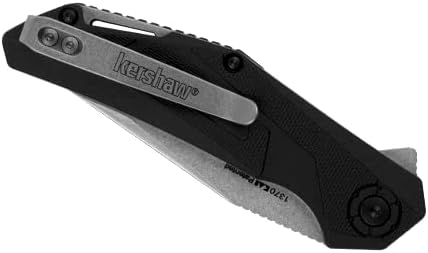
Kershaw makes somewhere north of a hundred different folding knives, and a chunk of them live under thirty dollars. That’s a crowded, confusing shelf — and if you’re buying your first real EDC folder (EDC means “every day carry,” a pocket knife you actually keep on you instead of forgetting in the junk drawer), or upgrading someone else from a gas-station blade, the lineup can feel deliberately opaque. This article focuses on three specific models — the Camshaft, the Appa, and the Misdirect — and draws on aggregated owner reviews, published specs, and forum testimony to give you a straight answer: which one is worth the money, which one has hidden tradeoffs, and when you’d choose one over the other. We’ll also pull in the Cryo and Clash for comparison, because they keep showing up in the same conversations.
| EDITOR'S PICKKershaw Clash Black Serrated Po… | Mid-tierKershaw Cryo Pocket Knife | Budget pickKershaw Appa Pocket Knife | |
|---|---|---|---|
| Blade steel | 8Cr13MoV | — | — |
| Blade length | 3" | 2.75" | 2.75" |
| Blade shape | Drop point | — | Reverse tanto |
| Edge | Serrated | — | — |
| Pocketclip | — | — | ✓ |
| Price | $39.94 | $39.14 | $16.41 |
| See on Amazon → | See on Amazon → | See on Amazon → |
What You’re Actually Buying at This Price Point
At sub-$30, you’re mostly in 8Cr13MoV territory. That’s a Chinese stainless steel — a mid-chromium alloy that holds an edge reasonably well, sharpens easily, and resists rust without demanding obsessive care. It is not a premium steel. Knife Steel Nerds’ composition breakdown of 8Cr13MoV puts it in the same broad category as AUS-8, a Japanese alloy many buyers know from older Spyderco budget models — decent toughness, moderate edge retention, nothing to write home about but nothing to apologize for either. You sharpen it, you use it, you sharpen it again. At this tier, that’s the deal.
The other number that matters: SpeedSafe. That’s Kershaw’s proprietary assisted-opening system — a torsion bar inside the pivot that lets the blade spring fully open once you push the thumb stud or flipper tab past a certain point. It’s not a switchblade or automatic; you initiate the motion manually, and the spring completes it. This distinction matters legally in a number of jurisdictions, and it matters practically because it affects how the knife rides in a pocket. More on that in a moment.
The Camshaft: The Honest Workhorse
The Camshaft is exactly what one long-term owner on Blade Forums described as “your standard Kershaw” — and he meant it as a compliment with an honest asterisk attached. The blade geometry is utilitarian: a drop-point profile (the tip curves down slightly from the spine, giving you a strong, controllable point) in 8Cr13MoV with a satin finish, running about 3.1 inches. The handle is glass-filled nylon — plastic reinforced with glass fiber, which is lighter and cheaper than G10 or aluminum but meaningfully more durable than plain injection-molded plastic.
The same reviewer was explicit: the Camshaft “won’t impress anyone used to $150 knives,” but it is a knife you can be hard on without hesitation. That framing is useful. At this price, you’re not buying a collectible. You’re buying a tool you can lend to someone who might not return it, toss in a tackle box, or keep in a work bag without anxiety. Aggregated reviews at Blade HQ consistently reinforce this — the pattern across dozens of owners is solid lockup, reliable SpeedSafe deployment, and no significant fit-and-finish failures out of the box.
The tradeoff: the blade steel is not going to thrill you on extended tasks. Owner testimony from Gear Junkie’s budget knife roundup and from Blade Forums threads alike flag that the edge starts rolling after sustained cardboard breaking or food prep. This isn’t a flaw — it’s the price point. Resharpen on a ceramic rod or a basic whetstone and you’re back in business inside five minutes.
The Appa: Small Footprint, Real Capability, One Real Limit
The Appa is a smaller knife — blade length sits around 2.9 inches, and the handle is compact enough that it all but disappears in a front pocket. Reviewers note it punches above its weight: the flipper action on SpeedSafe is crisp for the price, the fit between blade and handle is tighter than you’d expect, and the pocket clip is reversible (tip-up or tip-down carry), which matters more than people realize until they’ve lived with a clip they can’t change.
Here’s the honest flag that multiple Appa owners surface unprompted: large hands will find this knife small. Not unusable, but small. If your ring finger has nowhere to go when you grip it, you’ll feel every cut. Knife Informer’s budget EDC guide notes that compact handles under 4 inches total are consistently reported as limiting by buyers with XL glove sizes. If that’s you, the Appa is still worth understanding as a gift knife or a secondary carry — but it probably shouldn’t be your primary tool for extended use.
For everyone else — average hands, light-duty tasks, strong preference for low-profile carry — the Appa earns its reputation. It’s the kind of knife that generates “I forgot I was carrying it until I needed it” reviews, which at this tier is high praise.
The Misdirect: The One That Keeps Surprising People
This is where it gets interesting. The Misdirect occupies a specific niche in the Kershaw sub-$30 lineup: it’s the one that reviewers with real comparison breadth keep landing on.
One standout review — cited across multiple knife forums and aggregated on Blade HQ — comes from a buyer who had previously owned multiple Kershaws, several CIVIVI folders (a Chinese brand that competes at $30–$70 and has a strong reputation for D2 and 9Cr18MoV steels), and at least one Benchmade. He landed on the Misdirect as “finally checking all boxes.” That’s a meaningful data point. When someone who has held a Benchmade — a $150+ American-made folder — still comes back to a $25 Kershaw as their daily carry, the question isn’t whether the Misdirect is objectively better. It’s: what specific combination of size, blade geometry, deployment, and clip feel does it get right?
Based on aggregated owner testimony, the answer seems to be ergonomics and carry balance. The Misdirect’s handle has more contour than the Camshaft’s flatter profile, and the weight distribution sits slightly toward the handle — which owners consistently report as more comfortable during extended grip. The blade shape is a modified tanto (a flat grind with an angular tip) that handles box-opening and precision cuts differently than a drop-point, and some users strongly prefer it. Not better in any universal sense, but better for the way a certain percentage of people actually use a pocket knife.
The honest caveat: the tanto geometry makes the tip more fragile than a drop-point if you’re prying. Don’t pry. At this steel hardness, you’ll chip it.
The Clash and the SpeedSafe Safety Question
The Clash deserves a mention because it keeps appearing in the same decision set — and because it carries a specific safety nuance that reviewers surface and that shouldn’t be buried.
One long-form review from a firefighter and paramedic calls the Clash a genuine duty knife, and the praise is specific: reliable one-hand deployment under stress, solid lock-up (liner lock, same as most of these), and a blade long enough (3.1 inches) to be genuinely useful in work contexts. This is credible endorsement from someone who uses tools under real conditions.
The same product has a separate reviewer with an explicit warning: the SpeedSafe mechanism can cause accidental openings if the knife is carried loose in a pocket — no clip engaged, blade down among keys and coins — because the torsion bar tension is low enough that incidental pressure on the thumb stud can initiate deployment. This is not a defect. It’s a design characteristic of most assisted-opening folders, and Blade Forums’ SpeedSafe threads confirm it’s a known behavior pattern across the entire Kershaw assisted lineup, not just the Clash.
The decision rule here is simple: clip it or close it deliberately. Assisted-opening folders are not designed for loose pocket carry. If you won’t clip, look at a manual-open folder instead.
By the Numbers
| Model | Blade Length | Steel | Handle Material | Weight |
|---|---|---|---|---|
| Camshaft | 3.1 in | 8Cr13MoV | Glass-filled nylon | 3.0 oz |
| Appa | 2.9 in | 8Cr13MoV | Glass-filled nylon | 2.5 oz |
| Misdirect | 3.0 in | 8Cr13MoV | Glass-filled nylon | 3.1 oz |
| Cryo | 2.75 in | 8Cr13MoV | Stainless steel | 4.0 oz |
Published specs per manufacturer; Cryo included for comparison.
If X, Then Y: The Decision Frame
Here’s where the analysis collapses into something actionable:
- If you want a no-regrets beater you can lend, lose, or abuse: the Camshaft. It doesn’t excel anywhere, but it doesn’t fail anywhere either. It’s the correct answer for “I just need a knife.”
- If you have average or smaller hands and prioritize invisible carry: the Appa. Understand the grip limit going in, and it will serve you well.
- If you’ve owned several folders and kept finding small complaints with each one: seriously evaluate the Misdirect before dismissing it. The owner testimony from cross-brand comparers is too consistent to ignore.
- If you want the Cryo: know that size reduction from a previous larger knife is the most common purchase trigger. Owners consistently cite transitioning away from a heavier carry as the reason they bought it — and the stainless handle adds weight that contradicts that goal for some users. The Cryo is a statement piece more than it is a workhorse.
- On the Clash: it’s a competent knife, but the SpeedSafe loose-pocket caveat is real. Clip it always, or reconsider.
Frequently Asked Questions
Is SpeedSafe assisted opening safe to carry loose in a pocket? Not ideally. Aggregated Blade Forums discussion and multiple individual owner reviews confirm that SpeedSafe torsion bar tension is low enough that incidental pressure — keys, phone, coins — can initiate partial or full deployment in an unclipped carry. Use the pocket clip. This applies across the Kershaw assisted lineup, not just one model.
How long does the edge last on 8Cr13MoV steel with daily use? Owner reports vary by task, but the consistent pattern is: light daily tasks (packages, food, occasional rope) yield several weeks before a touch-up is noticeable. Sustained hard use — cardboard, fibrous materials, prolonged food prep — will show edge roll in hours to days. Per Knife Steel Nerds’ steel composition analysis, 8Cr13MoV trades edge retention for ease of resharpening. The steel is not optimized to hold a working edge for extended periods; it’s optimized to return to sharpness quickly on basic equipment.
Is the Kershaw Cryo too small for large hands? For many large-handed users, yes. The Cryo’s handle falls under 4 inches closed, and the stainless handle — while visually premium — doesn’t provide the grip texture that compensates for a small platform. Multiple owner reports on Blade Forums flag this specifically. The Cryo is better sized for medium hands and below.
What is the real difference between 8Cr13MoV and 4Cr14 steel? 4Cr14 is a lower-chromium, simpler stainless alloy found in promotional and true budget knives — think gas-station tier. Per Knife Steel Nerds’ comparative data, 4Cr14 has meaningfully lower carbon content than 8Cr13MoV, which translates to softer steel, faster edge degradation, and harder resharpening to a consistent bevel. None of the three Kershaws reviewed here use 4Cr14. The comparison matters because some gray-market or off-brand folders misrepresent their steel; knowing the difference protects you.
Can these knives be sharpened easily at home without special equipment? Yes. 8Cr13MoV is one of the more forgiving steels for home sharpening precisely because it’s relatively soft. A basic diamond rod, ceramic stick, or entry-level whetstone (800/2000 grit combination stones are widely available) will restore a working edge without requiring a Sharpmaker or edge-angle guide. Knife Informer’s sharpening section for budget steels confirms that 8Cr13MoV responds quickly to abrasive media — you don’t need to fight it the way you would a harder steel like S30V or CPM-3V.
Is the Misdirect actually a better value than the Clash or Cryo? “Better value” depends on your use case, but across owner testimony from buyers who’ve compared all three, the Misdirect earns its reputation among users who prioritize ergonomics and carry comfort. The Clash may edge it out for users who want maximum blade length. The Cryo has a premium feel but a size and weight combination that doesn’t suit everyone. The Misdirect’s consistent cross-brand-owner endorsements suggest it resolves the most complaints at the price — which is as close to a value verdict as the data supports.