August 29, 2026 • Callum Reeve • 10 min reading time • Specs verified June 5, 2026
Machetes and Camp Choppers: What Owners Actually Use Them For and Which Handle Survives the Work
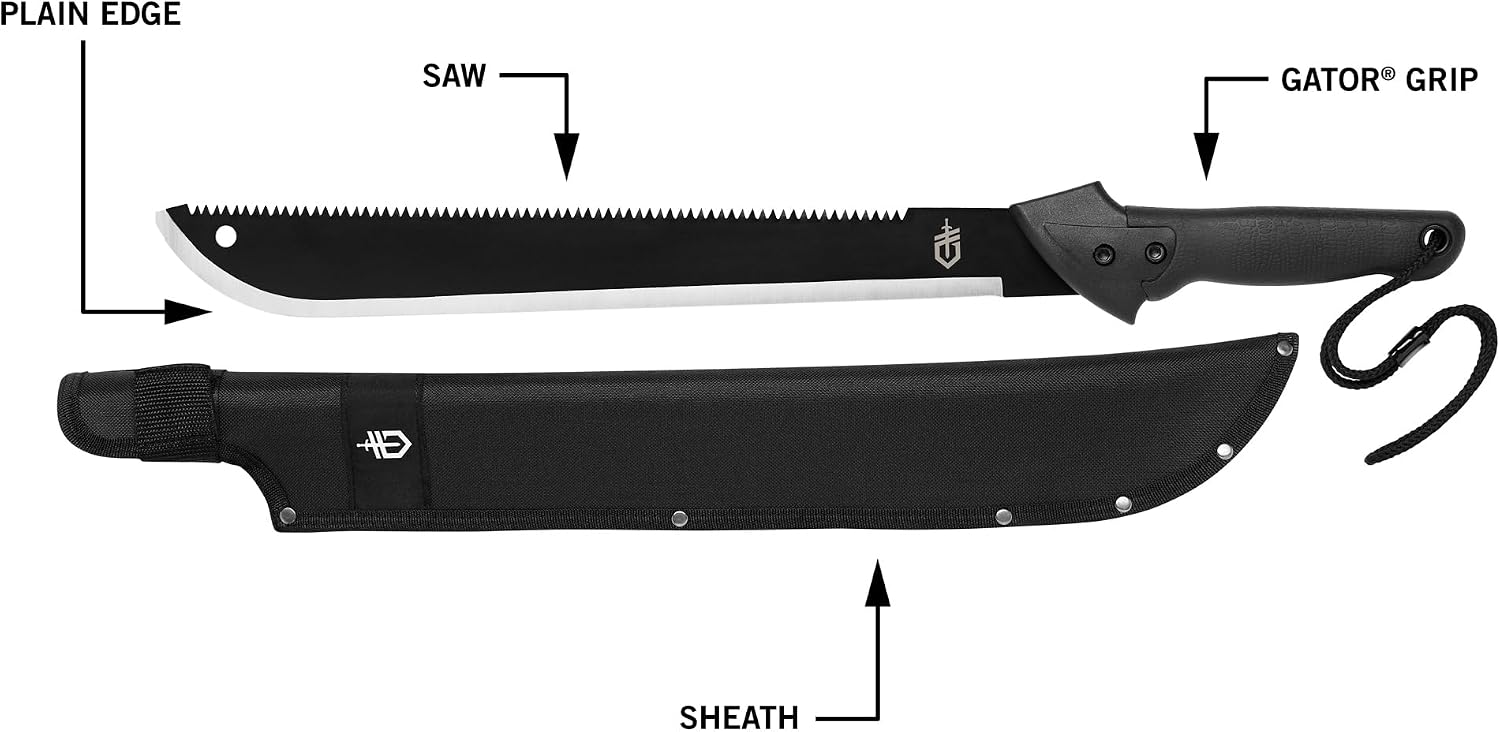
A machete is simply a large, single-edged blade — typically 12 to 24 inches long — designed for hacking through vegetation, processing wood, or clearing trail. A camp chopper is a shorter, heavier cousin: usually 10 to 14 inches of blade, with more mass concentrated near the tip to deliver harder blows with less arm travel. Neither is a fine-woodworking tool. Both are working tools that take abuse, and both reward the buyer who pays attention to handle ergonomics and steel grade before the first swing. If you’ve been camping or hunting for a season or two and you’re asking whether to buy one (or which one), you’re in the right place. This article covers what these tools are genuinely useful for, what owners report after years of actual use, and which handle materials and designs survive the punishment — because the blade is only half the story.
| EDITOR'S PICKBuck Knives 110 Folding Hunter… | Mid-tierKershaw Camp 10 Machete | Budget pickBuck Knives 385 Toothpick Singl… | |
|---|---|---|---|
| Blade Length | 3.75" | 10" | — |
| Steel | 420HC | 65Mn | 420J2 |
| Blade Type | Clip Point | Recurve | Modified Clip |
| Handle Material | Ebony | — | Woodgrain Inlay |
| Sheath Included | ✓ | ✓ | — |
| Weight | — | — | 0.8 oz |
| Price | $89.99 | $53.30 | $21.99 |
| See on Amazon → | See on Amazon → | See on Amazon → |
What People Actually Do With These Tools (It’s Not What the Marketing Shows)
Machete marketing loves dramatic jungle imagery. The reality most owners describe is considerably more mundane — and more useful for that.
Across aggregated long-term reviews on BladeForums and product review threads, the dominant use cases break down like this:
Vegetation clearing and trail work. This is the primary task for the majority of machete owners. Cutting back brush around a campsite, clearing a path through overgrown terrain, knocking down saplings to make a lane — these repetitive, moderate-force tasks are exactly what a machete’s weight-forward geometry is optimized for. A thin, long blade doesn’t need to be driven hard; the swing arc does the work.
Tent-stake and camp prep tasks. Batoning small logs (driving a blade through wood by striking the spine with another piece of wood), splitting kindling, and notching stakes. This is where the camp chopper earns its keep over a longer, lighter machete. The Kershaw Camp 10, a 10-inch blade on a 15.5-inch overall tool, gets consistently cited by owners for exactly this kind of work — it’s thick enough at the spine (about 0.188 inches) to take batoning abuse without flexing uncomfortably, while still being light enough to carry all day.
Emergency and vehicle recovery. Cutting through a tangle of branches after a downed tree blocks a trail, clearing a shooting lane before season, or processing a downed game animal in a pinch. Guides and outfitters on BladeForums note that a machete often lives in the truck or pack as a “problem solver” rather than a primary tool.
What they’re not good for: fine carving, food prep, detailed woodworking, or anything requiring a controlled fine-point cut. These aren’t knives. If you’re expecting a machete to replace a fixed-blade hunter or a bushcraft knife, realign your expectations.
The Handle Problem: Why This Is Where Value Breaks Down
Here’s the thing most buyers underweight at purchase time: the blade of a budget machete is usually fine. The handle is usually where the tool fails — physically or ergonomically — over a season.
The classic failure mode is a handle that loosens as moisture cycles through it. Wood scales swell when wet and shrink when dry; if the manufacturing tolerances are loose, this creates play at the handle joint, and eventually the handle either cracks or rotates. Reviewers of the Gerber Gator Machete have consistently highlighted the rubber overmold grip as the smart engineering decision in that tool — it maintains traction when wet and doesn’t telegraph vibration the way hard polymer handles do.
However, there’s a complication with the Gerber Gator worth naming explicitly: a buyer who purchased one in 2018 for approximately $51 and gave it five stars came back years later to note that the 2026 price point materially changes the value calculus. The tool didn’t get worse — the price got better for competitors. This is a real dynamic in the budget-to-mid-tier tool market right now. Gerber’s MSRP has drifted upward while the competitive landscape has filled in with tools that offer comparable or better specs at lower price points. The lesson isn’t that the Gator is bad; it’s that value is always time-stamped, and you should be doing price comparisons at the moment of purchase, not relying on reviews from several years ago.
Handle materials ranked by owner-reported durability:
| Material | Wet Grip | Vibration Damping | Longevity |
|---|---|---|---|
| Rubber overmold | Excellent | Good | Good |
| G10 composite | Good | Fair | Excellent |
| Kraton/TPR | Very good | Excellent | Good |
| Bare polymer | Fair | Poor | Good |
| Wood (production) | Fair | Good | Variable |
Note: Rankings synthesized from Outdoor Life’s machete buyer’s guide and Gear Junkie’s long-term reports.
The Kershaw Camp 10’s glass-filled nylon handle with its finger-groove geometry has drawn specific praise for one measurable quality: owners consistently report an hour or more of continuous use without significant hand fatigue. That’s not a trivial claim. Most budget-tier tools with poor weight distribution put stress on the palm and wrist within 20–30 minutes of continuous chopping. The Camp 10’s balance point — closer to the hand than most machetes — seems to be the mechanical reason. The Camp 10 was originally purchased by one buyer as a gift for their father; the father’s field reports were positive enough that the buyer eventually picked one up for themselves. That kind of word-of-mouth loop — from a working outdoorsperson to a family member who then converted — is meaningful signal in a category where review fraud is common.
Steel Reality Check: 65Mn Carbon and the Rust Question
Budget and mid-tier machetes almost universally run high-carbon steel rather than stainless. The most common spec in this segment is 65Mn — a manganese-carbon steel with roughly 0.65% carbon content and elevated manganese for toughness. Per Knife Steel Nerds’ composition overview, 65Mn is a spring steel originally developed for agricultural machinery; it takes a working edge reasonably well, is tough enough to flex before breaking, and sharpens quickly in the field.
The rust question is the honest complication. High-carbon steels, including 65Mn, oxidize readily in wet environments. A reviewer of one generic saw-back machete specifically noted that the blade did not rust after extended use in humid conditions — an unusual claim for a budget carbon-steel tool that deserves some healthy skepticism. It’s possible the blade received a heavier factory coating than typical, or that the individual reviewer’s storage and use conditions were drier than they realized. As Knife Informer’s machete buying guide points out, proper field care for any carbon-steel machete means wiping the blade dry after use and applying a light coat of oil (even generic mineral oil works). Assuming a budget carbon tool is rust-proof because one reviewer had a good experience is an easy way to ruin a blade.
The rust-resistance picture changes significantly if you move to a tool using stainless or semi-stainless steel, but at the price points where most machetes trade, that’s rare. If you’re working in prolonged wet environments — coastal areas, rainforest, hunting in the Pacific Northwest — factor in the maintenance commitment before buying any carbon-steel chopper.
Sharpening in the Field: The Norton Crystolon Play
Machetes don’t need to be razor sharp. They need to be sharp enough. The working geometry is a convex or flat bevel at a relatively obtuse angle — typically 20 to 30 degrees — because the edge has to survive impact, not just slicing. A hair-splitting edge on a machete is a fragile edge.
For field touch-ups, the most practical tool in the kit is a mill bastard file or a ceramic rod, not a fine whetstone. The Norton Crystolon file appears repeatedly in sharpening discussions for good reason: it’s a silicon-carbide abrasive that cuts fast and works well on the medium-to-hard carbon steels used in production machetes. The technique is simple — draw the file at the existing bevel angle along the edge, working from the spine toward the tip, light pressure. You’re not reprofiling; you’re refreshing. Ten passes per side restores working sharpness without needing any water, oil, or a flat surface.
For owners who want a bit more refinement without adding weight to the pack, a short ceramic rod accomplishes the same task with less metal removal per stroke — useful for touch-ups mid-day rather than a full dressing at camp.
The If-X-Then-Y Decision Rules
After synthesizing owner reports, published specs, and long-term testimony, here’s the decision frame:
If you’re clearing brush and trail primarily: A longer, thinner machete with a rubber overmold or Kraton handle is the right call. You want the swing-weight and the grip traction in wet conditions. The Gerber Gator was the obvious recommendation here for years; at 2026 prices, comparison-shop carefully before defaulting to it.
If you’re splitting kindling, batoning, or doing heavier camp work: The Kershaw Camp 10 or a comparable camp-chopper geometry wins. Shorter, heavier, more spine thickness. Expect to carry more weight but to do more work per swing on hard materials.
If you’re budget-constrained and in a humid environment: Pick up a generic 65Mn machete, but budget for a small bottle of mineral oil and a Norton Crystolon file. The blade will serve you well; it just needs basic maintenance that the marketing materials won’t remind you about.
If you’re equipping a client or building an outfitter kit: The Kershaw Camp 10’s multigenerational word-of-mouth record is the most honest signal of durable field satisfaction in this category right now. Tools that get purchased twice — once as a gift and once for oneself — are tools that delivered.
Frequently Asked Questions
Is a saw-back machete actually useful or just a gimmick? Mostly gimmick in real field use, though not always. The teeth on most production saw-back machetes are too coarse and shallow to function as an efficient cutting saw — they’re better at snagging branches than cutting them cleanly. Dedicated folding saws outperform them badly for actual wood-cutting tasks. The saw-back does add spine weight and can be useful for scoring, but Outdoor Life’s guide consistently recommends dedicated tools over combo designs at this price tier.
How do you sharpen a machete in the field without a whetstone? A mill bastard file (like the Norton Crystolon) works well and is the traditional tool for the job. Draw it along the existing bevel angle, spine toward edge, light pressure. A ceramic rod is a lighter, lower-material-removal alternative for mid-day touch-ups. You don’t need a whetstone — the geometry and edge expectations on a machete don’t require it.
Does 65Mn carbon steel rust easily in wet conditions? Yes, it can. Despite at least one reviewer reporting no rust, 65Mn is a high-carbon steel and will oxidize in wet conditions without proper care. Wipe dry after use, apply a light oil coat before storage. It’s not high-maintenance, but it’s not stainless.
Is the Kershaw Camp 10 too heavy for backpacking use? At roughly 1.5 pounds, it’s on the heavy end for ultralight or long-distance backpacking. For base-camp setups, truck camping, or hunting where you’re not counting every ounce, owners report the weight is a non-issue. If every gram matters, a lighter full-length machete is the more sensible choice.
What is the real difference between a machete and a camp chopper like the Camp 10? Blade length, weight distribution, and intended task. A machete is optimized for slicing and vegetation clearance — thin blade, long arc, light weight. A camp chopper like the Camp 10 is shorter and heavier with more mass toward the tip, optimized for splitting and batoning where impact force matters more than swing arc.
Has the Gerber Gator Machete’s quality stayed consistent as the price has increased? Owner reports suggest the tool itself hasn’t meaningfully degraded, but the value proposition has eroded. The same physical product that represented strong value at 2018 prices is harder to recommend without comparison shopping at 2026 prices. The competitive landscape has matured and the Gator’s price premium over alternatives is harder to justify on specs alone.