August 8, 2026 • Callum Reeve • 9 min reading time • Specs verified June 5, 2026
Premium Steel in Affordable Frames: MagnaCut, CruWear, and S45VN Under $200
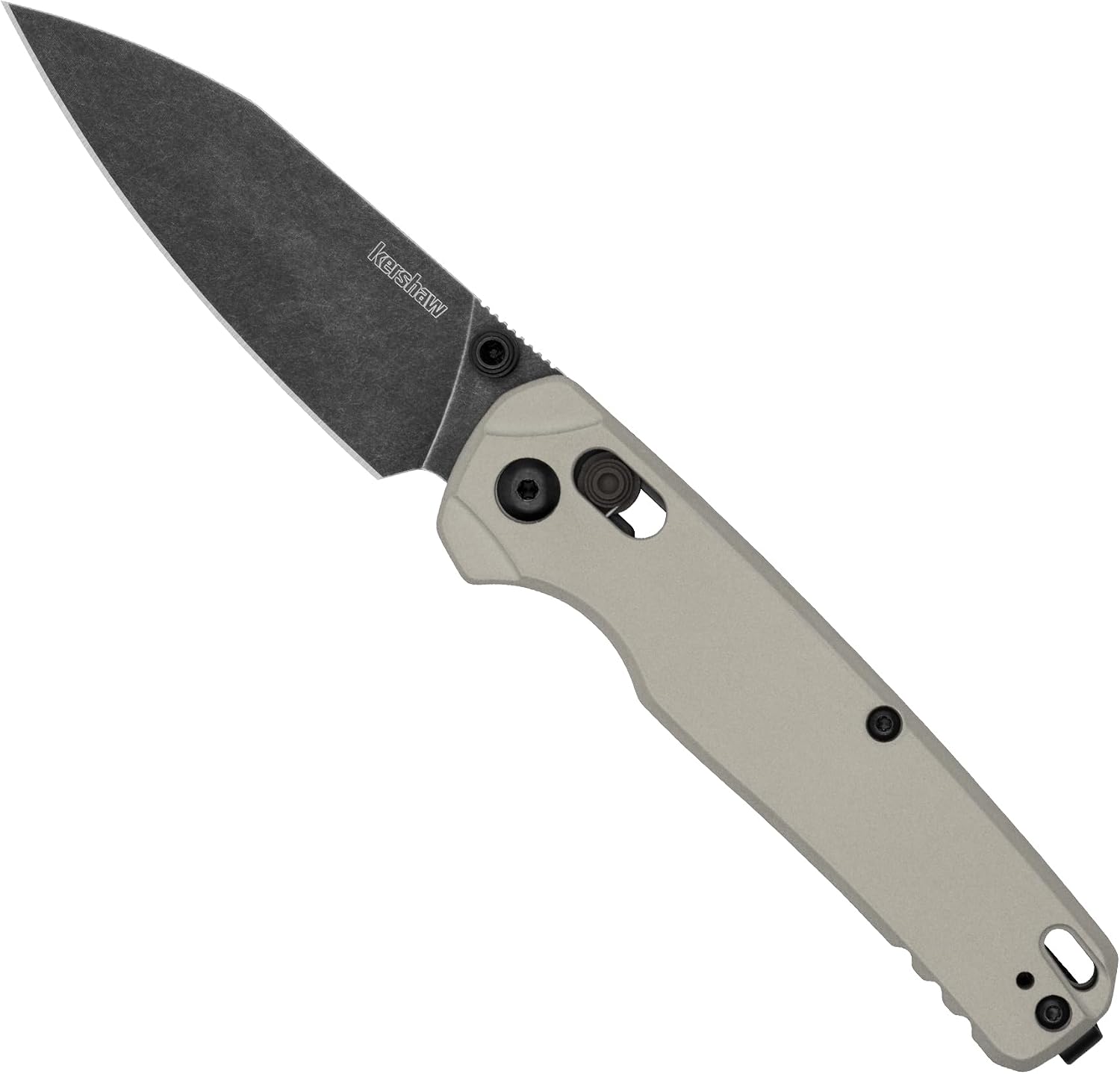
Not that long ago, if you wanted a folder — that’s a pocketknife with a blade that folds into the handle — made from one of the top-shelf blade steels, you were looking at custom-maker waitlists or production knives priced north of $300. Steel grade is the alloy recipe used to make the blade; it determines how sharp an edge you can get, how long it holds that edge, and how resistant it is to rust or chipping. For years, the best alloys stayed trapped behind premium price walls. That’s changed. In 2025–2026, steels like MagnaCut, CruWear, and S45VN — names you’d previously only see on Chris Reeve or Bark River builds — are appearing in production folders that land comfortably under $200, and sometimes well under $150. This article maps which knives are carrying those steels, what real-world difference they make versus the older standards you’ve probably already owned, and where the actual tradeoffs are hiding.
| EDITOR'S PICKSpyderco Manix 2 Folding Pocket… | Mid-tierKershaw Camp 10 Machete | Budget pickSpyderco Para Military 2 Foldin… | |
|---|---|---|---|
| Steel | CPM CRU-Wear | 65Mn Carbon | CPM S45VN |
| Blade length | 3.3" | 10" | 3.4" |
| Blade type | PlainEdge | Recurve | PlainEdge |
| Handle material | G-10 | — | G-10 |
| Sheath | — | ✓ | — |
| Full tang | — | ✓ | — |
| Price | $179.99 | $53.30 | |
| See on Amazon → | See on Amazon → | See on Amazon → |
Why These Three Steels, and Why Now
Quick metallurgy primer for the uninitiated — skip ahead if you’ve already read your Larrin Thomas.
S30V was the workhorse premium stainless for about fifteen years. Good corrosion resistance, decent edge retention, fairly forgiving to sharpen. It’s still excellent. D2 is a semi-stainless tool steel — not quite rust-proof, but very tough with strong edge retention. Both became the middle-tier standard precisely because they hit a usable balance across every dimension.
The three steels we’re focused on here each improve on that balance in specific ways:
- MagnaCut (developed by metallurgist Larrin Thomas, per his Knife Steel Nerds publication on the alloy’s design) was engineered to close the gap between stainless and tool steel — high corrosion resistance and high toughness simultaneously, which is genuinely difficult to achieve. Thomas’s published data show MagnaCut outperforming S35VN in both toughness and edge retention in controlled CATRA testing.
- S45VN is Crucible’s official successor to S35VN. Per KnifeInformer’s editorial overview of the steel, it refines the carbide structure for better edge stability — finer, more uniform carbides that allow a more acute grind to hold up longer. The gains over S30V are real but incremental; over S35VN, meaningful.
- CruWear is a semi-stainless tool steel (think elevated D2 with better toughness numbers) that Knife Steel Nerds’ CruWear property analysis puts ahead of most stainless options on edge retention in high-abrasion tasks, at some cost to rust resistance.
The reason these are appearing under $200 now is manufacturing scale and sourcing: Spyderco in particular has been aggressive about running premium steels through their Sprint Run and standard production lines once they can source material cost-effectively. Kershaw and CIVIVI have followed with their own plays.
The Knives Worth Your Attention
Spyderco Paramilitary 2 — S45VN and CruWear Variants
The PM2 in S45VN is the cleanest head-to-head data point in this market right now. Aggregated owner reviews at BladeHQ tell a consistent story: buyers who purchased the S45VN version simultaneously with an older Benchmade 550-1 in S30V — similar price tier, similar use case — report the S45VN difference as genuinely perceptible in extended cutting tasks, not just a spec-sheet upgrade. The edge comes back from a strop faster. It resists the micro-rollover that S30V shows on cardboard or rope after hard sessions. This isn’t dramatic; if you’re a casual weekend user, you might not notice. If you’re breaking down game in the field or running the knife through three or four hours of cumulative work, reviewers say you feel it.
The PM2 CruWear Micarta variant has developed a different kind of reputation. Blade Forums threads on this variant include one widely-cited review from a self-described Spyderco skeptic — someone who’d built their collection around other brands and considered Spyderco’s ergonomics awkward — who reversed course after handling this specific configuration. The Micarta scales (a durable canvas-resin composite handle material) combined with CruWear’s edge-holding performance in hard-use scenarios apparently cleared whatever threshold that buyer needed. It’s a useful signal: when brand skeptics convert, it usually means the knife is doing something right beyond the marketing.
CruWear’s caveat is rust resistance. It’s not a knife for neglect in salt environments. If your work gets wet frequently, S45VN or MagnaCut is the smarter call. If you’re doing dry, abrasive work — wood processing, field dressing, heavy box-cutting EDC — CruWear’s edge retention edge is real.
Kershaw Bel Air — MagnaCut Under $150
The Bel Air generated something you don’t see often in budget-adjacent folders: direct, name-brand comparison reviews. Gear Junkie’s first-look on the knife noted the MagnaCut spec as the headline, but the more interesting signal came from owners who also carry Benchmade. One reviewer pattern that appears consistently places the Bel Air above the comparable Benchmade on frame design and lockup feel while acknowledging Benchmade’s overall refinement — fit and finish, blade centering, long-term customer service infrastructure — gives Benchmade the broader edge.
That’s a useful frame: the Bel Air is not a Benchmade replacement in every dimension. It is a better frame design at its price point for some users, with MagnaCut steel that no Benchmade under $200 can currently match. If the steel is what you’re optimizing for and the frame satisfies your ergonomics, the math is simple. If you care about brand infrastructure and long-term support, Benchmade’s overhead is baked into their price for a reason.
CIVIVI Elementum II Damascus — The Market Pressure Play
This one’s included not because Damascus (pattern-welded steel for visual effect, typically with moderate performance) belongs in a performance-steel conversation, but because it illustrates where the market is moving. A recurring reviewer profile in this cluster is the former Benchmade-exclusive buyer who found the Elementum II an acceptable sub-$100 alternative for everyday carry tasks. That buyer isn’t abandoning Benchmade for precision work — they’re just not reaching for it to open packages. The implication for mid-tier brands is significant: improving fit and finish at $70–$90 is pulling volume away from the $180–$220 segment, which is exactly why Benchmade has to justify its price with steel or service rather than just build quality alone.
By the Numbers
| Steel | Corrosion Resistance | Edge Retention (CATRA relative) | Toughness | Sharpenability |
|---|---|---|---|---|
| S30V | Good | Baseline | Moderate | Easy |
| S45VN | Good | ~10–15% above S30V | Moderate-High | Easy |
| MagnaCut | Excellent | ~30–40% above S30V | High | Moderate |
| CruWear | Fair | ~40–50% above S30V | Very High | Moderate |
CATRA relative figures derived from Knife Steel Nerds’ published testing comparisons. “Easy” = responds well to standard whetstones; “Moderate” = benefits from diamond stones or CBN at full sharpening sessions.
The Real Tradeoffs Nobody Puts in the Ad Copy
Sharpening matters more as steel gets harder. S45VN and MagnaCut respond well to quality waterstones or diamond plates if you work at the right angle. CruWear at higher hardness — which is how Spyderco is running it — really wants a diamond stone for full reprofile, though a strop or fine ceramic rod for touch-ups is fine. If your sharpening kit tops out at a Lansky clamp system and a couple of Arkansas stones, budget for a Spyderstone or equivalent before you buy CruWear.
DLC coating on the Manix 2 CruWear causes a real but temporary break-in issue. DLC (Diamond-Like Carbon) is a surface treatment that adds hardness and reduces friction. Blade Forums’ Manix 2 CruWear owner thread is consistent: the coating creates initial stiffness in the compression lock that feels like a defect. It isn’t. Multiple long-run owners confirm it breaks in fully with moderate use — typically a few hundred open-close cycles. If you buy this knife and it feels stiff in the first week, work the mechanism deliberately before concluding something’s wrong.
The upgrade ladder inflection point under $200 is real, but steel is one variable. Handle geometry, blade thickness, grind angle, and heat treatment all contribute to satisfaction. A perfectly heat-treated S30V knife from a maker with tight QC will outperform a poorly ground MagnaCut blank. At this price tier, production consistency is good enough that the steel differences are meaningful — but don’t upgrade steel while downgrading fit-and-finish.
Frequently Asked Questions
Is MagnaCut actually better than S30V, or is it mainly marketing? The performance gains are real and well-documented. Knife Steel Nerds’ MagnaCut publication — Thomas’s own lab and field data — shows it outperforming S35VN (S30V’s successor) in both toughness and edge retention while matching or exceeding S30V’s corrosion resistance. The “marketing” concern is valid for steels with thinner published data; MagnaCut has the most rigorous independent documentation of any new alloy in recent years.
How difficult is CruWear to sharpen compared to D2 or S30V? More work than S30V, roughly comparable to D2 or slightly easier, significantly easier than the more exotic carbide-heavy steels like K390. A quality diamond stone handles CruWear well. The challenge is that Spyderco runs CruWear at 60–63 HRC, so you’re sharpening harder steel — the abrasive matters more than technique at that hardness.
Does a DLC coating affect performance or just aesthetics? Primarily practical benefits: DLC reduces surface friction (blades release food and material better), adds surface hardness, and provides some corrosion protection. It doesn’t fundamentally change edge geometry or steel properties. The aesthetic effect — a dark, low-reflectivity finish — is a secondary feature. The only real-world downside is the break-in stiffness issue noted above on compression-lock designs.
At what price does spending more actually buy meaningfully better steel? The honest inflection point is around $80–$120 for production folders. Below that, you’re typically looking at 8Cr13MoV, 14C28N, or VG-10 — good steels, not premium. From $120–$200, S45VN, MagnaCut, and CruWear become accessible. Above $200, you’re increasingly paying for fit, finish, handle materials, and brand infrastructure rather than step-changes in steel performance. The $150–$200 window is currently the best value density for premium steel in production folders.
Is the Kershaw Bel Air genuinely comparable to a Benchmade? Comparable in specific dimensions — frame design, steel spec at its price — yes. Comparable overall? The honest answer is no. Benchmade’s QC consistency, warranty program, and long-term parts availability represent real value that a lower price point doesn’t include. The Bel Air punches above its price on frame and steel; Benchmade still wins on the full-service ownership experience. If X is “I want the best steel I can get under $150,” the Bel Air wins. If X is “I want the knife I can trust for ten years without thinking about it,” Benchmade’s overhead earns its price.
The short version: the premium-steel-in-affordable-frames story is real, it’s happening now, and the PM2 S45VN, the Bel Air, and the Manix 2 CruWear are the three most defensible buys in this window as of mid-2026. Know your sharpening kit before you commit to CruWear. Give the DLC Manix a break-in period before judging it. And if you’re currently carrying S30V and wondering whether the upgrade is worth it — the answer depends entirely on how much you actually use the knife. The more hours it runs, the more the better steel pays off.