September 19, 2026 • Callum Reeve • 12 min reading time • Specs verified June 5, 2026
Scandi Grinds and Carbon Steel at Every Price: Mora Garberg, Condor Bushlore, and BeaverCraft Compared
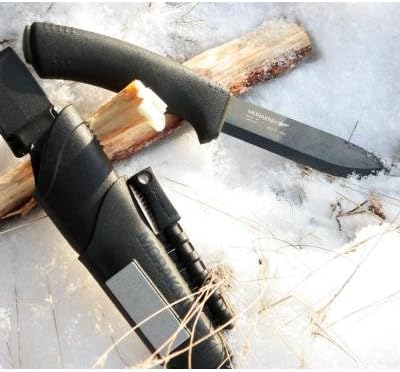
If you’ve been around the bushcraft world for more than a few months, you’ve heard the word Scandi used like it settles every argument. It doesn’t — but it does describe something specific and genuinely useful. A Scandi grind (short for Scandinavian grind) is a blade shape where the bevel — the angled face that creates the cutting edge — runs in a single flat plane from well up the blade down to the edge, with no secondary micro-bevel added at the tip. The result is a geometry that bites into wood cleanly, sharpens easily on a flat stone, and gives you clear tactile feedback about exactly where the edge is when you’re working. Pair that grind with carbon steel — iron alloyed with carbon but without the chromium that makes stainless steel rust-resistant — and you get a blade that sharpens faster, holds a working edge well in field conditions, and develops a dark patina (a stable surface oxide layer) that actually slows future corrosion once established. Three knives sit at the center of this conversation right now: the Mora Garberg, the Condor Bushlore, and the BeaverCraft BSH4. All three are Scandi-ground carbon-steel bushcraft knives. None of them are the same knife. This article maps the real tradeoffs so you can spend your money once.
| EDITOR'S PICKCondor Bushlore Knife - Bushcra… | Mid-tierMorakniv Carbon Steel Fixed-Bla… | Budget pickMorakniv Garberg Full Tang Fixe… | |
|---|---|---|---|
| Blade Steel | 1075 carbon | Carbon steel | Carbon steel |
| Blade Length | 4.3 in | 4.3 in | — |
| Handle | Walnut | — | — |
| Sheath | Leather | ✓ | ✓ |
| Fire Starter | — | ✓ | — |
| Blade Thickness | 3 mm | — | — |
| Price | $62.04 | $53.92 | |
| See on Amazon → | See on Amazon → | See on Amazon → |
What You’re Actually Comparing
Before you run the price numbers, get clear on what’s being traded at each tier.
By the numbers:
| Knife | Steel | Blade Length | Tang | Street Price Range (2026) |
|---|---|---|---|---|
| BeaverCraft BSH4 | High-carbon (unspecified alloy) | ~4.5 in | Full | ~$35–$45 |
| Condor Bushlore | 1075 high carbon | 4.3 in | Full | ~$55–$70 |
| Mora Garberg | Swedish carbon (Mora spec) | 4.3 in | Full | ~$85–$105 |
The word that does the most work in this comparison is full tang. A partial tang — used in most standard Mora knives, including the popular Companion — means the steel only extends partway into the handle. Full tang means the steel runs the full length of the handle, visible on the sides or spine, which is stiffer and more resistant to breakage under lateral stress (batoning, prying). Mora built the Garberg specifically to answer the full-tang objection that followed every Companion and Bushcraft Survival recommendation. That context matters when you’re pricing the Garberg’s premium.
The BPS Adventurer — a Ukrainian-made leather-sheathed carbon Scandi that appears frequently alongside this group in forum discussions — sits in the Condor price band and is worth a brief mention in context below. GearJunkie’s budget bushcraft knife roundup notes the Adventurer draws positive attention specifically because its country of origin is unusual at that price floor, and reviewers cite it as a differentiator when competing knives in the same bracket come from higher-volume mass-production lines.
Blade and Steel: Where the Performance Actually Lives
BeaverCraft BSH4 — Budget Entry Point
The BSH4’s steel is described on the manufacturer’s product pages as high-carbon but is not given a specific alloy designation in any product literature available at time of writing. This is worth naming honestly: you are buying into BeaverCraft’s brand promise rather than a known-quantity metallurgy specification. Reviewers consistently report edge performance as adequate to good for carving and general camp tasks. The grind geometry is true Scandi — flat primary bevel, no micro-bevel — and sharpens predictably on a flat stone, which is the main reason this knife earns its place in the comparison despite the thinner long-term hard-use record compared to the other two.
Morakniv
In stock on Amazon
Check price on AmazonCondor Bushlore — Mid-Range Workhorse
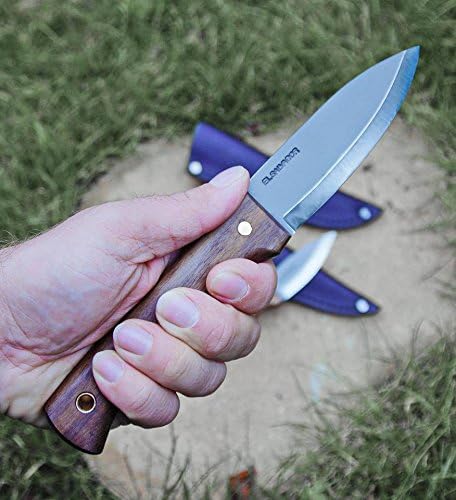
The Condor Bushlore’s 1075 high-carbon steel is the most explicitly specified steel in this group. BladeHQ’s Condor Bushlore specification listing confirms the 1075 designation, and 1075 sits in a well-understood zone for field knives: it is not as wear-resistant as tool steels like 1095 or O1, but it is tougher — meaning less brittle under impact — takes a very sharp edge from a basic flat stone, and re-sharpens quickly in field conditions. For a knife you are going to use hard and sharpen yourself, that is often exactly the right trade.
Condor’s heat treatment is consistently praised in long-thread owner discussions on BladeForums covering Bushlore real-world use. Multiple contributors flag the Bushlore’s edge retention as performing above what the 1075 steel specification alone would suggest, which points to a competent quench and temper from the factory rather than a mediocre one. A detailed account aggregated from BladeForums owner reports describes the Bushlore across a single camp weekend covering toggle carving, feather stick preparation, batoning through split-sized wood, rope cutting, food prep, and tomato slicing at the end of the session with no edge touch-up between tasks. That kind of multi-task evidence is more useful than a single-axis test because it mirrors how camp knives actually get used.
Morakniv
$53.92
In stock on Amazon
Check price on AmazonMora Garberg — Full-Tang Premium
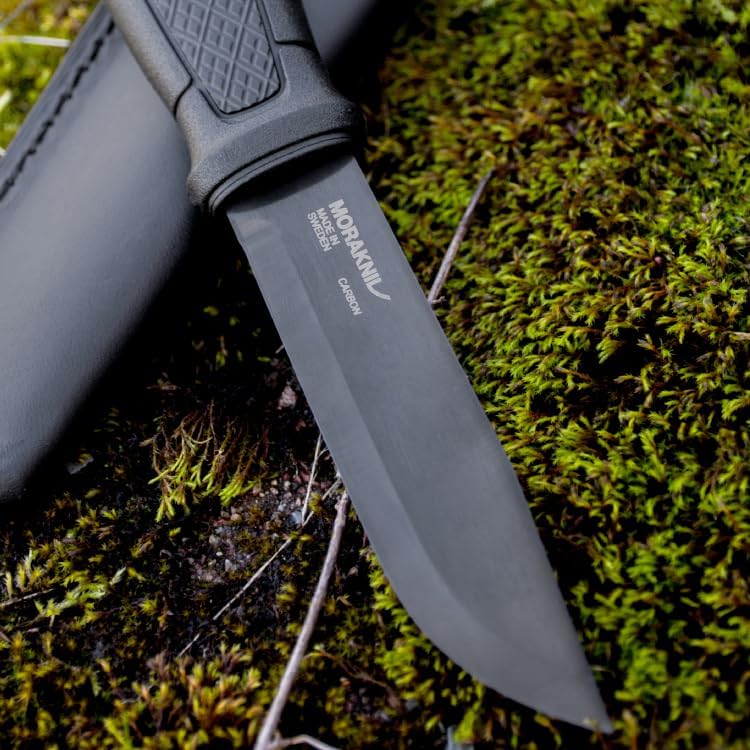
The Mora Garberg’s Swedish carbon steel is heat-treated to a hardness that balances edge retention with toughness. KnifeInformer’s full Mora Garberg review notes published hardness specifications fall roughly in the 59–60 HRC (Rockwell hardness) range, which is appropriate for a working field knife that will see batoning and wood processing rather than just fine carving. The Garberg’s grind geometry is precise: Mora’s manufacturing consistency means the bevel angle is tighter lot-to-lot than most hand-finished competitors in the price range, which matters when you are sharpening in the field and want predictable feedback off the stone.
The full-tang construction is the framing most Garberg reviewers reach for when justifying the premium over the Companion or Bushcraft Survival. KnifeInformer’s review specifically identifies the full tang as the Garberg’s primary structural differentiator within the Mora lineup. For moderate to heavy batoning — splitting dry wood for fire prep, processing smaller-diameter material — the full tang gives users confidence that handle flex or tang failure is not a realistic concern.
Condor
$62.04
In stock on Amazon
Check price on AmazonSheaths, Handles, and the Details That Determine Satisfaction
This is where the ranking reshuffles significantly.
Condor Bushlore: Owners across BladeForums discussion threads consistently rate the leather sheath as a category standout — multiple contributors describe it as the best sheath-to-knife value ratio in the budget-to-mid tier. At least one long-running thread includes the observation that the sheath alone would justify a significant portion of the knife’s purchase price as a standalone item. The fit is snug, the leather is thick, and stitching holds up across extended use reports. OutdoorLife’s field knife buyer’s guide notes that a well-fitted leather sheath on a carbon blade can pull double duty: protecting the blade and, if properly conditioned, applying a very thin oil film on the draw stroke that helps maintain the patina.
BPS Adventurer (context entry): Similar sheath praise appears for the Adventurer in forum discussions. GearJunkie’s budget bushcraft roundup specifically calls out the leather sheath as unusually well-executed for the price point, noting it contrasts favorably with competitors at similar prices where the sheath is an afterthought — thin-walled nylon or poorly fitted kydex.
Mora Garberg: The Garberg ships with a polymer sheath that integrates a ferro rod loop. KnifeInformer’s review describes the ferro rod integration as genuinely functional rather than a marketing feature: the loop is positioned to actually be used, not merely photographed. The polymer sheath’s retention is positive and the system is weatherproof, which a leather sheath is not without careful conditioning. The tradeoff is that the polymer construction does not carry the tactile or aesthetic quality of the Condor’s leather, and for users who weight those qualities, that gap is real.
BeaverCraft BSH4: The handle is the most consistently cited actionable complaint across owner reviews. Multiple sources describe the wood as rough and unfinished out of the box — not unusable, but noticeably below the fit-and-finish level the price might suggest. The consensus field fix: a few passes with fine steel wool followed by a coat of boiled linseed oil or similar penetrating finish transforms the feel. That is a 20-minute task. The fact that it should not be necessary is fair criticism. Knowing it going in means you do not receive a bad first impression and dismiss a knife that may serve you well once properly finished.
Carbon Steel Maintenance Across All Three
One topic that applies equally to all three knives is the corrosion question. Carbon steel will rust faster than stainless in wet camping conditions — that is not in dispute. The practical management protocol is straightforward: wipe the blade dry after use, apply a thin coat of mineral oil or food-safe wax, and never store the knife inside a wet leather sheath. OutdoorLife’s field knife buyer’s guide addresses carbon-steel care specifically, noting that a working patina — the dark oxide layer that develops naturally over the first several uses against food acids and wood tannins — creates a stable barrier that significantly slows further surface rust. Users who treat patina development as part of getting the knife ready, rather than as a defect to prevent, report very little active corrosion in extended field use.
All three knives in this comparison are carbon steel. All three develop a patina. The maintenance protocol is identical across the group, which means your choice between them comes down to construction, steel spec, and sheath quality rather than any meaningful difference in care requirements.
The Decision Frame: If X, Then Y
If you are new to carbon Scandi blades and want the lowest-risk entry point: The BeaverCraft BSH4 gets you into the geometry and the carbon-steel maintenance routine at minimal cost. Sand the handle. Oil it. Learn on it. You will know within two camping seasons whether you want to move up.
If you want the best sheath-and-blade package under $75 and you will use the knife hard: The Condor Bushlore is the clearest value recommendation in this group. The 1075 steel is a known commodity with a strong track record, the leather sheath is genuinely good, and the field-use testimony documented on BladeForums is the most detailed and consistent of the three.
If full-tang construction is non-negotiable, or if you want a single knife that handles camp tasks, ferro rod work, and comes from a manufacturer with consistent quality control: The Mora Garberg earns its premium. It is not a dramatically superior blade to the Bushlore, but it is a more complete and weatherproof system, and Mora’s manufacturing consistency means you are not rolling the dice on heat treatment quality.
If the BPS Adventurer is on your shortlist: It fits between the Bushlore and Garberg on sheath quality and carries the Ukrainian provenance differentiator if that matters to your purchasing criteria, as noted in GearJunkie’s budget bushcraft roundup. It is a reasonable alternative if you find it at a fair price.
None of these knives require specialized sharpening gear. A flat diamond paddle or a well-dressed natural stone will maintain a Scandi grind more easily than it will most convex or hollow-ground blades — the flat bevel registers naturally against a flat abrasive and the angle is set for you without guesswork. That maintainability is part of the design’s appeal that holds true at every price point in this group.
Frequently Asked Questions
Do carbon steel Scandi-grind knives rust quickly in wet camping conditions?
They will rust faster than stainless steel in the same conditions, but not unmanageably so. A developed patina — which forms naturally over the first several uses on food and wood — creates a stable oxide layer that significantly slows further surface rust. The practical maintenance protocol is simple: wipe dry after use, apply a thin coat of mineral oil, and do not store the knife inside a wet leather sheath. Users who treat patina development as part of the break-in process report very little active corrosion in extended field use.
Is the Mora Garberg worth the price premium over the Mora Companion or Bushcraft Survival?
For most users, the premium comes down to one feature: full tang. The Companion and Bushcraft Survival are excellent knives at their prices, but their partial tangs are a potential failure point under sustained heavy lateral stress. If your camp use involves hard batoning, prying, or you want a knife you would trust in a genuine emergency situation, the Garberg’s full tang closes a real gap. If your use is primarily carving, food prep, and light fire prep, the Companion handles most of that work at lower cost.
Can the BeaverCraft BSH4 handle batoning and heavier camp tasks?
Owners report it handles light-to-moderate batoning without issue. The long-run hard-use testimony is thinner than for the Condor or Garberg, so there is less documented confidence in how it holds up under sustained heavy work. For a carving-primary user or someone building a first carbon-steel kit, it is adequate. For someone whose camp tasks involve consistent heavy splitting or processing game, the Condor Bushlore or Mora Garberg have a stronger documented track record.
How hard is it to re-sharpen a Scandi grind in the field without specialized tools?
It is genuinely easier than almost any other grind geometry. The flat primary bevel registers naturally against a flat stone — you lay the bevel flat on the abrasive and the angle is set for you. A basic diamond paddle, a flat natural stone, or a smooth piece of flat sandstone can produce a working edge on a Scandi in the field. There is no compound angle to maintain and no secondary bevel to track separately. This is one of the reasons the grind retains its following among serious bushcrafters: it is a system designed to be maintained by the user, in the field, with basic tools.
Is the BPS Adventurer’s leather sheath genuinely high quality or just acceptable for the price?
Based on aggregated owner reports and GearJunkie’s budget bushcraft knife roundup, the Adventurer’s sheath appears to be a genuine standout — not “acceptable for the price” in the sense of damning with faint praise, but a legitimately well-executed piece of leather work for the tier. Multiple independent sources describe it as the best part of the overall package. Whether it holds up over years of wet-dry cycling and field conditioning is harder to assess without a longer base of owner testimony, but the consistent early praise across independent reviews is meaningful.