September 7, 2026 • Callum Reeve • 12 min reading time • Specs verified June 5, 2026
Slim Sub-3-Inch EDC Folders: CIVIVI, Qubit, Kershaw, and the Lightweight Carry Argument
A folding knife — a knife with a blade that folds into the handle for safe carry — is probably the single most practical tool most people carry every day without thinking much about it. The blade length (measured from the tip to where the blade meets the handle) matters more than people expect: laws in many cities and states cap legal carry at 3 inches or under, and a slimmer, lighter knife simply disappears into a pocket in a way that a 3.5-inch workhorse never quite does. This article is a focused comparison of the sub-3-inch folding knife category, anchored on three names that keep surfacing in owner discussions right now: the CIVIVI Qubit, the Kershaw Cryo, and the Kershaw Appa. We’ll dig into steel choices, lock mechanisms, hand-fit tradeoffs, and carry discipline — so you can make a fast, informed call if you’re sitting on a “which one?” decision today.
| EDITOR'S PICKCIVIVI Pocket Folding Knife- Bu… | Mid-tierKershaw Misdirect Pocket Knife… | Budget pickKershaw Appa Pocket Knife | |
|---|---|---|---|
| Blade length | 2.98" | — | 2.75" |
| Blade steel | 14C28N | — | — |
| Handle material | Aluminum | — | — |
| Lock type | Button lock | — | — |
| Opening | Thumb stud | — | Assisted |
| Pocket clip | — | — | ✓ |
| Price | $66.90 | $24.97 | $16.41 |
| See on Amazon → | See on Amazon → | See on Amazon → |
Why Sub-3 Inches Is Its Own Category (Not a Compromise)
The instinct among knife enthusiasts is to treat a short blade as a shrunken version of a real knife. That’s the wrong frame. A sub-3-inch EDC folder is optimized for a specific job description: packages, food, cordage, the occasional box flap at work, and the thousand micro-tasks that don’t require anything larger. The tradeoff you’re explicitly making is reach and belly (the curved cutting surface) in exchange for legalese-proof carry, pocket presence that genuinely disappears, and — at this price tier — guilt-free daily use.
That last point matters. A recurring theme across owner discussions documented at BladeForums.net in the CIVIVI and Kershaw compact threads is what one user articulated plainly: he avoids expensive knives because he loses them. The sub-3-inch, sub-$60 bracket is where that logic lives. These aren’t “lesser” tools — they’re appropriately specified tools for people who want a knife on them every single day without the anxiety of a $300 EDC vanishing in a rental car seat. GearJunkie’s buyer’s guide titled “Best EDC Knives Under $50” makes the same point directly: the best knife for daily carry is the one you’ll actually carry without hesitation.
The Three Knives at a Glance
Before the detailed breakdown, here’s the fast reference table. Each row is tagged with its tier marker for quick orientation.
| Knife | Blade Length | Steel | Lock Type | Approx. Weight | Tier |
|---|---|---|---|---|---|
| Kershaw Cryo | 2.75 in | 8Cr13MoV | Frame lock + SpeedSafe | 2.6 oz | Kershaw — $16.41 |
| Kershaw Appa | 2.79 in | 8Cr13MoV | Liner lock + SpeedSafe | 2.0 oz | Kershaw — $16.41 |
| CIVIVI Qubit | 2.98 in | 14C28N | Button lock | 1.9 oz | Kershaw — $24.97 |
Specs per manufacturer listings and KnifeInformer published review coverage, 2024–2025.
Detailed Comparison by Knife
Kershaw Cryo: Frame Lock and SpeedSafe at Its Best
Kershaw
$16.41
In stock on Amazon
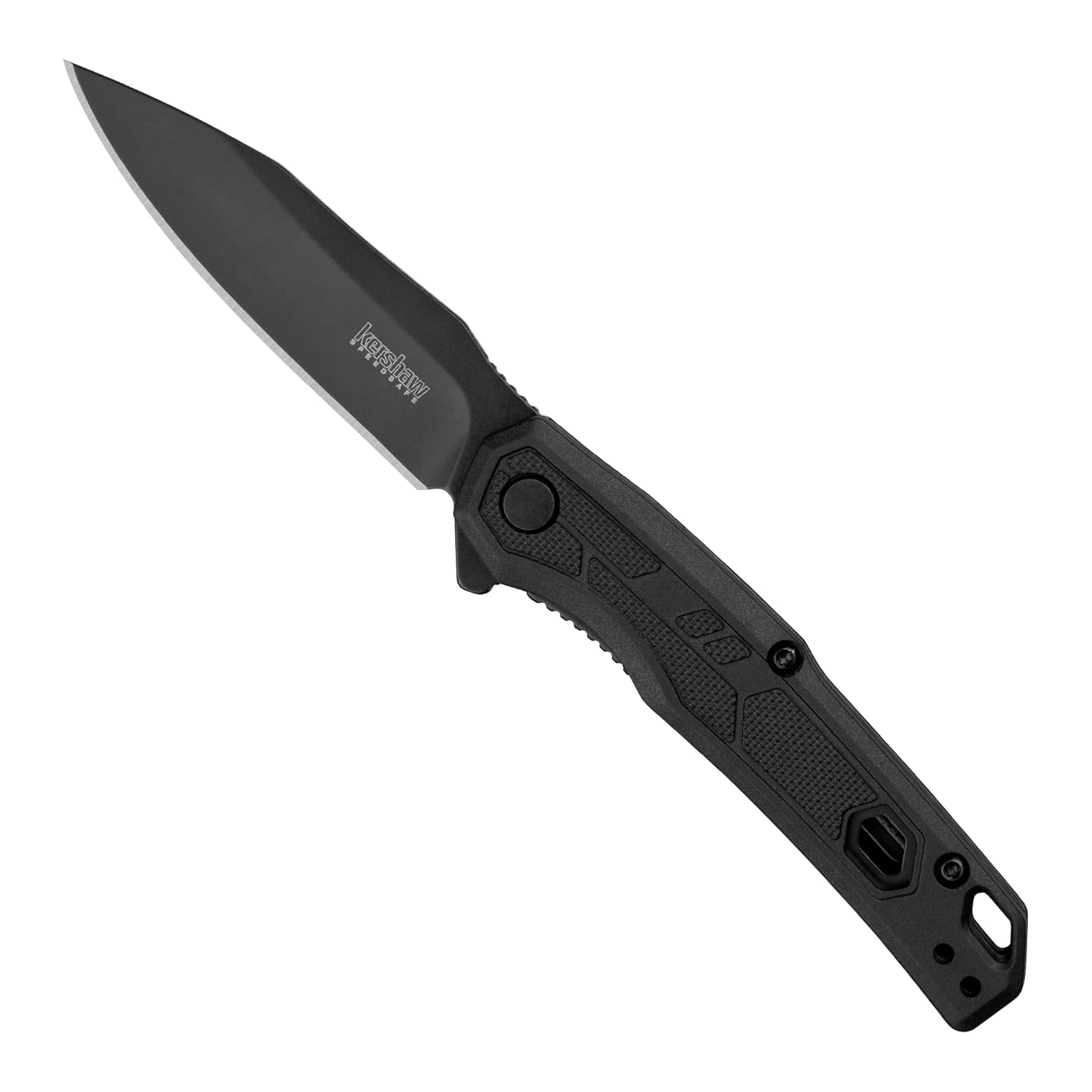
Check price on AmazonThe Kershaw Cryo is the chunkier, slightly heavier option in Kershaw’s compact lineup, and it earns that weight with a frame lock — a mechanism where part of the handle frame itself moves inward to lock the blade open, offering robust engagement at a price point where liner locks are more common. Paired with SpeedSafe assisted opening, which uses an internal torsion bar to snap the blade open once you’ve pushed it past a small resistance point, the Cryo delivers deployment speed that KnifeInformer’s review coverage consistently flags as punching above its budget bracket. The snap is purposeful rather than toy-like.
Here’s the honest counterweight: SpeedSafe in a compact knife requires carry discipline. Owner feedback documented in BladeForums.net Kershaw compact threads notes that SpeedSafe can open accidentally in-pocket if the knife is not properly clipped. The spring tension is designed for a quick intentional push — but if the knife shifts and the thumb stud catches fabric, unintended deployment can result. The fix is straightforward: clip the knife. The Cryo is designed for tip-up carry with the clip engaged, which keeps the thumb stud protected. If you’re the type to drop a knife loose into a bag pocket or jacket, an assisted opener at this size isn’t the right choice. But if you clip consistently, SpeedSafe becomes a daily pleasure rather than a liability.
The Cryo runs 8Cr13MoV, a Chinese stainless steel that is the workhorse of the budget folder category. It’s corrosion-resistant, easy to sharpen, and completely adequate for daily tasks. It won’t hold an edge as long as 14C28N, and it’s noticeably softer under sustained cutting. But for a knife you’re going to use hard, maybe lose, and potentially replace in 18 months, BladeHQ’s published reference document “Steel Comparison Guide: 14C28N vs 8Cr13MoV” is direct: 8Cr13MoV is the right call when price matters more than edge retention between sharpenings. That’s an honest verdict, not a knock.
For larger-handed buyers choosing between the two Kershaws here, the Cryo’s slightly bulkier frame lock construction gives you marginally more handle bulk to grip, making it the better Kershaw option in this comparison for bigger hands.
Kershaw
$16.41
In stock on Amazon
Check price on AmazonKershaw Appa: The Slimmest Carry in the Lineup
Kershaw
$16.41
In stock on Amazon
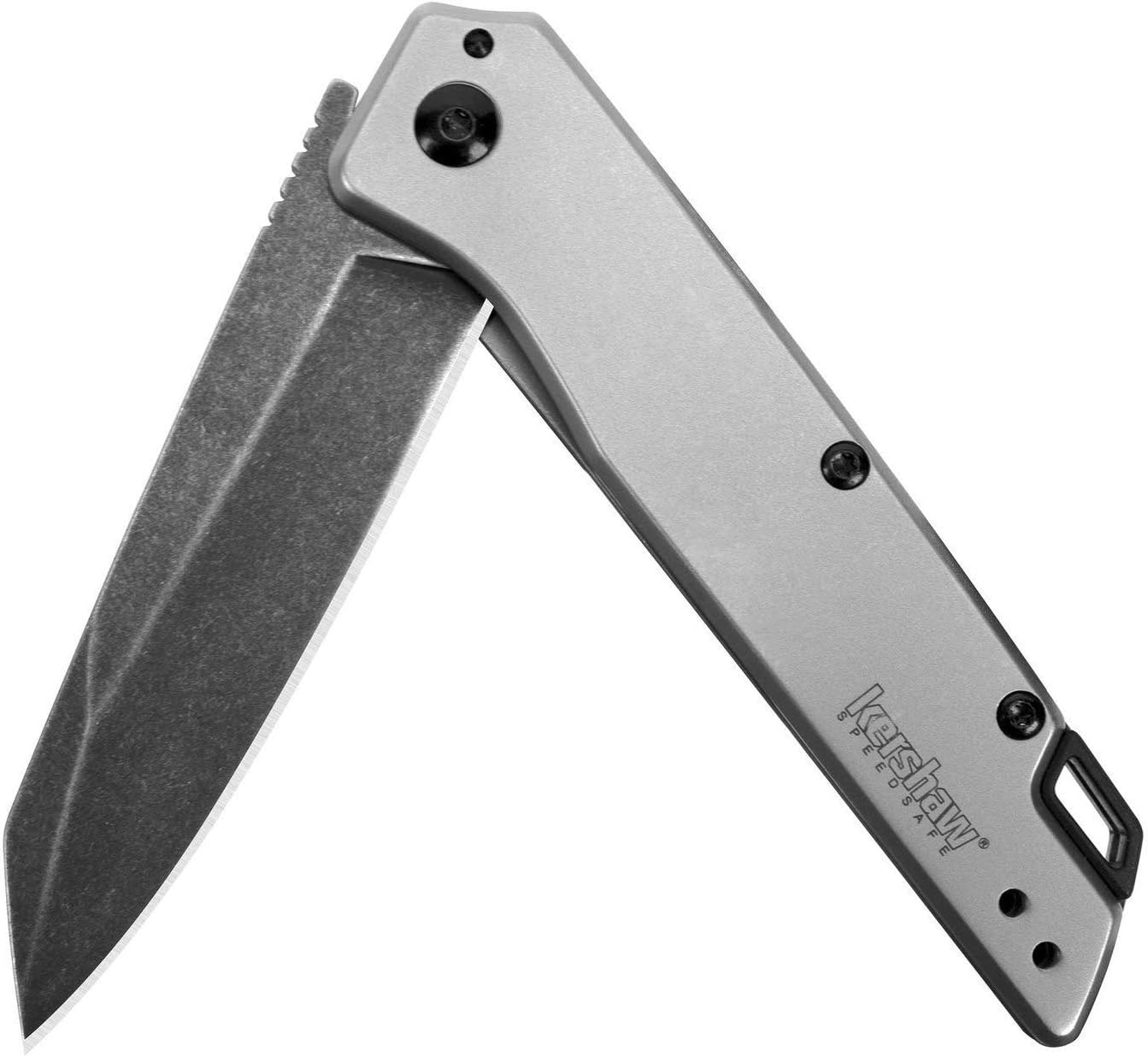
Check price on AmazonThe Kershaw Appa shares the Cryo’s SpeedSafe engine and 8Cr13MoV steel, but it diverges in two meaningful ways: it swaps the frame lock for a liner lock (a spring-loaded metal strip inside the handle that holds the blade open) and sheds nearly half an ounce compared to the Cryo, landing at 2.0 oz. The result is the slimmest, lightest carry in this comparison.
Owner feedback documented at BladeForums.net Kershaw compact threads splits predictably by hand size. Smaller-handed reviewers call the Appa ideal — a genuinely pocketable sub-3-inch carry that disappears. Larger-handed reviewers acknowledge it works but several describe it as feeling “a little cramped” during extended use. Neither is a large-hand knife, and if you’re a bigger-framed person buying your first compact folder, that’s worth knowing up front.
The carry discipline point from the Cryo section applies equally here: clip the Appa as designed, carry it tip-up, and SpeedSafe is a feature. Carry it loose in a bag and it’s a risk. GearJunkie’s “Best EDC Knives Under $50” coverage notes that Kershaw’s assisted openers deliver deployment speed that typically only appears at higher price brackets — the Appa earns that same praise in a smaller, lighter package.
For buyers who want the least possible pocket presence and have smaller or average hands, the Appa is the correct Kershaw choice. For buyers who want a little more grip surface, the Cryo wins that trade.
Kershaw
$16.41
In stock on Amazon
Check price on AmazonCIVIVI Qubit: The Handle-to-Blade Ratio That Changes the Conversation
Kershaw
$24.97
In stock on Amazon
Check price on AmazonThe Qubit is the knife in this comparison that most surprises people who pick it up expecting a toy. The design trick CIVIVI pulled off — and which BladeForums.net owner threads in the CIVIVI Qubit discussion document consistently — is that the handle feels substantially larger than a 2.98-inch blade would logically require. The geometry is stretched toward the handle end: you get a full grip, a deep finger groove, and almost no sense that you’re holding something miniaturized. Owners consistently describe extended-use comfort as a genuine differentiator, not a marketing claim. KnifeInformer’s review coverage of the Qubit specifically calls out the handle proportions as the knife’s defining feature — unusual praise for a sub-3-inch folder, and it holds up in practice.
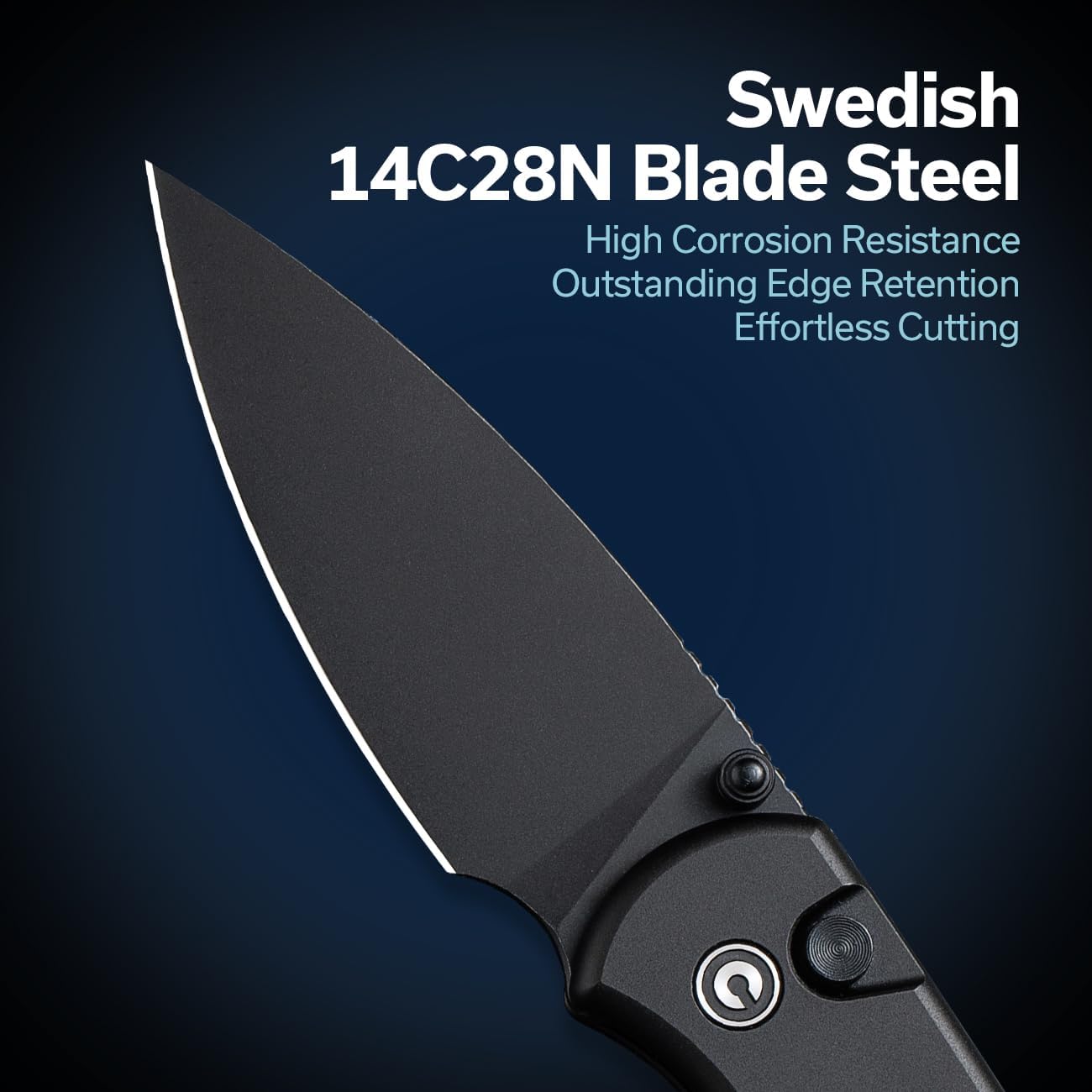
The steel is 14C28N, a Sandvik grade developed specifically for knife blades. (Sandvik is a Swedish specialty steel manufacturer.) Knife Steel Nerds’ reference document on 14C28N steel composition and properties describes it as a high-corrosion-resistance stainless with enough carbon for a solid working edge — better rust resistance than the 8Cr13MoV found in the Kershaw options, and edge retention that outperforms its modest price point. In real-world use, owners at BladeForums.net report it comes sharp from the factory and responds well to a strop or basic ceramic rod without demanding exotic sharpening equipment.
The button lock — a push-button mechanism that releases the blade rather than requiring you to push a metal liner aside — is less common in this price bracket, where liner locks and frame locks dominate. At the $40–$60 CIVIVI price point, a button lock with the fit and finish the Qubit delivers is genuinely above-average for the category. The tradeoff: button locks require a more deliberate motion to close than a liner lock, which some users find slower under gloves. For ungloved office and daily carry, that’s a non-issue. For cold-weather or tactical use, worth considering.
If you have large hands and want a sub-3-inch knife, the Qubit is the safer ergonomic choice in this comparison. The handle geometry works across a wider range of hand sizes than either Kershaw compact option.
Kershaw
$24.97
In stock on Amazon
Check price on AmazonCIVIVI Mini Praxis with D2: A Step Up in Cutting Performance
Kershaw
$24.97
In stock on Amazon
Check price on AmazonIf you’re considering the broader CIVIVI sub-3-inch lineup beyond the Qubit, the CIVIVI Mini Praxis deserves attention. It runs D2 tool steel, which occupies genuinely different territory from both 14C28N and 8Cr13MoV. D2 is a semi-stainless high-carbon steel — it has more carbon than either of the stainless options in this comparison, which translates to longer edge retention under sustained cutting tasks. BladeForums.net owner discussions in the Mini Praxis thread frequently describe D2 at this price point as punching well above its weight for a working-use knife.
D2’s known weakness is corrosion resistance: it has more carbon and less chromium than a true stainless, which means wet environments, salty hands, or neglect can lead to surface staining. Wipe it dry after use, apply a drop of oil occasionally, and D2 is a practical non-issue. Ignore it for weeks in a humid environment, and you’ll find spots. For a dry-climate daily carry or a knife that lives in an office environment, D2 in the Mini Praxis is a real differentiator at its price point. For fishing guides, kayakers, or anyone working around water frequently, the 14C28N in the Qubit remains the smarter call.
BladeHQ’s “Steel Comparison Guide: 14C28N vs 8Cr13MoV” situates these steel tiers clearly: D2 belongs in a category above both when edge retention is the priority, at the cost of more diligent maintenance. That framing holds in the Mini Praxis context.
Kershaw
$24.97
In stock on Amazon
Check price on AmazonThe Decision Frame: If X, Then Y
Here’s where the comparison resolves into a clear rule for each buyer type:
If you prioritize ergonomics and want a handle that punches above its blade length → CIVIVI Qubit. The handle geometry is genuinely unusual for this size class, and 14C28N at this price is hard to argue with. Button lock is a minor learning curve that most owners stop noticing within a week.
If you want fast deployment and don’t mind the carry discipline requirement, with larger hands → Kershaw Cryo. Clip it consistently and SpeedSafe is a feature, not a liability. The frame lock and added handle bulk work better for bigger grips.
If you want fast deployment with the slimmest possible carry and have average or smaller hands → Kershaw Appa. Lightest in the lineup, liner lock, and the same SpeedSafe engine in a thinner package.
If edge retention between sharpenings matters more than corrosion resistance → CIVIVI Mini Praxis with D2. Wipe it down, oil it occasionally, and you get a step up in cutting performance that shows up in sustained daily use.
If you genuinely lose or hard-use knives and want zero anxiety → Either Kershaw in this lineup. The “guilt-free user” framing isn’t condescension; it reflects how real owners in BladeForums.net threads describe their relationship with these knives, and there’s no shame in that being the right answer for your life.
Frequently Asked Questions
Is a 2.75-inch blade actually useful for everyday tasks, or is it too small to be practical? For the tasks that fill 90% of real EDC use — breaking down packaging, opening letters and bags, cutting food, trimming tape and cordage — a 2.75-inch blade is completely adequate. Where it falls short is tasks requiring significant reach or belly: slicing a large piece of food, scoring drywall, or any cutting that benefits from a longer stroke. If those tasks are frequent for you, a 3.5-inch blade is the right answer. If they’re occasional and you prioritize pocketability and legal carry, sub-3 inches is practical, not compromised.
Does SpeedSafe assisted opening make accidental in-pocket deployment a real risk? It’s a real consideration, not a crisis. Owner accounts documented at BladeForums.net note that unintended deployment happens when the knife is carried loose — in a bag or pocket without the clip engaged. With the clip properly set and the knife carried tip-up as designed, accidental opening is rarely reported. Carry it as designed and it’s a non-issue; treat it like a loose item and it’s a risk worth taking seriously.
What is the difference between 14C28N and 8Cr13MoV steel in real EDC use? Both are corrosion-resistant stainless steels suited for daily carry. 14C28N, a Sandvik Swedish-manufactured grade, offers better edge retention and slightly superior corrosion resistance. 8Cr13MoV is softer, dulls a little faster under sustained use, but is easier to touch up in the field on any sharpener. Per BladeHQ’s “Steel Comparison Guide: 14C28N vs 8Cr13MoV,” the practical gap is meaningful but not dramatic for light daily tasks — you’ll sharpen 8Cr13MoV a bit more often, but it’s never a bad edge.
Are sub-3-inch folders suitable for people with large hands? Honestly, some aren’t. The Kershaw Appa draws explicit “cramped” feedback from larger-handed reviewers documented at BladeForums.net, while the CIVIVI Qubit — despite its short blade — gets consistently positive ergonomic reviews across hand sizes because of its handle geometry. If you have large hands and want a sub-3-inch knife, the Qubit is the safer choice in this comparison. The Cryo, with its slightly bulkier frame lock construction, is the better Kershaw option for larger grips.
How does the CIVIVI Qubit’s button lock compare to a liner lock at this price? A liner lock is the mechanical standard at this price and works reliably. A button lock requires you to push a button to release the blade for closing — it’s more positive, less likely to be bumped accidentally during use, and generally considered a premium feature. At the Qubit’s price point, getting a button lock with clean fit and finish is genuinely above-average for the category. The practical difference in daily carry is minor; the mechanical difference favors the button lock slightly for safety and deliberate-closure feel.