August 27, 2026 • Callum Reeve • 11 min reading time • Specs verified June 5, 2026
Spyderco's Value Ladder: Tenacious, Manix 2 CruWear, and Para Military 2 — What Each Price Step Actually Delivers
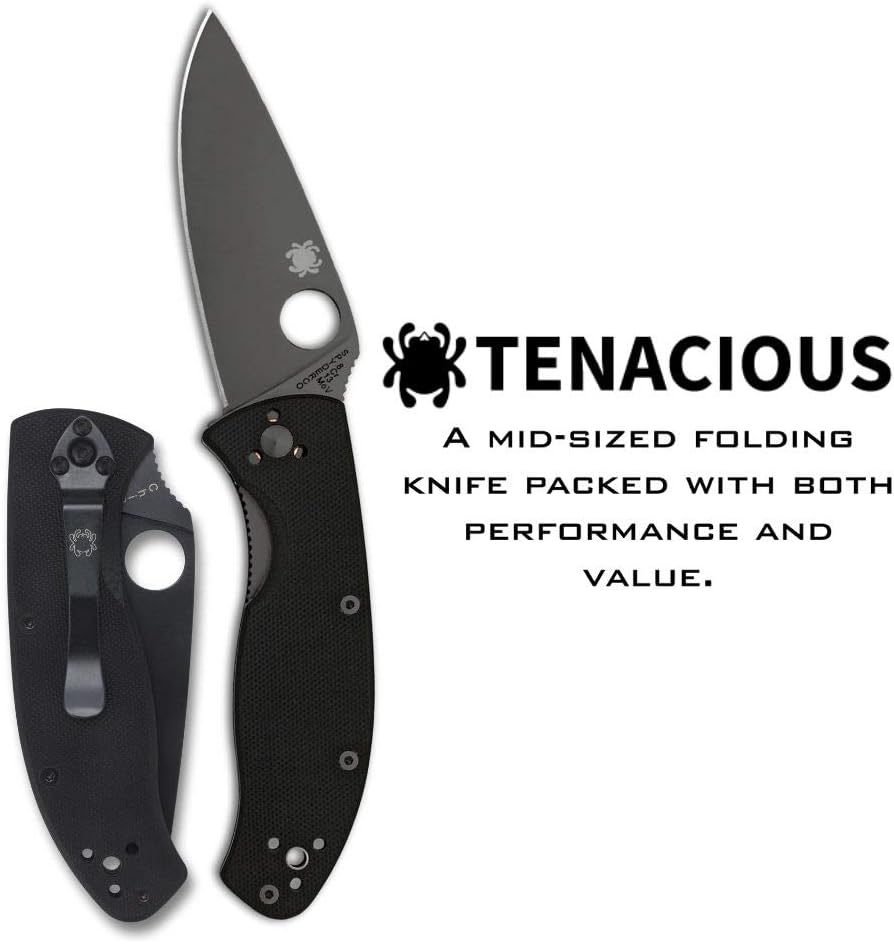
Spyderco makes folding knives — pocket knives with a blade that folds into the handle — at almost every price point imaginable. Three of their most talked-about models sit on a clear value ladder: the Tenacious (a budget workhorse around $40–$55), the Manix 2 in CruWear steel with a DLC coating (a mid-to-premium option in the $150–$200 range), and the Para Military 2, or PM2, available in steels like S45VN or CruWear Micarta in the $200–$250+ window. Each step up costs real money. The question worth answering before you spend it: what does that money actually buy? Better steel that holds an edge longer? Better ergonomics? Smoother action? Or are you partly paying for reputation and aesthetics? This guide maps each rung of the ladder in plain terms, names the tradeoffs clearly, and ends with a decision rule so you can stop second-guessing and buy the right one.
The Tenacious: Twelve Years of Evidence You Can’t Ignore
Let’s start at the bottom — and mean that as a compliment.
The Tenacious is built on 8Cr13MoV, a Chinese stainless steel that gets compared unfavorably to premium Western and Japanese alloys at every opportunity on the forums. That comparison is fair on paper. It’s less fair when you zoom out and look at what owners actually report over time.
KnifeInformer’s Tenacious review notes the steel’s limitations honestly — it won’t hold an edge as long as S30V, and it won’t resist corrosion as aggressively as higher-chromium alloys — but consistently frames it as a steel that performs well for the price tier and sharpens easily, which matters more than people admit. A blade you can touch up on a cheap ceramic rod in two minutes is more useful to most people than a blade with superior edge retention that requires a diamond plate and forty-five minutes of patience.
Here’s the data point that anchors this section: one long-term owner documented in aggregated forum discussions at BladeForums reports twelve-plus years of single-EDC use on their Tenacious. Twelve years. That’s not a weekend test. That’s a decade of daily pocket carry, task cutting, and re-sharpening cycles — and they describe it as the single best buck-for-buck knife they’d choose as a solo EDC even now, after presumably being exposed to far more expensive options in the interim.
What keeps that knife working after twelve years isn’t the steel grade. It’s the Compression Lock — Spyderco’s own locking mechanism that reviewers consistently rate as one of the most reliable and intuitive in production folders — combined with the full flat grind (a blade geometry that makes for efficient slicing), and a handle that fits a wide range of hand sizes. None of those virtues erode with price.
By the numbers — Tenacious:
- Blade steel: 8Cr13MoV (budget tier, easy to sharpen)
- Blade length: 3.39 in / 86 mm
- Closed length: 4.53 in
- Approximate street price (May 2026): $40–$55
- Lock type: Compression Lock
The honest ceiling on the Tenacious: in demanding cutting tasks — hard use on fibrous materials, sustained edge work, anything that pushes a blade — you’ll feel the steel’s limits. It chips more readily than premium steels under lateral stress, and the handle materials are plainly cost-engineered. If you’re a light-to-moderate user doing cardboard, food prep, cord, and occasional wood work, the ceiling may never matter. If you’re a professional guide or a hunter processing multiple animals per season, you’ll outgrow it.
The Manix 2 CruWear DLC: What You’re Actually Buying in the Middle Tier
CruWear is a tool steel — not a stainless — with a composition that prioritizes toughness and wear resistance over corrosion resistance. Knife Steel Nerds’ analysis of CruWear’s composition puts it in a category alongside steels like CPM-3V: excellent at resisting edge chipping under hard use, holding a working edge well, and tolerating the kind of lateral stress that causes more brittle steels to fail. The tradeoff is that CruWear, being low in chromium relative to stainless grades, requires more maintenance attention in humid or wet environments. Wipe it dry. A light coat of oil on the blade isn’t paranoia — it’s correct procedure.
The DLC coating — Diamond-Like Carbon, a thin hard-surface treatment applied to the blade — addresses some of that rust vulnerability, but it introduces a notable buyer expectation issue that KnifeCenter reviews surface repeatedly: initial action stiffness. Multiple buyers across aggregated reviews describe the Manix 2 CruWear DLC as noticeably stiffer than expected out of the box, with one reviewer characterizing it as “needing convincing” to open smoothly in the first weeks.
This is not a defect. It is a break-in characteristic of the DLC coating interacting with the bearing pivot system. Reviewers consistently report that after 200–400 open/close cycles — call it two to three weeks of regular use — the action smooths out considerably and becomes one of the better-feeling deployments in the production folder market. If you buy a Manix 2 CruWear DLC and it feels stiff, work it. That’s the process, not a problem.
What the Manix 2 buys you over the Tenacious:
- A materially tougher, longer-lasting steel in demanding tasks
- The BALL CAGE LOCK — a unique Spyderco mechanism that is ambidextrous and fully tool-free to disassemble, which matters if you clean your knives regularly
- A wider, more substantial handle that many large-handed users find more comfortable than the slimmer PM2
- The DLC aesthetic, which is genuinely stealthy and professional in a way that flat-ground G10 isn’t
What it doesn’t buy you: a significant ergonomic improvement for average hands, or a dramatically better deployment feel (at least initially). If the Tenacious’s G-10 handle and Compression Lock already work for you, the Manix 2’s ergonomic gains are incremental.
The Para Military 2: Converting Skeptics and Serving Professionals
The PM2 is where Spyderco’s reputation actually lives. Let’s address the aesthetic objection first, because it’s real and it keeps buyers away.
The thumb hole — the circular opening in the blade that Spyderco uses for one-handed opening — is divisive. It looks unusual next to thumb studs or flippers. It generates forum arguments. It has a dedicated fanbase that can be off-putting to newcomers. One PM2 CruWear Micarta reviewer, cited in aggregated BladeHQ review data, describes themselves as someone who had genuinely disliked Spyderco for years — the hole, the blade shape, the community — until they actually put one in their pocket and used it. Their conclusion: the thumb hole, once practiced, is faster and more natural than a flipper for their grip, and the distinctive blade geometry that had seemed awkward on a display table turned out to be extremely efficient in real cutting. The aesthetic objection softened under actual use.
That’s a useful data point for the skeptic, not a guarantee. Ergonomics are individual. But it suggests the objection is worth testing before it’s used as a purchasing veto.
On the working-tool question: a police officer with 29 years of service documents in BladeForums discussion that the PM2 is the first knife in their career they would describe as a genuine EDC — not a backup tool, not a utility piece, but the primary working folder they’d stake daily professional use on. After three decades of trying options, that’s a meaningful endorsement of the PM2’s durability and reliability as a working instrument rather than a collector piece.
S45VN vs. CruWear Micarta: The Variant Decision
The PM2 comes in several configurations, but the two most discussed for buyers in mid-2026 are the S45VN variant and the CruWear Micarta variant.
S45VN is a refined stainless steel — an evolution of S35VN that improves toughness and slightly refines edge retention. One PM2 S45VN owner on BladeForums bought a Benchmade 550 in S30V simultaneously as a direct comparison. Their reported verdict after extended use: the S45VN held a working edge noticeably longer and felt cleaner after equivalent tasks. S30V is a very good steel; S45VN is meaningfully better in the characteristics that matter to a daily user — not dramatically, but detectably. That comparison matters because Benchmade 550 is a direct price-tier competitor, and the S45VN doesn’t just win on brand preference — it wins on the material.
CruWear Micarta trades stainless convenience for toughness. CruWear, as noted in the Manix 2 section, resists edge chipping under lateral stress better than S45VN — it’s a tool steel oriented toward hard use rather than corrosion resistance. The Micarta handle (a resin-impregnated linen or canvas material) adds grip texture, especially in wet conditions, and is widely preferred by bushcrafters and hunters over smoother G10. The CruWear Micarta variant is the one to consider if your use skews toward hard outdoor work and you’re disciplined about blade maintenance. It’s not the right choice for someone who wants a low-maintenance daily carry in a humid environment.
By the numbers — PM2 variants:
| Variant | Steel | Handle | Best For |
|---|---|---|---|
| PM2 S45VN | S45VN (stainless) | G10 | Low-maintenance EDC, urban/mixed use |
| PM2 CruWear Micarta | CruWear (tool steel) | Micarta | Hard outdoor use, hunters, bushcrafters |
If X, Then Y: The Decision Rule
This is where the comparison framework collapses into an answer.
If your budget ceiling is under $75 and you need a reliable daily folder: the Tenacious is not a compromise — it’s a correct answer. Twelve years of single-EDC evidence is a meaningful data point. Buy it, use it, sharpen it on anything, and stop second-guessing.
If you do regular hard use — processing game, sustained outdoor cutting, anything that punishes a blade — and you want to stay under $200: the Manix 2 CruWear DLC is the right step. Expect the stiff break-in, work through it, and you’ll have a materially tougher tool. Accept the maintenance obligation that comes with a non-stainless steel.
If you want the best production folder Spyderco makes in this tier and can spend $200–$250+: the PM2 is the answer, and your variant choice follows your use pattern. Low-maintenance urban or mixed carry → S45VN. Wet, hard outdoor work with proper blade care → CruWear Micarta.
If you’ve been avoiding the PM2 because you dislike the thumb hole or the brand aesthetic: the conversion testimony is real. Try one before you rule it out.
If you are a professional who needs a folder that won’t let you down in working conditions: the PM2 CruWear Micarta, based on aggregated owner reports and the working-professional testimony, earns that role.
The ladder is real. Each rung delivers something the rung below doesn’t. The question is whether the thing it delivers matches what you actually need.
Frequently Asked Questions
Is S45VN steel noticeably better than S30V in real use? Yes, detectably so, based on owner comparison reports. The PM2 S45VN versus Benchmade 550 S30V comparison documented on BladeForums shows longer working edge retention and cleaner cutting after equivalent use in favor of S45VN. S30V is not bad steel — it’s just an older formulation. S45VN refines it meaningfully without adding significant sharpening difficulty.
What is CruWear steel and how does it compare to S30V or S45VN? CruWear is a tool steel — not a stainless — developed for wear resistance and toughness. Knife Steel Nerds’ published analysis places it in a similar category to CPM-3V for edge stability under lateral stress. It outperforms both S30V and S45VN in chipping resistance under hard use, but it has significantly less chromium content, meaning it requires more diligent moisture management to avoid surface oxidation. It is the correct choice for demanding outdoor use; it is not the correct choice for a low-maintenance urban EDC.
Why is the Spyderco thumb hole there and does it actually work better than a flipper? The round hole is Spyderco’s signature one-handed opening mechanism, patented in 1981. It works by letting the thumb push through the hole to rotate the blade open. Whether it outperforms a flipper is genuinely individual — grip size, thumb length, and habit all factor in. The CruWear Micarta PM2 conversion reviewer, previously a vocal skeptic of the design, found it faster than flippers after practice. The honest answer: it works extremely well for many users and requires about two weeks of habit-forming before a fair judgment is possible.
Does the Manix 2 DLC coating cause permanent stiffness or does it break in? It breaks in. KnifeCenter buyer reviews and aggregated reports consistently show initial stiffness resolving after sustained use — typically 200–400 open/close cycles. This is a normal characteristic of DLC coating on bearing pivot systems, not a quality defect. Work the action deliberately in the first few weeks. It will reward you.
Is the Para Military 2 worth the price over the Tenacious for an average user? For a light-to-moderate user doing everyday tasks, the Tenacious’s twelve-year owner testimony suggests the price difference may not be justified by use needs alone. The PM2 earns its premium in ergonomics under extended use, steel quality in demanding tasks, and long-term deployment reliability. If you’re an average user with casual needs, the Tenacious is not a gap to bridge — it’s a destination. If you want the best production folder in this tier because your use or standards demand it, the PM2 justifies every dollar.
Which PM2 variant — S45VN or CruWear Micarta — should I buy? S45VN for lower-maintenance carry in urban or mixed environments. CruWear Micarta if you’re a hunter, bushcrafter, or professional guide who does real outdoor cutting and is disciplined about blade care. The Micarta handle also gives a grip advantage in wet conditions that makes it the clear working-outdoors choice.