September 27, 2026 • Callum Reeve • 12 min reading time • Specs verified June 5, 2026
Traditional and Slipjoint Folders: Buck, Old Timer, and the Case for a Classic Pocket Knife
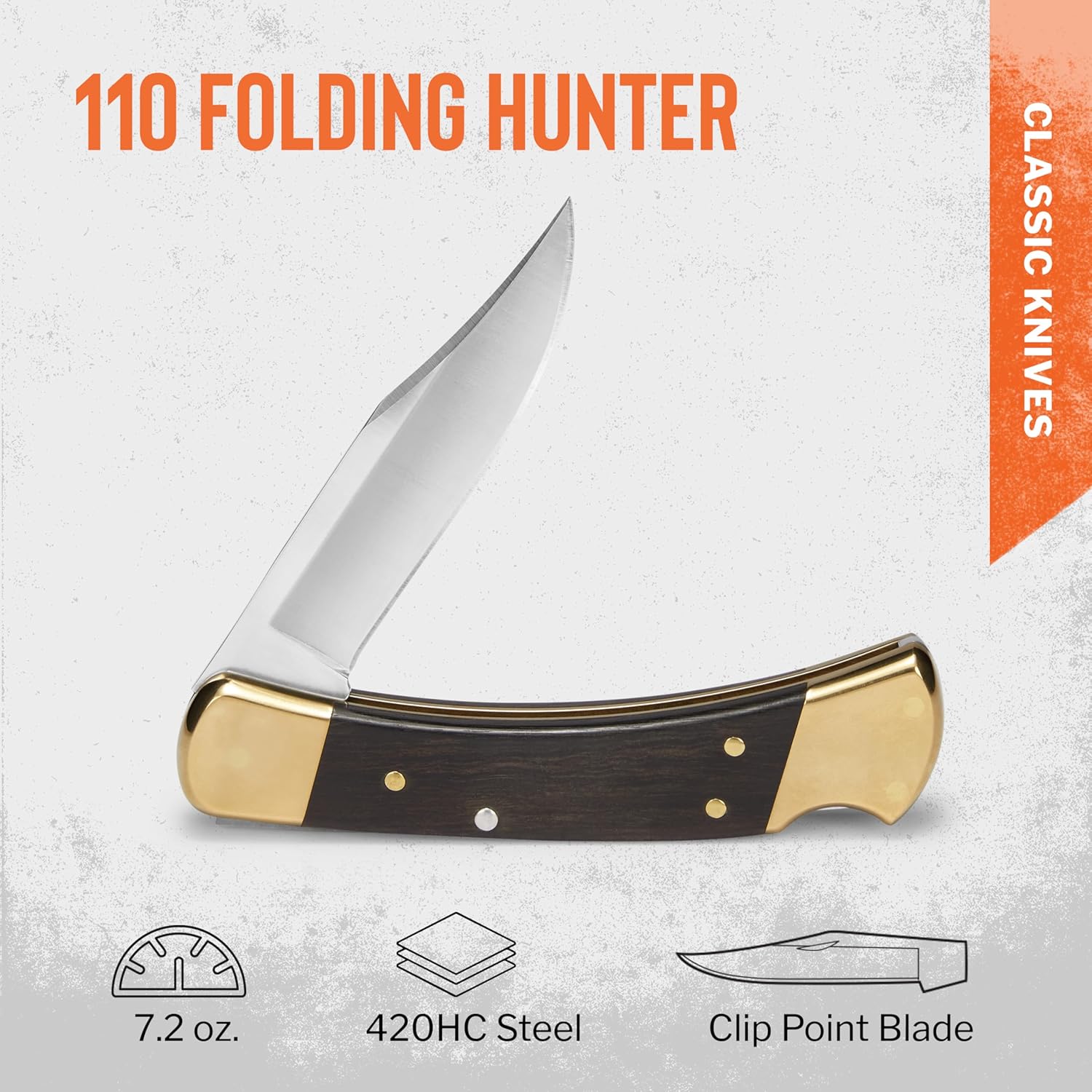
A traditional folder is a folding pocket knife — a blade that hinges open and folds back into the handle for safe carrying — built to a pattern that has changed very little in 150 years. The two most common operating styles you will encounter are the slipjoint (no lock; the blade is held open by spring tension alone and can be pushed closed with deliberate thumb pressure) and the lockback (a spine-mounted lock snaps over the blade tang to hold it rigidly open until you press a release). Neither is exotic. Both have lived in American pockets since the Civil War era. What they are, in 2026, is a quietly practical choice getting a second look from buyers who are tired of tactical aesthetics, who face blade-length restrictions in urban carry environments, or who simply want a knife their grandfather would have recognized. This article compares the flagship models from Buck and Old Timer, addresses the steel and lock questions that trip up intermediate buyers, and ends with a clear decision framework.
| EDITOR'S PICKBuck Knives 110 Folding Hunter… | Mid-tierOld Timer 194OT Gunstock Trappe… | Budget pickRtek 3.75" Spanish Brown Wood H… | |
|---|---|---|---|
| Blade Steel | 420HC stainless | — | Stainless steel |
| Blade Length | 3-3/4" | 3.1" | 3.75" |
| Handle Material | Ebony | Sawcut | Spanish brown wood |
| Bolster Material | Brass | Nickel silver | — |
| Lock Type | Lockback | Lockblade | Lockback |
| Sheath Included | ✓ | — | — |
| Price | $89.99 | $19.24 | $14.99 |
| See on Amazon → | See on Amazon → | See on Amazon → |
Why Traditional Folders Are Having a Moment
The resurgence is not purely nostalgia, though that element is real. Three concrete pressures are pushing buyers toward slipjoints and lockbacks:
Carry legality. Many states and most European jurisdictions restrict automatic-opening knives, assisted-openers, or blades over a certain length. A slipjoint with a 3-inch blade typically clears restrictions that would flag a liner-lock tactical folder. This is addressed in more detail in the FAQ section below.
Social neutrality. A Buck 110 Folding Hunter sitting on a restaurant table reads as a tool. A tanto-tipped G10 tactical folder reads differently to bystanders and sometimes to law enforcement. Gear Junkie’s “Best EDC Knives” roundup has noted this social-context distinction in its editorial reasoning for recommending traditional patterns to urban carriers.
The learning curve is short. If you are coming from a Swiss Army knife background and stepping up, a slipjoint folder uses the same operating principle at larger scale with better steel. There is no liner lock to fumble, no assisted mechanism to explain at a security checkpoint.
The tradeoff is real: a slipjoint is not a one-hand-open working knife. If you regularly need a blade deployed with one gloved hand in the field, a lockback like the Buck 110 is a more honest tool. Name the tradeoff before you buy.
Comparing the Main Contenders
The three tiers below — budget, mid-range, and premium — map onto the realistic price bands in the traditional folder market as documented in BladeHQ product listings and owner Q&A threads, the Outdoor Life “Best Pocket Knives” buyer’s guide, and KnifeInformer’s catalog of working-folder reviews.
Old Timer Gunstock Trapper
Rtek
$14.99
In stock on Amazon
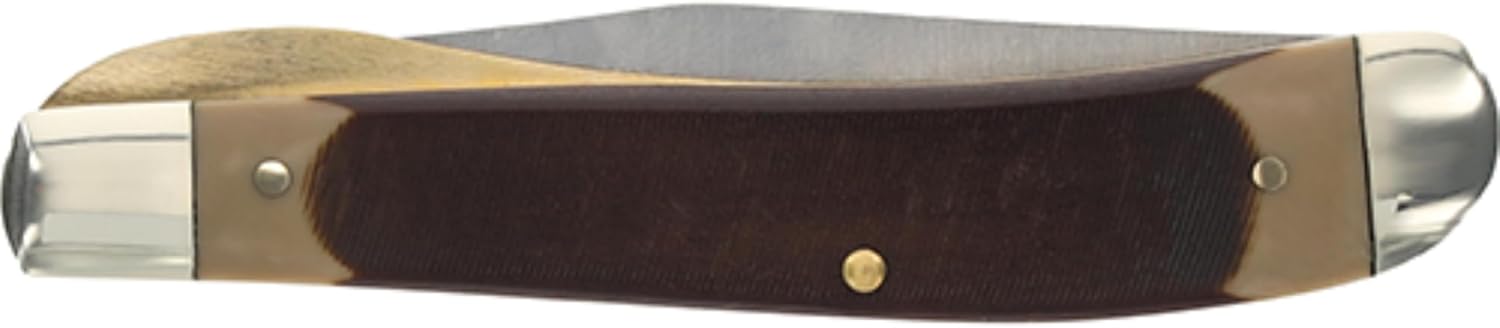
Check price on AmazonThe Old Timer line — now produced under the Taylor Brands umbrella — occupies the sentimental, affordable end of the traditional folder market. The Gunstock Trapper is the flagship pattern: a multi-blade slipjoint with a clip blade and a spey blade, jigged bone scales in the Old Timer brown, and a wide-bellied handle that fits a work-worn hand.
The nostalgia premium is real and not something to dismiss. These are the knives that rode in grandfathers’ pockets, used to cut twine, clean fish, and whittle kindling. For buyers who want that lineage at an accessible price, the Gunstock Trapper delivers it.
There is a documented ergonomic issue worth addressing honestly. Across multiple owner accounts in the Blade Forums Traditional Folders subforum, a recurring complaint surfaces: the nail nick — the small groove in the blade spine that you hook your thumbnail into to open a slipjoint — is tight enough to be uncomfortable, occasionally bordering on painful, during repeated openings. One reviewer cited this specifically and still awarded five stars, reasoning that the nostalgia value and spring-tension quality outweighed the ergonomic friction. That is a valid individual calculus.
If you are buying for regular working use rather than occasional carry, the nail pull issue will accumulate. The fix is simple: a few passes with folded 600-grit wet/dry sandpaper on the nail nick, or careful minutes with a small needle file, opens the groove enough to eliminate the pain point. It is a break-in task, not a design flaw — but know it is coming.
The Old Timer also uses 7Cr17MoV stainless, a Chinese stainless grade that sharpens easily, cleans up well, but will not hold an edge through demanding field work. For occasional carry, camp chores, and light cutting, it is entirely sufficient.
By the Numbers — Old Timer Gunstock Trapper
| Spec | Value |
|---|---|
| Blade length | ~3.3 in (clip blade) |
| Steel | 7Cr17MoV stainless |
| Lock type | Slipjoint |
| Best use case | Light carry, gift, camp chores |
| Price tier | Budget |
Rtek
$14.99
In stock on Amazon
Check price on AmazonBuck 110 Folding Hunter
Old
$19.24
In stock on Amazon
Check price on AmazonThe Buck 110 has been in continuous production since 1964. At current pricing it sits comfortably in the mid-tier working-knife range — more than an impulse buy, less than a dedicated collector piece.
Something that shows up repeatedly in owner reviews is worth taking seriously: people describe the unboxing experience with language usually reserved for fine watches. KnifeInformer’s “Buck 110 Folding Hunter Review” documents this pattern, and aggregated owner accounts across the Blade Forums Traditional Folders subforum echo it — reviewers describe picking it up for the first time and feeling, before a single cut, that they are holding something built with intention. Brass bolsters, genuine wood scales (or jigged bone on upgraded versions), a satisfying lockback snap. This is not irrational sentimentality. It is the knife communicating its own quality through tactile cues, and for a tool you will carry for decades, that first impression is actually predictive of long-term satisfaction.
The steel question. Buck uses 420HC, heat-treated in-house to their proprietary specification. Knife Steel Nerds’ coverage titled “420HC and Its Place in the Stainless Hierarchy” is precise on this point: out-of-the-box 420HC from a budget producer sharpens easily and dulls fast, but Buck’s thermal processing pushes hardness into the low-to-mid 58 HRC range, closing much of the gap with steels like AUS-8. What you get is a blade that responds well to a ceramic rod, resists staining and corrosion in hunting and fishing conditions, and can be touched up on any flat stone available in camp. The downside: it will not compete with S35VN or CPM-3V on edge retention under sustained hard use. If you are processing a caribou in the field and need a blade that stays sharp through a full quartering job, the 110 will ask you to strop more often than harder steels would.
The Outdoor Life “Best Pocket Knives” buyer’s guide raises a practical counterpoint that applies here: a touchable edge you can maintain in camp beats a harder edge you cannot fix until you are home. For most field users, that trade resolves in Buck’s favor.
The Buck 112 Slim Select deserves mention alongside the 110. Its slimmer profile and shorter blade make it a natural skinner — shorter strokes, less leverage demand, less heat at the edge. Owners defending 420HC in the 112 context are not apologizing for the steel; they are making a sensible argument that easy field sharpening is the correct priority for that task profile.
By the Numbers — Buck 110 Folding Hunter
| Spec | Value |
|---|---|
| Blade length | 3.75 in |
| Overall open | 8.625 in |
| Steel | 420HC (Buck spec heat treat) |
| Lock type | Lockback |
| Approx. hardness | 57–58 HRC |
| Price tier | Mid-tier |
Old
$19.24
In stock on Amazon
Check price on AmazonBuck 110 Auto and Upgraded Scale Variants
Buck
$89.99
In stock on Amazon
Check price on AmazonBuck offers the 110 in upgraded configurations — including automatic-opening versions, premium handle materials such as cocobolo and ebony wood, and stabilized wood scales — that push the price into the premium bracket. These variants sit above the standard 110 in the BladeHQ catalog and are documented in KnifeInformer’s extended coverage of the Buck lineup.
The automatic variant is worth flagging specifically: it is restricted in many jurisdictions that permit the standard 110 without issue. If carry legality is part of your decision, the standard lockback is the right choice. If you are buying a premium version for bench use, camp, or display, the upgraded scales and auto mechanism represent genuine value — the brass and wood construction quality on premium variants is noticeably better than the base model, and owner accounts on Blade Forums consistently rate the fit and finish above the standard production piece.
The Buck Toothpick also fits this premium-interest tier for a specific buyer: collectors and carvers looking for a slim, single-blade slipjoint with a clip point that would look at home in a 19th-century catalog. Its small size gets praised by owners who use it for detail wood carving and finishing work — the narrow profile and controllable blade length become assets rather than limitations when fine-motor cutting is the actual task.
By the Numbers — Buck 110 Premium Variants
| Spec | Value |
|---|---|
| Blade length | 3.75 in (same as base) |
| Steel | 420HC (same spec) |
| Lock type | Lockback or Auto |
| Handle options | Cocobolo, ebony, stabilized wood |
| Price tier | Premium |
Buck
$89.99
In stock on Amazon
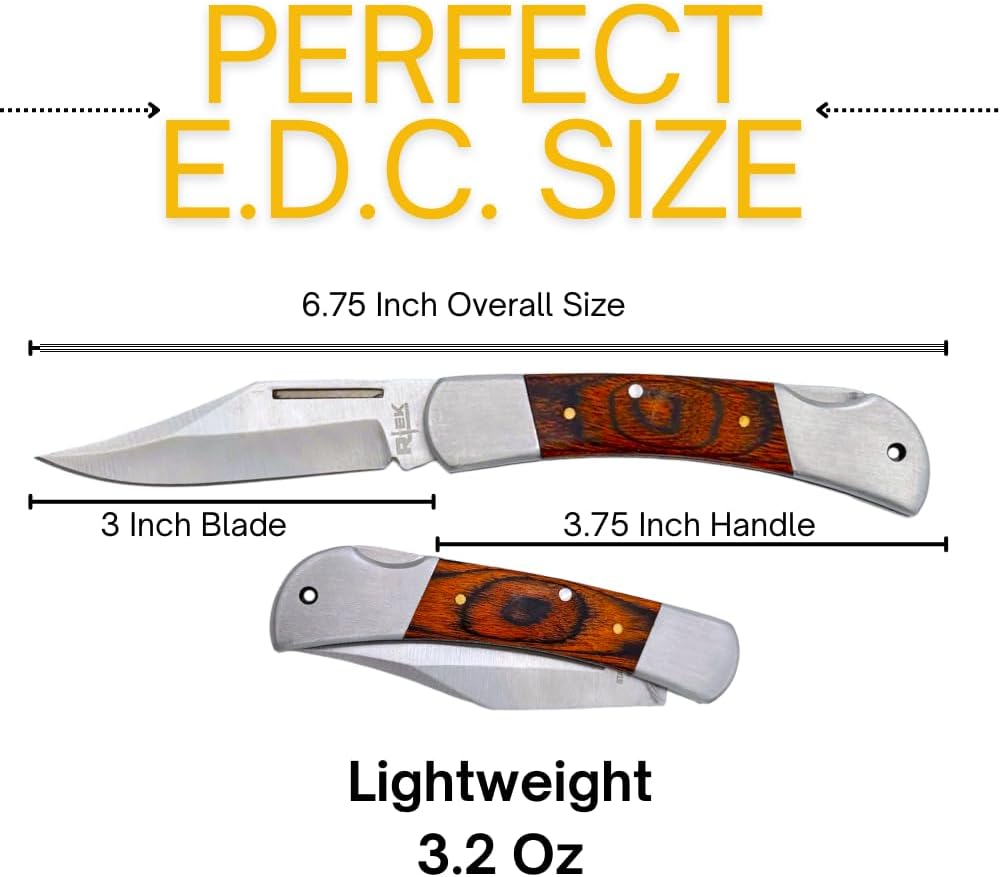
Check price on AmazonA Note on the Rtek Traditional Folder
The Rtek traditional folder appears frequently in gift-purchase contexts. Reviewers describe it warmly — good looks, reasonable fit and finish, appropriate price for a gift-giving occasion — but with less technical engagement than the Buck or Old Timer lines typically generate. The pattern of reviews documented across BladeHQ owner Q&A positions it as a gateway knife: an introduction to traditional folders for someone who has not yet formed opinions about steel or lock preferences. If you are buying for yourself and are at the 6–24 month mark in your knife education, you have likely outgrown the Rtek’s ceiling. If you are gifting a first traditional folder to someone who mainly needs the experience of carrying something classic, it serves that purpose.
Maintenance: Brass, Wood, and the Pivot
Traditional folders with brass bolsters and natural wood or bone handles require a different maintenance mindset than modern synthetic-handled knives. The following routine is drawn from consistent guidance in the KnifeCenter “Knife Care and Maintenance” guide and long-run practice threads in the Blade Forums Traditional Folders subforum:
- Oil the pivot regularly. A drop of mineral oil or purpose-made knife oil at the blade pivot every few months of carry prevents wear and keeps the opening action from stiffening.
- Keep the spring channel clean. Lint, debris, and grit accumulate in the channel where the blade folds. Rinse with warm water and dry thoroughly — never soak — before re-oiling.
- Condition the scales. Natural wood and bone scales benefit from occasional treatment with food-safe mineral oil to prevent cracking in dry climates. Do not leave them submerged.
- Strop rather than neglect. Both 420HC and 7Cr17MoV respond well to a leather strop. Five passes per side every few weeks of use keeps the edge from requiring a full reprofiling.
Frequently Asked Questions
Is 420HC steel good enough for hunting and field use, or is it only suitable for light tasks? Buck’s proprietary heat treatment brings 420HC to a hardness level that Knife Steel Nerds’ analysis in “420HC and Its Place in the Stainless Hierarchy” places solidly in the working-steel tier, not the budget tier. Owners report it handles skinning, camp food prep, and general field tasks without issue. The honest limitation is edge retention on sustained hard cutting. Field-sharpenable is a genuine advantage when you are actually in the field and do not have access to a full sharpening kit.
What is the difference between a lockback and a slipjoint, and which is safer for working use? A lockback mechanically locks the blade open and requires intentional press-and-fold to close — it will not close under cutting pressure alone. A slipjoint holds open by spring tension only; hard lateral pressure can cause it to fold. For sustained working cuts or gloved use, a lockback is the safer choice. For light carry in a legal-restriction environment where locking knives are prohibited, a slipjoint is the appropriate trade.
Is the Buck 110 worth buying at current prices, or has inflation made it poor value? KnifeInformer’s “Buck 110 Folding Hunter Review” documents the quality-to-cost ratio as still favorable given American manufacturing, proprietary heat treatment, and a lifetime warranty that Buck honors in practice. Owners who have sent knives in for warranty service report straightforward resolution. The value math holds at 2026 pricing relative to what the mid-tier category otherwise offers.
Are these traditional folders legal to carry in states and countries with strict blade length laws? Generally yes for slipjoints with sub-3-inch blades, but verify locally. The Buck 110 at 3.75 inches will trigger length restrictions in some jurisdictions. UK carry law restricts any locking knife in public; a non-locking slipjoint under 3 inches typically qualifies as legal folding-knife carry there. The Outdoor Life “Best Pocket Knives” buyer’s guide includes a useful carry-law overview as a starting point. Local legal counsel is worth a call if your situation is unclear.
How do you properly maintain a traditional folder with brass bolsters and wood handles? See the maintenance section above. Short version: mineral oil at the pivot, keep the spring channel debris-free, condition wood scales periodically, and use a strop rather than a stone for routine edge upkeep. Avoid dishwashers, prolonged water exposure, and storing knives in leather sheaths while still damp — leather holds moisture against steel.
The Decision Rule
If you carry in an environment with legal restrictions or social context where a tactical folder reads poorly, a slipjoint traditional folder is the right tool. Match blade length to your jurisdiction and verify local law before you buy.
If you need a working hunting or camp knife for real tasks and want American manufacturing with a genuine warranty, the Buck 110 lockback is the honest choice and holds its value across years of use.
If price sensitivity is real and the use case is occasional carry and light tasks, the Old Timer Gunstock Trapper delivers the traditional experience at an accessible price — just budget 20 minutes to open up the nail nick before your first season with it.
The traditional folder is not a compromise. It is a specific tool for a specific context, and in that context it has been refined for over a century. Sometimes that is exactly what the job calls for.